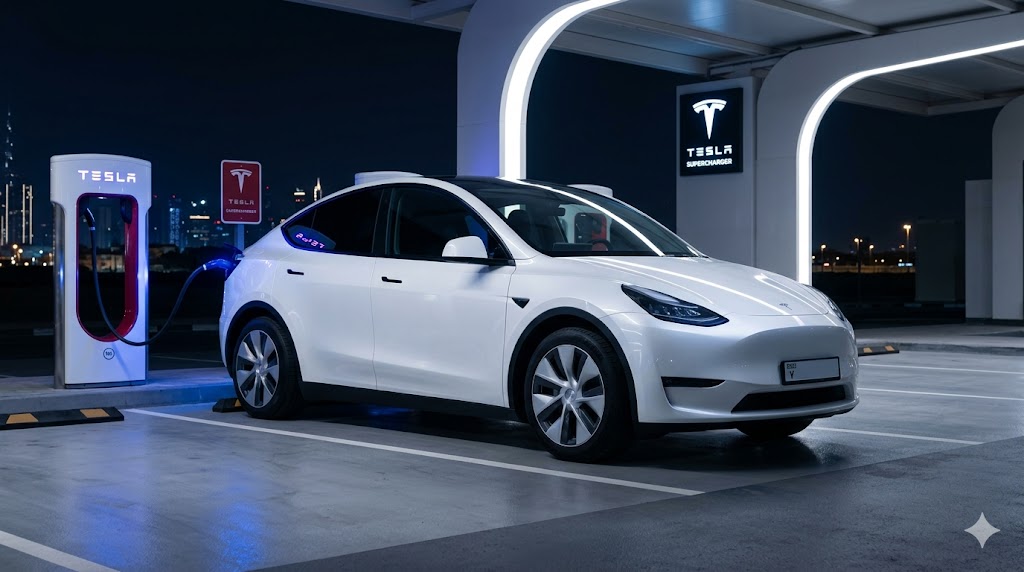
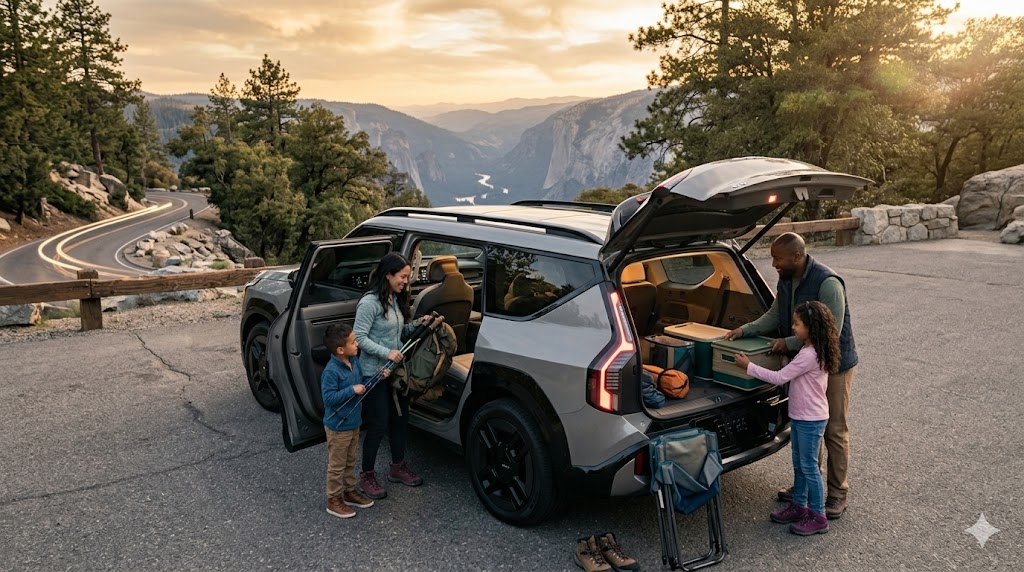
Picture a week where you never touch a gas pump. You drop the kids at school, run to the grocery store, commute to work and back, and grab dinner on the way home, all without the engine ever firing. Then Saturday arrives and you point the same vehicle toward a destination four states away without a second thought about charging stations. That's the pitch behind the 2025 Toyota RAV4 Prime, and unlike a lot of marketing claims in this segment, it largely holds up. The number at the center of it all is an EPA-estimated electric-only range of roughly 42 miles, and that figure deserves more attention than most reviews give it, because it's the whole reason this vehicle exists in its current form.
Forty-two miles doesn't sound dramatic next to the 250-plus miles a modern EV can deliver, but context matters. The average American commute is well under 20 miles each way, which means a huge share of RAV4 Prime owners can plausibly do their entire round-trip commute, plus a stop for coffee or a school pickup, on electricity alone. Charge overnight at home and you start every day with a full electric buffer. For drivers whose daily routine stays within that range, the gas engine can go days or even weeks without waking up. That's not a hypothetical; it's the lived experience many current Prime owners report, and it's the practical heart of this review.
What 42 Miles Actually Buys You Day to Day
The honest way to think about the RAV4 Prime's electric range is as a rolling buffer rather than a hard limit. You wake up with a full charge, and as long as your errands stay inside that radius, you're driving on electrons, not gasoline. Grocery runs, school drop-offs, a trip to the gym, a short commute — all of it can happen without the engine contributing at all. Because the electric motor supplies power instantly and smoothly, these short trips don't feel like a compromise either; if anything, they're quieter and more relaxed than the equivalent gas-only errand.
Where this gets genuinely useful is for two-car households or anyone whose daily radius rarely exceeds the electric range. Some owners plug in each night and legitimately go long stretches between fill-ups, reserving the gas tank for the occasional longer outing. That's a meaningfully different ownership experience than a standard hybrid, which always burns some fuel, or a pure EV, which requires planning around charging infrastructure for any trip beyond its range. The Prime splits the difference in a way that rewards drivers with predictable short routines while still covering them completely on the unpredictable long ones.
Unlimited Range Without the Anxiety
The flip side of that 42-mile buffer is what happens once it's gone, and this is where the Prime separates itself from a full EV. When the battery depletes, the gasoline engine takes over automatically and the RAV4 Prime simply becomes a strong-running hybrid SUV. There's no range countdown creeping toward zero, no hunting for a fast charger along the interstate, no detour planning around charging network coverage. You can drive from coast to coast on the same tank-and-battery combination you'd use for a trip to the hardware store, refueling at any gas station in minutes.
This is the "unlimited possibilities" half of the equation, and it's not just a slogan. Plug-in hybrids exist precisely to solve the anxiety that keeps many shoppers away from full EVs, especially those who don't have reliable home charging, live in colder climates where EV range drops in winter, or regularly drive long distances for work or family visits. The RAV4 Prime lets you have the electric-first experience most of the time while never asking you to change your road-trip habits at all.
Performance: The Electric Motor Does Heavy Lifting
One side effect of pairing a gas engine with an electric motor for range extension is that Toyota also gained a genuinely quick compact SUV. The electric motor's torque is available immediately, with none of the lag you'd feel waiting for a conventional engine to build revs, and that instant response is what makes the Prime feel noticeably quicker off the line than the standard RAV4 Hybrid, let alone the gas-only RAV4. Toyota doesn't need to chase flashy performance numbers here; the combination of instant electric torque and the gas engine's backup power simply makes the Prime feel eager in everyday driving, particularly when merging or passing. You should check current published horsepower and acceleration figures for the exact numbers, but qualitatively, this is one of the swiftest vehicles in Toyota's lineup, plug-in badge and all.
That extra motivation does come with trade-offs. The larger battery pack needed to deliver 42 miles of range eats into cargo space compared with the standard gas RAV4 or even the regular Hybrid, since the pack has to live somewhere in the floor and rear structure. If you regularly haul bulky cargo, it's worth sitting in the back and popping the hatch before you buy, rather than assuming Prime and Hybrid share identical capacity. The added battery weight also firms up the ride somewhat versus a standard RAV4, which some drivers read as sportier and others read as less forgiving over rough pavement.
Charging Reality: Level 1 vs Level 2
Because the Prime's battery is modest by EV standards, charging it doesn't require the elaborate home setup people associate with full electric vehicles, but the method you choose changes the experience considerably. Plug into a standard household outlet — Level 1 — and you can expect a charge that stretches well into overnight territory, which is fine if you plug in every evening and only need to top off what you used that day. It's slow, but it's also free of installation cost, and plenty of owners never bother with anything more.
Step up to a Level 2 home charger, the kind an electrician can install alongside a dryer outlet, and the wait drops dramatically, often to a couple of hours or so, making a full top-off achievable in a single evening even if you arrived home nearly empty. For most owners, a Level 2 charger is what turns the RAV4 Prime from "occasionally electric" into "almost always electric," since it removes any anxiety about topping off before a busy next-day schedule. It's an added upfront cost, but one that pays off quickly if you're serious about maximizing electric miles.
Efficiency After the Battery Runs Dry
The other number worth understanding is what happens to fuel economy once you've used up your electric range and the gas engine is doing all the work. In that mode, the RAV4 Prime behaves like a strong hybrid rather than a plug-in, and real-world efficiency once depleted tends to land respectably alongside the standard RAV4 Hybrid rather than dramatically ahead of it, since you're now hauling a heavier battery pack with a conventional hybrid drivetrain. That's not a knock against the Prime so much as a reminder that its headline efficiency advantage is front-loaded into those first 42 electric miles each day. Drivers who rarely plug in and mostly run on gasoline won't see the same advantage as those who charge nightly, so your real-world MPGe depends heavily on your charging discipline. Check current published EPA combined MPGe and gas-only mpg figures before you buy, since they vary by trim and drivetrain configuration.
Trim Choices and Whether the Premium Is Worth It
The RAV4 Prime carries a real price premium over the standard RAV4 Hybrid, and that gap is the central value question for shoppers. Many owners recoup part of that premium through fuel savings if they charge consistently and drive mostly short trips, and federal or state incentives may narrow the gap further, though eligibility rules shift often enough that you should check current published incentive programs rather than assume last year's numbers apply. Higher Prime trims add stronger performance tuning and additional tech and convenience features, but the core electric-range value proposition doesn't change much between trims, since battery size is consistent across the lineup.
It's also worth entering the market with realistic expectations about availability. The RAV4 Prime has historically been in tight supply relative to demand, which pushed some dealers toward markups above sticker price in certain regions. That's improved over time but hasn't disappeared everywhere, so shop around, compare dealer inventory across your region, and don't assume the first lot you visit reflects the best deal available.
Key Takeaways
The 2025 RAV4 Prime's roughly 42-mile EPA electric range covers most daily commuting and errands entirely on electricity for owners who charge nightly. Once that range is used up, the gas engine takes over seamlessly, giving you unlimited practical range and none of the charging-network anxiety that comes with a full EV. The electric motor's instant torque makes the Prime feel notably quicker than the standard RAV4 Hybrid, though the battery pack trims cargo space and firms up the ride. A Level 2 home charger turns the Prime into a near-daily electric vehicle for short-radius drivers, while Level 1 charging works fine for more patient overnight charging. Real-world fuel efficiency after the battery depletes lands closer to a strong hybrid than a groundbreaking leap, so the Prime's advantage depends heavily on how often you actually plug in. Expect a real price premium over the RAV4 Hybrid and historically tight availability, so verify current incentives and shop multiple dealers before committing. Bottom line: if your daily driving fits inside roughly 40 miles and you can charge at home, the RAV4 Prime delivers genuine gas-free commuting with zero road-trip compromise, making it one of the most practical plug-in hybrids on the market today.