Sit inside the refreshed Model 3 with the doors closed and the first thing you notice is what's missing: road noise. Tesla's mid-cycle redesign, known inside the company and across the enthusiast press by its development codename "Highland," didn't just tweak a few trim pieces and call it a year. It rebuilt the sensory experience of the car from the inside out, and after spending real time behind the wheel, the changes are the kind you feel in your shoulders and hear in your ears before you ever check a spec sheet.
That's the headline here. This isn't a Model 3 with a new bumper. It's a Model 3 that finally addresses the two biggest complaints owners and reviewers have lodged against the car since it launched: a cabin that let in too much tire roar and wind noise at highway speed, and an interior that felt like an engineering demo rather than a finished product. Tesla went after both problems directly, and largely succeeded, while also nudging efficiency upward enough that real-world range numbers creep higher on the same battery philosophy. The result is a car that feels meaningfully more mature without losing the traits that made the original Model 3 a sales phenomenon.
What Actually Changed Inside
The redesigned cabin is the story. Tesla added acoustic glass across more of the greenhouse, thickened sound-deadening material in the doors and floor, and revised the suspension bushings to filter out more of the coarse-road chatter that used to transmit straight into the seat. Drive the new car back-to-back with an older one over broken pavement and the difference is obvious within the first mile — the Highland refresh simply lets less of the outside world in.
The interior itself got a genuine styling refresh, not just new seat fabric. There's a slimmer dashboard with a strip of ambient lighting that runs the width of the cabin, a new steering wheel, and reworked seats that Tesla says are more supportive on longer drives, which tracks with the seat-time impression of less fatigue after a few hours. Rear passengers benefit too, with a small screen mounted in the back of the center console that lets them control climate and entertainment without leaning forward and bothering the driver. It's a small addition that signals Tesla is thinking about the whole car, not just the front two seats.
Exterior styling picked up sharper lighting elements front and rear, a cleaner fascia, and aerodynamic details that Tesla folded into the broader efficiency push. None of it is a dramatic departure from the silhouette that's now instantly recognizable on any street in America, but the details read as more resolved, less like a car still finding its final form.
Software: The Bigger Story Than the Sheet Metal
Tesla's real differentiator has never been purely mechanical, and the Highland refresh leans into that harder than any Model 3 before it. The updated software experience brings a smoother, more responsive interface on the central touchscreen, refined menu logic that puts frequently used controls fewer taps away, and continued over-the-air update cadence that means the car you buy today keeps evolving well after you drive it off the lot. That's a genuine advantage over rivals whose infotainment systems tend to freeze in amber the moment the car ships.
The trade-off, and it's worth being honest about it, is that Tesla continues to push more functionality into that one central screen rather than distributing it across physical controls. Highland notably removed the traditional stalks for gear selection and turn signals in some configurations, shifting those functions to the steering wheel and touchscreen. Drivers used to a stalk under their right hand will need an adjustment period, and some will simply never love the change. It's the kind of decision that makes sense in a product-design meeting and generates real friction in the driveway on day one. Whether you find it minimalist and clever or needlessly fussy will likely depend on how attached you already are to conventional controls.
Range and Efficiency Gains
Tesla didn't reinvent the battery to get more range out of Highland. Instead, the gains come from the unglamorous work of efficiency: better aerodynamics, lower rolling resistance, refined thermal management, and software that squeezes more usable miles out of the same energy budget. The net effect is a car that goes farther on a charge than its predecessor without a dramatic jump in battery size, which is exactly the kind of incremental, unsexy improvement that adds up to real-world usability. Highway range, historically the weak point for aerodynamically boxier EVs, benefits noticeably from the cleaner exterior details Tesla incorporated into the redesign.
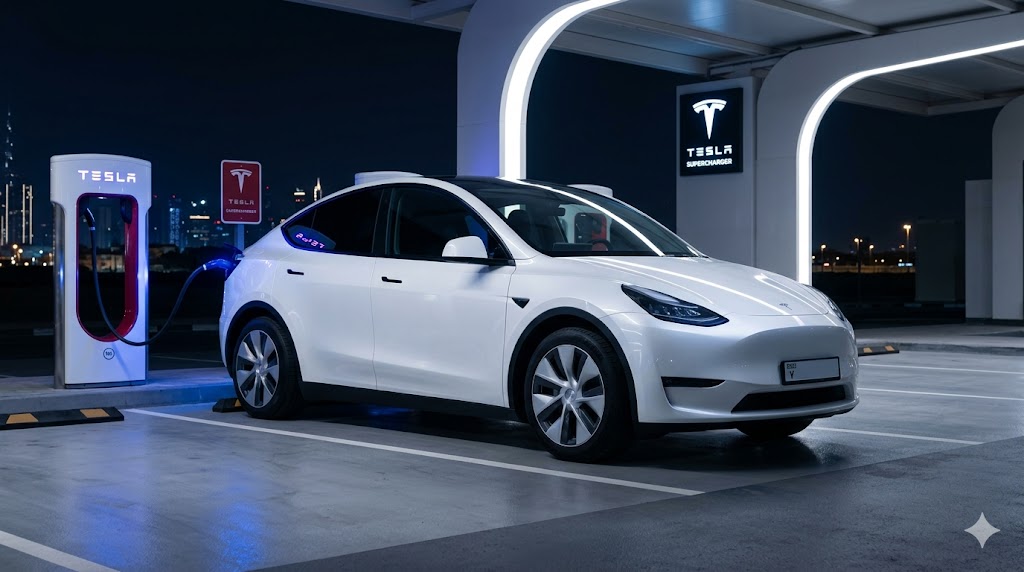
None of this happens in a vacuum, either. Tesla's Supercharger network remains the single biggest practical advantage the Model 3 holds over most rivals. Charging stops are fast, plentiful, and reliably functional in a way that many competing networks still aren't, and route planning through the car's native navigation accounts for charging stops automatically. If you've road-tripped an EV from a brand without Tesla's charging infrastructure, you understand immediately why this matters as much as the range number itself.
Value Proposition in a Crowded Field
The EV sedan market in 2025 is far more competitive than it was when the Model 3 first launched, with credible rivals now offering strong range, sharp styling, and their own software ecosystems. Against that backdrop, the refreshed Model 3's case for value rests on the combination of Supercharger access, a quieter and better-finished cabin, continuous software improvement, and pricing that remains competitive within its segment relative to the equipment and range on offer. It's not the only good option anymore, but it's a notably better one than it was a few years ago, and it no longer feels like you're trading comfort for range or software polish for either.
Build quality has historically been Tesla's soft spot, with panel gaps and interior fit-and-finish drawing criticism in past model years. The Highland refresh shows evidence of tighter tolerances and more attention to interior material choices, though shoppers with a keen eye for finish details should still inspect a car in person before assuming the reputation has been fully erased. Improvement is evident; perfection is not guaranteed.
Who This Car Is For
The refreshed Model 3 makes the most sense for buyers who want a genuinely quiet, comfortable daily driver with strong efficiency, who plan to road-trip occasionally and want to lean on the best charging network available, and who don't mind an interior philosophy built around a central screen rather than traditional buttons and stalks. If you prioritize physical controls and a more conventional cabin layout, or you're skeptical of over-the-air software as the backbone of a car's user experience, you'll want to test drive one yourself before committing, since those design choices are now more deeply embedded in the car than ever.
For everyone else, this is the most complete, most livable Model 3 Tesla has built. It doesn't reinvent the formula. It refines it, and refinement was exactly what this car needed.
Key Takeaways The Highland refresh's biggest improvement is cabin quietness, achieved through acoustic glass and added sound deadening rather than any single flashy feature. Interior styling and rear-seat amenities are genuinely upgraded, though the shift toward stalk-less steering wheel controls will divide drivers who prefer physical switches. Software remains Tesla's strongest differentiator, with a smoother interface and ongoing over-the-air updates that keep the car improving after purchase. Range gains come from efficiency refinements like aerodynamics and thermal management rather than a larger battery, and they meaningfully help real-world highway range. The Supercharger network continues to be a practical advantage that's hard for rivals to match on road trips. Bottom line: if you can adapt to Tesla's screen-centric control philosophy, this is the best-executed Model 3 yet and a strong value pick in the EV sedan class.