Pull up to a trailhead or a boat ramp in an R1T and the reaction is rarely indifference. People expect an electric truck to be a science project, something better suited to a charging station than a gravel forest road. The R1T spent its first few model years quietly dismantling that assumption, and the 2025 version continues the job. This isn't a truck that merely exists as a statement about the future of energy. It tows, it climbs, it hauls gear through mud, and it does the unglamorous work a truck owner actually needs done. That combination is precisely why the R1T matters: it gave skeptics a reason to stop treating electric pickups as a novelty and start treating them as a legitimate category.
Proving Trucks Could Go Electric Without Losing Their Purpose
The core skepticism around electric pickups was never about acceleration or gadgetry. It was about whether a battery-powered truck could do truck things without falling apart under real load. Towing drains range fast, off-road terrain punishes suspension and battery packs, and truck buyers have historically been the most conservative, brand-loyal customers in the industry. The R1T addressed this by building a vehicle engineered from the ground up as a truck first and an EV second, rather than an EV platform with a bed bolted on.
That shows up in the details. The R1T's independent suspension and available air suspension setup let it adjust ride height for clearance or aerodynamics, and its motor configuration (in dual- or quad-motor form depending on trim) allows for genuinely useful low-speed torque control on loose surfaces like sand, mud, and rock. Owners routinely report that the truck's off-road manners, including tank turn functionality on quad-motor versions, aren't gimmicks reserved for marketing videos. They translate into real capability on technical trails where wheel placement and traction control matter more than raw power. For a segment that needed to prove itself, this was the right place to start: not with a flashy 0-60 number, but with dirt under the tires.
Towing: The Make-or-Break Test the R1T Passed
Towing is the toughest test for any electric truck, because it exposes every weakness at once. Aerodynamic drag from a trailer, added rolling resistance, and the sheer energy demand of moving thousands of pounds all compound against an EV's limited energy density compared to gasoline. The R1T's factory-rated towing capacity is strong for its class, and Rivian built in towing-specific features, like trailer profiles saved in the truck's software and a tow-focused suspension mode, that show real engineering thought went into this use case rather than an afterthought checkbox.
The trade-off, and it's a real one, is range. Towing a trailer with any electric truck cuts driving range substantially, often by half or more depending on trailer weight, shape, and speed. This isn't unique to Rivian, but it's the single biggest asterisk on the "electric trucks can tow" claim. Anyone planning to tow a camper or boat regularly needs to think seriously about charging stops along the route, since the truck will need to recharge more frequently than it would during unloaded driving. Rivian's growing network of company-operated fast chargers helps, but the broader public charging infrastructure for heavy-load towing routes is still catching up. Buyers should check current published range and towing figures directly from Rivian, since these numbers have been refined across model years and vary by configuration.
The Frunk, the Gear Tunnel, and Everyday Utility
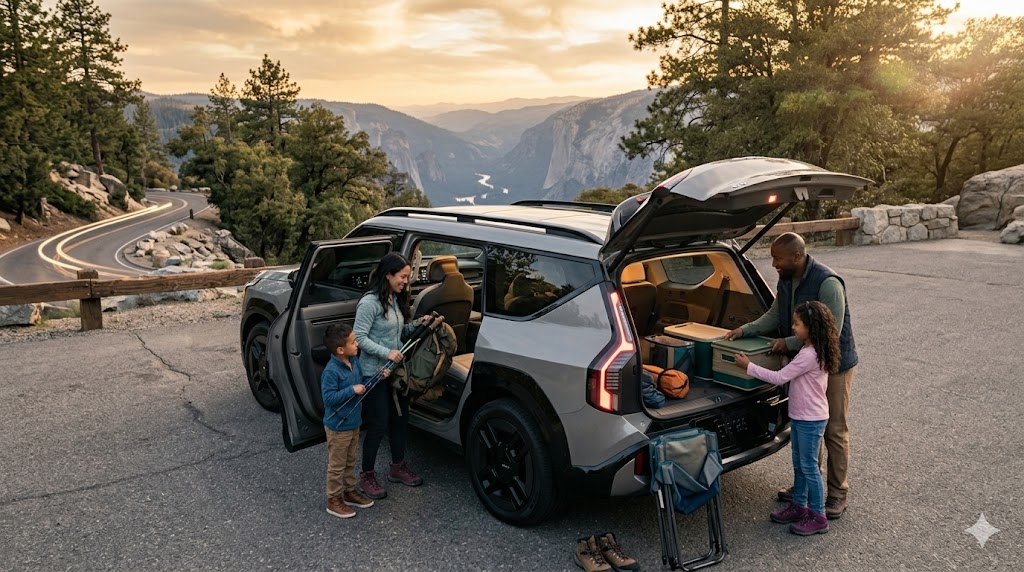
Where the R1T distinguishes itself from a generic pickup is in how it rethinks storage. Without a traditional engine up front, Rivian carved out a front trunk, or frunk, that adds genuinely useful lockable, weatherproof cargo space. More clever still is the gear tunnel, a pass-through storage compartment running behind the cab and in front of the bed, which owners have adopted for everything from camping gear to slide-out kitchen accessories sold as options. This is the kind of feature that wins over people who camp, fish, or work outdoors, because it solves a real problem: where do you put muddy, wet, or valuable gear where it stays dry and secure but easily accessible.
That said, the R1T's utility isn't without quirks. The bed itself is shorter than what you'd get on a full-size combustion truck, which matters for buyers hauling long lumber or oversized equipment. The frunk and gear tunnel are excellent for gear but don't replace the flat, wide-open bed space some trades genuinely need. And because the R1T is a newer platform from a newer manufacturer, some owners have reported the learning curve on accessories and bed configurations is steeper than with a decades-old truck platform that has an established aftermarket. If you need extensive aftermarket customization on day one, that ecosystem is still maturing.
Price, Ownership, and the Service Network Question
None of this capability comes cheap. The R1T carries a real price premium over comparable gas-powered midsize and even some full-size trucks, and that premium is a legitimate consideration for buyers who are truck-shopping on value rather than technology. Prospective buyers should look up current trim-level pricing directly from Rivian, since configurations and options have shifted since launch and vary meaningfully based on battery pack size and motor count.
Ownership experience is the other variable worth weighing honestly. Rivian is a much younger company than the legacy automakers that have built trucks for a century, and its sales and service network, while expanding, is still smaller and more geographically limited than what Ford, Ram, or Chevrolet offer. For buyers in major metro areas or along well-traveled corridors, this is a minor inconvenience. For those in more rural areas, where trucks arguably matter more, service access is a genuine factor to research before buying. Software-driven repairs and over-the-air updates have helped reduce some traditional service visits, but hardware issues still require a physical service center or mobile service visit, and availability varies by region.
Why the R1T's Existence Changed the Conversation
The significance of the R1T isn't that it was the very first electric truck concept ever shown, or that it dominates every sales chart. It's that it arrived as a credible, well-engineered product at a moment when many observers doubted an electric pickup could satisfy the demands of real truck buyers. It demonstrated that towing, off-roading, and daily utility could coexist with an electric drivetrain, and it did so with a level of design thoughtfulness, from the gear tunnel to the tank-turn off-road mode, that made competitors and skeptics alike take the category seriously. Every electric truck that has followed, and every one still in development, now gets measured partly against the bar the R1T set.
That's the real legacy of this truck. It didn't just enter a market; it validated one. For buyers who can accommodate the price premium and the still-growing service footprint, the R1T remains one of the most capable and genuinely useful electric vehicles you can buy, truck or otherwise.
Key Takeaways The R1T proved electric pickups can genuinely tow, off-road, and haul gear rather than serving as a novelty or compliance vehicle. Towing capability is strong for the segment, but expect a substantial real-world range reduction whenever you're pulling a trailer. Clever storage solutions like the frunk and gear tunnel add real utility, though the bed itself is shorter than a traditional full-size truck's. The price premium over comparable gas trucks is real, and buyers should verify current trim pricing and range figures directly from Rivian. Rivian's service network is expanding but still smaller than legacy automakers', which matters more for rural buyers than urban ones. Bottom line: the R1T earns its reputation as the truck that made electric pickups credible, and it remains a strong choice for buyers who value capability and innovation and can live with the price and service trade-offs.