Mash the accelerator in the Kia EV6 GT and something happens that no amount of reading about "577 horsepower" on a spec sheet quite prepares you for. The dual motors slam power to all four wheels simultaneously, the chassis squats, and the horizon starts arriving at a rate that feels genuinely disorienting the first few times you experience it. This is a Kia. The badge on the nose is the same one you'll find on a grocery-getter Forte, and yet the acceleration on tap here belongs in conversations with cars costing dramatically more. That contrast, more than any single number, is what makes the EV6 GT worth talking about.
The 577-horsepower figure is the headline for a reason. It's a startling amount of output for a mainstream, non-luxury badge to put into a compact crossover shape, and it repositions the entire EV6 lineup in the public imagination. Where the standard EV6 trims are competent, efficient, sensible electric crossovers aimed at everyday buyers, the GT variant exists purely to answer a different question: what happens when you stop optimizing for range and start optimizing for violence off the line. The answer is a car that feels genuinely unhinged in the best possible way, and a reminder that the instant-torque nature of electric powertrains makes absurd acceleration available to brands that never used to play in that space.
What 577 Horsepower Actually Feels Like
Numbers on paper rarely translate directly into seat-of-the-pants sensation, but in the GT's case, the figure undersells the experience if anything. Because electric motors deliver peak torque immediately rather than building through a rev range, the initial hit of acceleration is more abrupt and more physical than a gasoline car with a comparable power figure. There's no wait for turbos to spool or a transmission to kick down. Input translates to thrust almost instantaneously, and the dual-motor all-wheel-drive system puts that power down with a level of traction that keeps the chaos controlled rather than turning into wheelspin and drama.
That traction matters enormously here. A front- or rear-drive-only application of this much power would be a handful in anything but perfect conditions. Splitting output across both axles means the GT can actually deploy its full potential from a stop without drama, launching hard and pulling through the mid-range with a relentlessness that keeps surprising you even after you think you've calibrated your expectations. It's the kind of acceleration that reorders your sense of what a Korean crossover badge is capable of, and it's genuinely funny in the way that only truly excessive performance can be — the sort of car that makes passengers laugh out loud on their first launch.
Chassis Tuning: Built to Handle the Power
Kia didn't just drop a bigger set of motors into a standard EV6 and call it done. The GT variant receives a meaningfully stiffer suspension tune designed to control body movement under the kind of lateral and longitudinal forces this powertrain can generate, keeping the crossover shape from wallowing or pitching excessively under hard acceleration and braking. Bigger brakes are fitted to handle the repeated hard stops that come with a car this quick, giving the pedal a firmer, more confidence-inspiring feel during aggressive driving than you'd get from the standard EV6's brake tuning, which is calibrated more toward smooth, regen-assisted everyday stops.
The steering and overall chassis response are sharpened as well, giving the GT a more eager, tied-down feel through corners than the comfort-oriented standard EV6. It doesn't fully disguise the car's crossover proportions and center of gravity, and physics still applies even to a car this quick, but the GT holds its composure through fast direction changes far better than its silhouette would suggest. This is a car that clearly had engineering attention paid to the whole package, not just the motors, and it shows in how confidently it can actually use its power on a curving road rather than just a straight line.
The Trade-Off: Range and Efficiency Take a Hit
None of this comes free, and the GT's honest weakness is exactly where you'd expect it to be. All that power, the more aggressive tuning, and the larger wheel-and-tire package that comes with the performance-oriented setup combine to reduce both range and efficiency compared to the standard EV6 trims. Buyers coming from a regular EV6 or cross-shopping against efficiency-focused EVs need to recalibrate their expectations around how far the GT will go on a full charge and how much energy hard driving will consume. This is the fundamental trade-off of performance EVs generally, and the GT doesn't escape it. You're trading range and efficiency for straight-line drama and cornering composure, and Kia doesn't pretend otherwise with this variant's positioning.
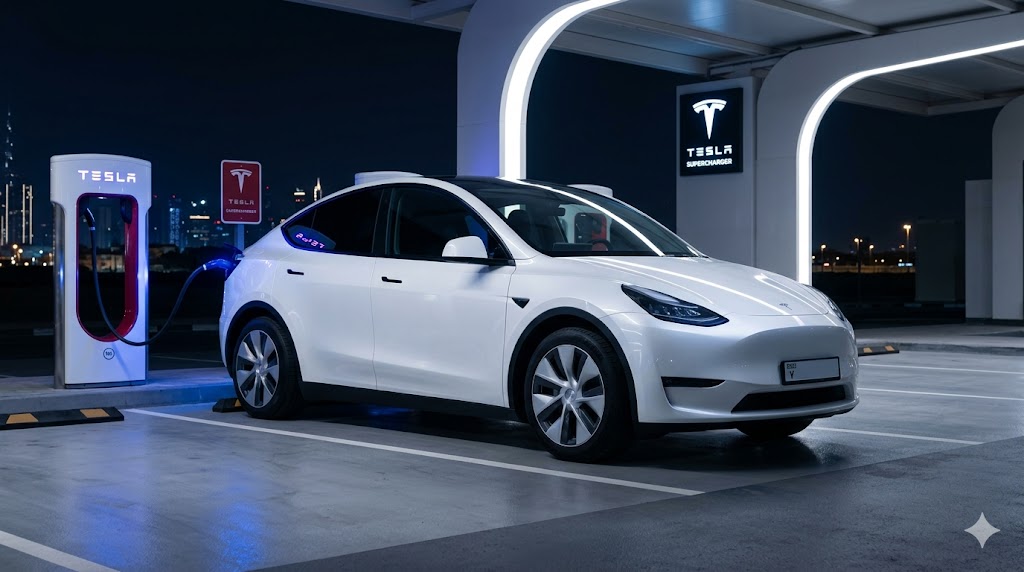
Charging speed and the underlying 800-volt architecture carry over from the standard EV6, so road-trip charging stops remain relatively quick by class standards even if you'll be stopping more often given the reduced range. It's a reasonable compromise for a car whose reason for existing has little to do with maximizing efficiency in the first place.
Interior and Tech: Familiar EV6 DNA
Step inside and the GT doesn't reinvent the EV6's cabin, and that's mostly a good thing given how well-regarded the standard car's interior already is. The dual-curved display setup, the clean dashboard layout, and the EV6's generally strong ergonomics carry over largely intact, giving GT buyers the same functional, tech-forward experience as the rest of the lineup. Sport-specific seats with more aggressive bolstering show up to keep occupants in place during the kind of cornering and acceleration this car is capable of, and GT-specific trim details and drive-mode readouts remind you which variant you're sitting in, but the fundamental architecture of the interior is shared with more affordable EV6 trims rather than being a bespoke performance-cabin experience.
This carryover approach means GT buyers aren't paying a premium for a dramatically different interior experience, just a faster car wrapped in the same well-executed cabin. Whether that reads as smart platform efficiency or a missed opportunity for something more special probably depends on how much you value interior distinctiveness in a halo performance model.
Who This Car Is Actually For
The EV6 GT makes sense for a specific buyer: someone who wants genuine, startling performance in a practical crossover body, who's cross-shopping against other high-performance EVs from brands with far pricier badges, and who's willing to accept reduced range and efficiency as the cost of admission. If you're the kind of driver who gets genuine joy out of launching hard and carving a back road with real urgency, and you don't need maximum range for your typical driving pattern, this car delivers an experience that punches well above its brand positioning.
For most people, though, the standard EV6 remains the smarter choice. It offers the same fundamentally good interior, the same fast-charging architecture, and genuinely quick, satisfying acceleration for everyday driving without sacrificing range or paying for a suspension tune and brake package built for a kind of driving most owners will rarely explore. The GT is a specialist's car hiding inside a family crossover, and specialists should buy it enthusiastically. Everyone else should save the money and the range, and get the version of this car built for the other 95 percent of driving.
Key Takeaways The EV6 GT's 577-horsepower dual-motor setup delivers startling, immediate acceleration that feels more dramatic in person than the number suggests. All-wheel drive is essential to putting that power down cleanly, keeping launches controlled rather than turning into wheelspin. Stiffer suspension and bigger brakes give the GT genuine chassis composure to match its straight-line speed, not just a power bump. Range and efficiency take a real hit compared to standard EV6 trims, the honest cost of this much performance. The interior carries over largely unchanged from the standard EV6, meaning GT buyers get familiar tech and ergonomics rather than a bespoke performance cabin. Bottom line: buy the GT if outright performance is the priority and range is a secondary concern; otherwise the standard EV6 remains the smarter everyday choice.