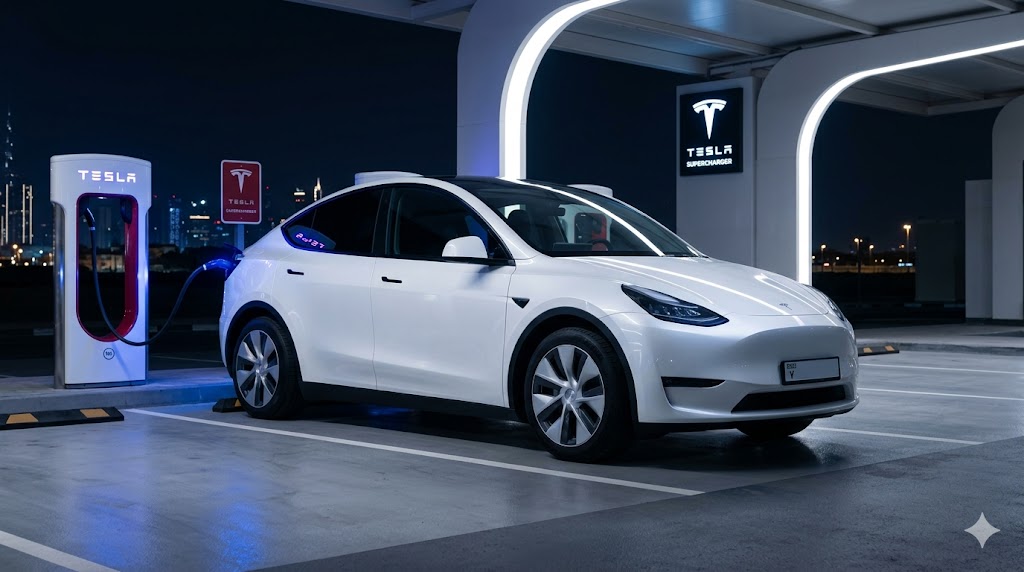
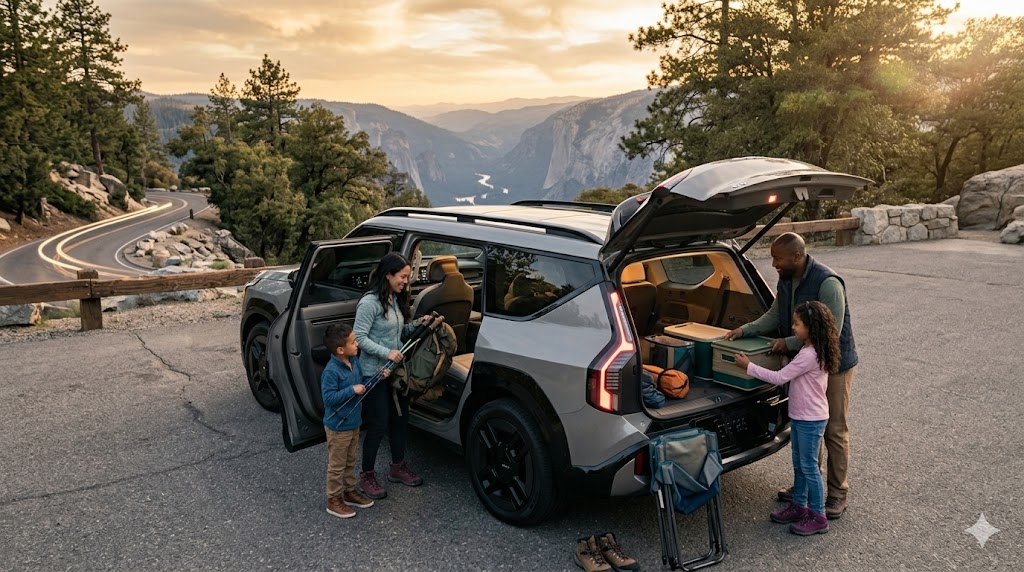
Plug in the 2025 Hyundai Tucson Plug-in Hybrid every night in your garage, and something quietly changes in how you own the vehicle. Your daily commute, school runs, and grocery loops stop touching the gas tank almost entirely. You start measuring your driving in electrons instead of gallons, and the fuel pump becomes something you visit for road trips rather than a weekly ritual. That shift is the entire case for this vehicle, and it's a case built on habits, not horsepower.
The Tucson PHEV pairs a turbocharged four-cylinder engine with an electric motor and a larger battery pack than the standard hybrid, giving it a meaningful all-electric range that covers most short errands and average one-way commutes without burning a drop of gasoline. The catch, and it's a real one, is that this advantage only materializes if you actually plug in. A Tucson PHEV driven like a regular hybrid and never charged will still get you decent fuel economy once its battery depletes, but you'll have paid a real price premium for a battery you're not using. This review is about the math behind that premium, and when it tips in your favor.
The Real Math: PHEV vs. Standard Hybrid vs. Gas
Here's the practical scenario that decides whether the plug-in makes financial sense: a driver with a daily round-trip commute short enough to be covered mostly or entirely by the battery, who has consistent access to charging at home or work. For that driver, the Tucson PHEV can turn the majority of weekday driving into electric miles, with the gasoline engine reserved for longer trips, highway stretches, or the occasional day charging isn't possible. Over a year, that pattern adds up to a dramatic reduction in fuel purchases compared with either the standard Tucson Hybrid or the base gas Tucson, both of which burn fuel on every single mile regardless of how short the trip.
The comparison gets less flattering, though, for a driver who can't charge reliably. Without regular access to a plug, you're essentially driving a heavier, more expensive hybrid that carries around a bigger battery it rarely gets to use to full advantage. In that case, the standard Tucson Hybrid is almost always the smarter buy: it delivers strong fuel economy, costs less upfront, and doesn't ask anything of your daily routine. The PHEV's ownership-cost advantage isn't inherent to the drivetrain — it's conditional on your charging behavior, which is exactly why "smart charging" is the operative phrase and not just a marketing tagline.
Where the numbers tend to work out best is the classic suburban or urban commuter profile: predictable daily mileage, a driveway or carport, and occasional longer weekend drives. That's the household most likely to recoup the PHEV's higher sticker price over a few years of ownership through fuel savings alone, before even factoring in incentives. If your driving is mostly long highway hauls or you park on the street with no charging access, the premium is harder to justify, and you should be honest with yourself about that before signing.
Charging Practicalities: Level 2 vs. the Wall Outlet
Charging the Tucson PHEV doesn't require anything exotic, but your setup materially affects how much of that ownership-cost advantage you actually capture. Plugging into a standard household outlet works and is better than nothing, but it's slow enough that you may not fully replenish the battery overnight, especially if you drive more than a short commute or forget to plug in immediately after arriving home. A dedicated Level 2 home charger, by contrast, can typically top off the battery in a couple of hours, which makes it far easier to start every single day with a full charge and maximize electric-only miles.
That Level 2 setup isn't free — installation costs vary depending on your home's electrical panel and how far the charger sits from it — and it's a cost worth folding into your total ownership calculation rather than treating as a footnote. Some buyers find that workplace charging, if available, reduces the urgency of a home installation. Others discover that a standard outlet is genuinely sufficient because their commute is short enough that a partial overnight charge covers it. The point is that charging infrastructure is not a one-time checkbox; it's an ongoing variable that determines whether you're actually living the low-fuel-cost lifestyle the PHEV makes possible, or just carrying its extra weight and price tag without the payoff.
Incentives and Taxes: Real Money, But Verify Before You Count On It
Plug-in hybrids like the Tucson PHEV have historically qualified for federal and state incentives that can meaningfully offset the price premium over the standard hybrid, and in some regions those incentives extend to reduced registration fees, HOV lane access, or utility rebates for home charging equipment. These programs matter enough to the ownership-cost equation that they deserve real research before you buy, not a vague assumption that "there's probably a tax credit."
Here's the balanced reality: incentive rules are genuinely complicated and they change. Eligibility can depend on your income, the vehicle's price, where it was assembled, battery sourcing requirements, and whether you're buying or leasing — and those rules have shifted multiple times in recent years at the federal level, with state and local programs adding their own layers on top. Because this article is general automotive commentary and not tax advice, verify current federal and state incentive eligibility through official government sources or a tax professional before you factor a specific dollar figure into your purchase decision. Treat any incentive as a pleasant bonus to confirm, not a guaranteed discount to bank on.
Warranty and Reliability as Hidden Ownership-Cost Factors
Total cost of ownership isn't just fuel and purchase price — it's also what happens when something breaks, and this is where Hyundai has built real goodwill. The brand's warranty coverage remains among the strongest in the mainstream class, with powertrain protection that extends well beyond what most competitors offer, plus separate coverage for the hybrid battery components that typically runs even longer. For a vehicle with the added mechanical complexity of a plug-in hybrid system — engine, electric motor, larger battery, and the software managing them together — that extended coverage is a meaningful hedge against the exact kind of expensive repair bills that can quietly erode any fuel savings you've banked.
Reliability data on plug-in hybrids generally, and the Tucson PHEV specifically, tends to lag behind simpler gas-only powertrains simply because there are more systems that can theoretically need attention. In practice, most owners report the added complexity is invisible day to day; the vehicle drives like a hybrid with a bigger battery, not like a science experiment. Still, factor routine maintenance costs and the eventual out-of-warranty repair risk into your long-term ownership math rather than assuming the PHEV is maintenance-free simply because it sips less gas.
Resale Value and the Used-PHEV Market
Resale is the piece of the ownership equation that's hardest to predict, and it's worth going in with realistic expectations. Plug-in hybrids as a category have had a mixed resale history — some hold value well because demand for efficient, incentive-eligible vehicles stays strong, while others depreciate faster than expected once buyers realize a used PHEV's tax incentives typically don't transfer and its battery is a few years further into its life cycle. The Tucson PHEV benefits from riding on Hyundai's broadly improved reputation for quality and design, which has helped resale values across the lineup, but plug-in variants specifically remain a smaller, less liquid slice of the used market than mainstream gas or standard-hybrid trims.
If resale value is a major part of your financial planning, cross-shop recent used listings for outgoing Tucson PHEV model years to see how they've actually depreciated, rather than assuming the math will mirror the gas model or the standard hybrid.
Trade-offs and Daily Driving Feel
None of this ownership-cost advantage is free of compromise. The PHEV's larger battery pack eats into cargo space compared with the standard hybrid and gas Tucson, which matters if you regularly haul gear, strollers, or cargo to capacity. The purchase price premium is real and needs to be weighed against your specific charging access and commute pattern rather than assumed away. And the day-to-day driving experience, while smooth and notably quiet in electric mode with confident acceleration when the gas engine joins in, asks a small behavioral commitment from you: plugging in isn't hard, but it is a habit you have to actually build and keep.
For the right household — predictable short commutes, reliable charging access, and a multi-year ownership horizon — the Tucson PHEV's combination of reduced fuel spend, strong warranty protection, and potential incentives can add up to a genuinely lower total cost of ownership than either the standard hybrid or the gas Tucson. For everyone else, the standard Tucson Hybrid remains the more straightforward, less conditional value.
Key Takeaways
The Tucson PHEV's ownership-cost advantage is conditional on charging habits, not automatic — regular home or workplace charging is what turns the higher purchase price into real savings. Drivers with short, predictable commutes and reliable charging access stand to gain the most; without consistent charging, the standard Tucson Hybrid is usually the smarter financial choice. A Level 2 home charger maximizes electric-only miles and captures more of the fuel savings than a standard household outlet, though it adds its own installation cost to weigh. Hyundai's strong warranty coverage, including extended hybrid battery protection, meaningfully reduces the long-term repair-cost risk that comes with the PHEV's added mechanical complexity. Federal and state incentives can offset the price premium substantially, but eligibility rules are complex and change frequently — verify current qualification through official sources before counting on a specific figure. Bottom line: choose the Tucson PHEV if you can charge consistently and plan to keep it several years; choose the standard Hybrid if charging access is uncertain or cargo space matters more than electric range.