Most plug-in hybrid crossovers give you just enough electric range to feel like a novelty — a few miles of quiet running before the gas engine inevitably kicks in. The 2025 Hyundai Santa Fe Plug-in Hybrid is built around a different idea: give owners enough battery-only range that the gas engine becomes optional for the bulk of their driving. Among compact and midsize PHEV crossovers, the Santa Fe PHEV has positioned itself at or near the top of the class for EV-only range, and that single spec changes how you actually live with the vehicle day to day.
Why Electric-Only Range Is the Number That Matters Here
Automakers love to advertise combined MPG figures for plug-in hybrids, and on paper those numbers look spectacular — triple-digit MPGe ratings that make a Santa Fe PHEV look like it sips fuel. But that combined number is a bit of a mirage unless you understand how it's calculated: it assumes a mix of electric and gas driving based on a standardized test cycle, not your actual commute. For most owners, the number that actually predicts your day-to-day experience is the EPA-rated all-electric range, and that's exactly where the Santa Fe PHEV separates itself from rivals like the Toyota RAV4 Prime, Kia Sportage PHEV, and Ford Escape PHEV.
You should check the current EPA-rated electric range for your specific trim before buying, since these figures can shift with model-year updates and options, but the qualitative story is consistent: the Santa Fe PHEV is engineered to cover a genuinely useful stretch of daily driving on electrons alone, not just a token few miles. If your commute, school run, and errands fit within that electric range — which for a large swath of American commuters they will — you could go days or even weeks between fill-ups, using the battery as your primary power source and the 1.6-liter turbocharged engine as a backup for longer excursions.
That's the real value proposition of a class-leading electric range: it flips the fuel economy conversation. Instead of asking "how many miles per gallon does this get," you start asking "how many miles per charge do I need, and how often do I actually touch the gas pedal." For a lot of Santa Fe PHEV owners, the answer is going to be "rarely," at least around town.
Charging Behavior and What a Level 2 Setup Actually Buys You
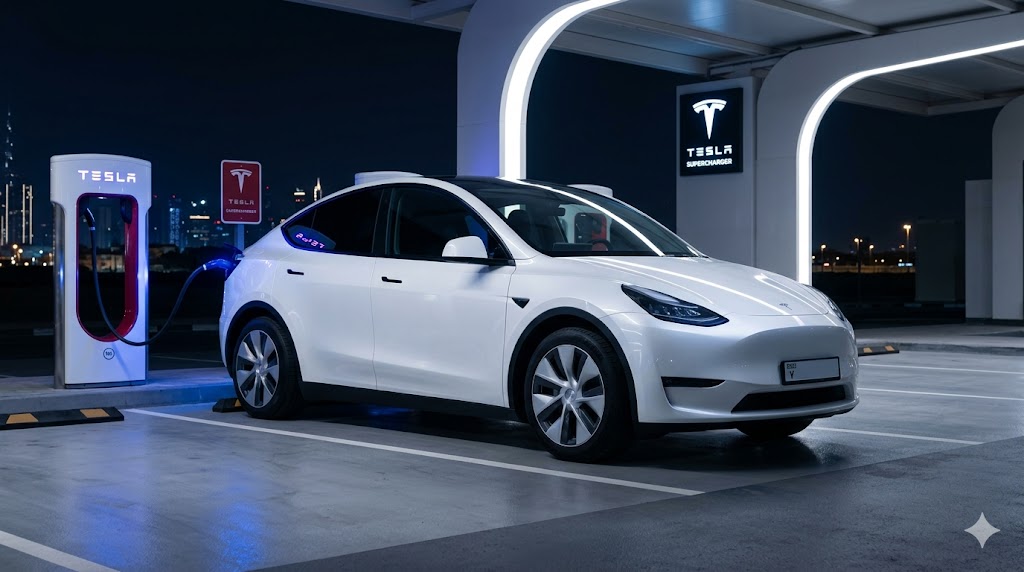
None of this works, though, without a plan for recharging, and this is where buyer expectations need to be realistic. The Santa Fe PHEV's battery pack is sized to deliver that strong electric range, but it also needs to be replenished regularly to keep paying off. Plugged into a standard household 120-volt outlet, a full charge can take the better part of a day or longer — workable if you plug in every night and never need a quick turnaround, but not ideal if your schedule is unpredictable.
A Level 2 home charger, or reliable access to one at your workplace, changes the equation substantially. Hyundai designed the PHEV's battery to top up in a reasonably quick window on 240-volt Level 2 service, turning an overnight or workday charge into a routine rather than a chore. This is worth stressing because it's the single biggest variable in whether you'll actually realize the range advantage this vehicle is known for. If you live in an apartment without charging access, or your workplace parking lot has zero EV infrastructure, you're buying a heavier, more expensive hybrid that spends most of its life running on gasoline anyway — which defeats the purpose. Confirm your charging situation before you confirm your order.
How the Range Holds Up in Cold Weather and at Highway Speed
EPA electric-range ratings are measured under controlled conditions, and real-world range on any plug-in vehicle — Santa Fe included — will flex based on temperature, speed, and how you drive. Cold weather is the most common culprit for reduced electric range: battery chemistry is less efficient when temperatures drop, and cabin heating draws power that would otherwise go toward propulsion. Expect a noticeable dip in how many miles you get per charge during winter months compared to a mild spring day, a trait shared by every plug-in hybrid and EV on the market, not a Santa Fe-specific flaw.
Highway speed matters too. Electric-only range figures tend to reflect a mix of city and highway driving, but sustained high-speed cruising draws down a battery faster than stop-and-go city miles, where regenerative braking helps claw back energy. If your daily drive is mostly surface streets at moderate speeds, you'll likely get closer to or beyond the rated range. If it's 70 mph interstate driving the whole way, plan for somewhat less. None of this erases the Santa Fe PHEV's class-leading position — it simply means the "best-in-class" range should be understood as a strong baseline, not a guarantee under every condition.
Driving Feel: Blending Gas and Electric Power
On the road, the Santa Fe PHEV's drivetrain is engineered to make the transition between electric and gas power as unremarkable as possible, which is exactly what you want from a plug-in hybrid. Under light throttle and around-town speeds, the vehicle defaults to electric propulsion, and the cabin stays notably quiet. Ask for more power — merging onto a freeway, passing on a two-lane road — and the turbocharged four-cylinder engine joins in smoothly, with the electric motor's instant torque helping mask any lag from the gas side.
The added battery weight is noticeable in a way that's hard to fully hide: the Santa Fe PHEV carries more mass than the standard hybrid or gas-only Santa Fe, and that heft is most apparent in quick direction changes or aggressive cornering, where the extra pounds sitting low in the chassis ask the suspension to work a bit harder. Most buyers cross-shopping this segment aren't chasing sports-sedan handling, though, and the tradeoff of a lower center of gravity from the battery placement does help offset some of that added weight in everyday driving. Hyundai offers this PHEV alongside a standard hybrid Santa Fe and conventional gas versions, so if driving dynamics and weight are a bigger priority for you than maximum electric range, it's worth cross-shopping those siblings before committing to the plug-in.
Cargo Space, Interior Trade-Offs, and Where the Battery Lives
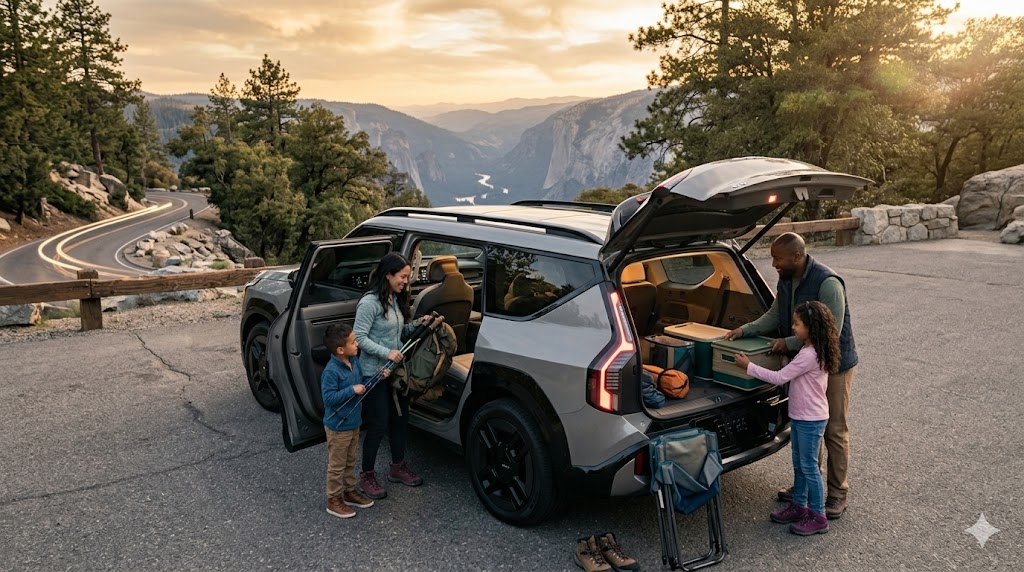
The Santa Fe PHEV's battery pack is mounted under the cargo floor, which is the right place for it from a packaging and safety standpoint, but it isn't entirely free. Compared to the non-plug-in Santa Fe hybrid and gas variants, expect some reduction in cargo volume and, on some configurations, a slightly raised load floor. For families who regularly pack the Santa Fe to its limits with strollers, sports gear, or luggage for road trips, this is a real consideration worth measuring against your own cargo habits rather than dismissing as a minor footnote.
The upfront cost is another honest trade-off. The Santa Fe PHEV carries a higher sticker price than the standard hybrid trim, reflecting the larger battery and plug-in charging hardware. Federal and state incentives may offset some of that gap depending on your location and current eligibility rules, so it's worth checking what applies to you at the time of purchase rather than assuming a number from a headline. Whether the premium pencils out depends heavily on how much of your driving you can actually run on electricity — which loops back to the charging-access question above. A buyer with a home charger and a short commute will realize far more value from the plug-in premium than someone who'll be running on gas most of the time anyway.
What Happens Once the Battery Runs Dry
It's worth setting expectations for road trips and longer drives, because this is where the Santa Fe PHEV's story shifts. Once the battery depletes, the vehicle operates as a conventional hybrid, and here the extra battery weight works against you: the gas engine now has to haul around a heavier vehicle than the standard hybrid Santa Fe, which can result in somewhat lower fuel economy on sustained highway trips once you're off battery power. This isn't a defect — it's simply physics — but it does mean the PHEV's efficiency advantage is front-loaded into your electric-range miles, not spread evenly across every mile you'll ever drive. For buyers whose driving is a mix of short electric-friendly trips and occasional long highway hauls, the standard hybrid Santa Fe might actually deliver more consistent real-world efficiency across the board, even though it lacks any electric-only capability. Choosing between them really is a question of matching the vehicle to your specific driving pattern rather than assuming the plug-in is automatically the more efficient choice in every scenario.
- The 2025 Santa Fe PHEV's headline strength is a best-in-class electric-only range among compact/midsize PHEV crossovers, letting many owners handle daily commuting almost entirely on electricity.
- That range advantage only pays off with reliable Level 2 charging access at home or work; without it, you're mostly driving a heavier gas-powered Santa Fe.
- Real-world electric range will dip in cold weather and at sustained highway speeds compared to EPA ratings, so treat published figures as a strong baseline rather than a guarantee.
- Once the battery depletes, the extra weight of the battery pack can make the PHEV less fuel-efficient than the standard hybrid Santa Fe on long highway trips.
- Expect a cargo space reduction and a higher purchase price relative to the non-plug-in hybrid, trade-offs that matter more if you rarely plug in.
- Bottom line: if you have consistent charging access and a commute that fits within the electric range, the Santa Fe PHEV is one of the smartest plug-in crossover buys on the market; if you don't, the standard hybrid is the more sensible choice.