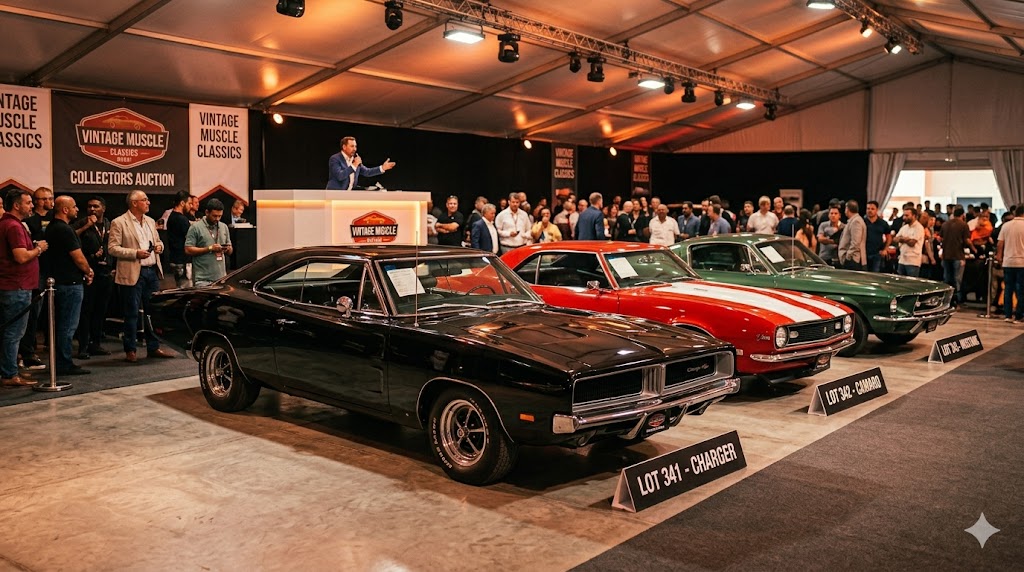
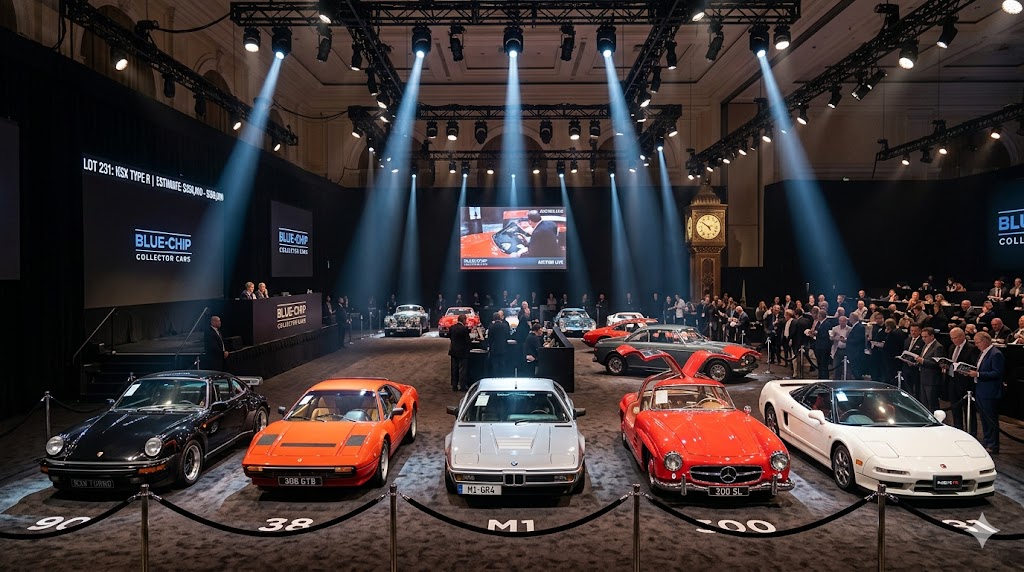
Walk any auction floor today and you'll notice something that would have seemed unthinkable three years ago: cars are actually going unsold. Bidding stalls below reserve. Consignors who expected a bidding war watch paddles stay down. After a pandemic-era run that turned garages into investment portfolios and turned casual collectors into overnight speculators, the classic car market has come back to earth. Broad market indices that track collector vehicle values have reportedly pulled back from their 2022 highs, with some trackers citing declines in the mid-teens percentage range. For anyone who bought at the top expecting the line to keep going up, that's a hard number to sit with. For everyone else, it's worth understanding exactly why it happened.
The Perfect Storm That Built the 2022 Peak
To understand the drop, you have to understand the climb, because the two are mirror images of each other. Between 2020 and 2022, the classic car market absorbed a wave of money that had nowhere else obvious to go. Interest rates sat near zero for an extended stretch, which meant the traditional havens for cash — savings accounts, money market funds, short-term bonds — offered next to nothing in return. When safe assets pay you almost nothing, capital goes looking for yield and excitement elsewhere, and tangible collectibles were an obvious beneficiary. Classic cars joined watches, sneakers, art, and trading cards in a broader "alternative asset" enthusiasm that swept through households with excess savings and few places to spend it.
Stimulus payments and pandemic savings added fuel directly. With travel curtailed, restaurants closed, and entertainment options narrowed to whatever could happen at home or in a garage, a lot of disposable income that would normally have gone toward experiences instead went toward objects. Remote work compounded this in a specific way: people who no longer commuted, and who found themselves with unstructured time and a home office instead of a cubicle, rediscovered garages, driveways, and weekend projects. A classic car wasn't just a purchase — it was a hobby, a distraction, and in many buyers' minds, an investment that could plausibly beat a bond yield of essentially zero.
That last piece mattered enormously. Low borrowing costs made financing a six-figure purchase feel almost painless, and a genuine belief took hold that certain cars — particularly limited-production models from the 1980s through the early 2000s — were the "next" blue chips. Speculative buying accelerated as newer entrants, some with little historical interest in cars beyond their appreciation potential, chased anything with a compelling story and a limited build number. Prices for these "instant classics" shot upward at a pace that outstripped anything resembling organic, enthusiast-driven demand. By 2022, the market had priced in an assumption that this appetite, and the cheap money underwriting it, would simply continue.
Why the Reversal Happened
It didn't continue, because the conditions that created it stopped existing. Central banks raised interest rates aggressively to fight inflation, and that single shift undid much of what had inflated the market in the first place. Financing a large discretionary purchase suddenly cost meaningfully more, which either priced out buyers who needed a loan or made them think twice about tying up capital in a depreciating hobby asset. At the same time, safe assets became competitive again. When a savings account or short-term Treasury pays a real, attractive yield, the incentive to chase a speculative collectible weakens considerably — why take on the risk, storage costs, and illiquidity of a car when you can earn a solid return doing nothing?
Inflation itself squeezed the other side of the equation. Even buyers who weren't relying on financing found their discretionary budgets tighter, as everyday costs rose and made big optional purchases feel less comfortable. Layer onto that a simple, human dynamic: enthusiasm normalizes after a speculative run. The buyers who entered the market purely because prices were rising had little reason to stay once prices stopped rising, and their exit removed a source of demand that had been propping up the top of the market. None of this required a scandal or a single triggering event — it was the ordinary unwinding of a market that had been inflated by unusually cheap money and unusually restless capital, both of which have since gone back to normal.
Not All Classics Are Feeling It Equally
The pullback has not been distributed evenly, and that unevenness tells you a lot about what actually happened during the boom. The cars that got hit hardest tend to be the ones that were driven by hype rather than history — limited-run modern performance cars marketed heavily as future collectibles, or vehicles that shot up in value largely because of social media attention and speculative flipping rather than any deep, longstanding enthusiast base. These cars rode up fastest on froth, and they're coming down fastest now that the froth has cleared.
By contrast, genuinely blue-chip material — pre-war classics with real provenance, iconic models with decades of established collector demand, and cars whose significance rests on history rather than hype — has generally proven far more resilient. That's not a coincidence. Buyers of these cars tend to be longtime enthusiasts with deep knowledge of the market, not opportunists looking for a quick flip, and that kind of demand doesn't evaporate just because interest rates moved. The lesson embedded in this divergence is one the market seems to relearn every cycle: speculative money is fast in and fast out, while genuine passion for a car's history and character tends to hold steady through the cycle.
What This Means If You're Buying or Selling Right Now
If you're a seller who bought near the top hoping to flip for a profit, the current environment is genuinely difficult, and there's no way to sugarcoat that. Reserves are getting missed, and the easy-money exit that seemed available in 2021 and 2022 simply isn't there anymore. Patience, realistic pricing, and a willingness to hold rather than sell into a soft market are the only real levers available.
If you're a buyer, though, particularly one who actually wants to own and drive the car rather than flip it, this is arguably one of the more sensible windows in years to transact. Softer prices mean less competition at auction, more room to negotiate on private sales, and less pressure to overpay just to secure a car before the market moves further away from you. It's worth noting plainly that none of this constitutes financial or investment advice — this is general commentary on market conditions, and anyone treating a car purchase as a financial decision should weigh their own circumstances and, if needed, talk to a professional who knows their full financial picture.
Correction or the Start of Something Longer?
Nobody can tell you with certainty which this is, and you should be skeptical of anyone who claims otherwise. It's entirely plausible that this is a healthy, overdue correction — a market shedding the excess that speculative money and cheap financing had built into it, after which genuine collector demand reasserts itself and values stabilize at a more sustainable level. It's also plausible that softness persists for longer, particularly if interest rates remain elevated and discretionary spending stays constrained across the broader economy. The honest answer is that collector car values, like most asset markets, respond to macro conditions that are themselves genuinely uncertain right now.
What can be said with more confidence is that a pullback after a speculative spike is not automatically a bad thing for the market's long-term health. A market where prices are driven primarily by genuine appreciation for a car's history, engineering, and character — rather than by cheap money chasing the next flip — is arguably a more credible and durable one. The pandemic-era boom pulled in a lot of buyers who were never really enthusiasts, and their departure, while painful for anyone who bought at the peak, may leave behind a market that better reflects what these cars are actually worth to the people who love them.
Key Takeaways
- The 2022 peak in classic car values was driven by near-zero interest rates, pandemic savings, remote-work leisure spending, and a broader rush into alternative assets as cash and bonds offered little return.
- Higher interest rates since then have raised the cost of financing big purchases and made safe assets attractive again, while inflation squeezed the discretionary budgets that fueled speculative buying.
- The decline has hit speculative, hype-driven "instant classics" hardest, while blue-chip pre-war and historically significant models have generally held up better.
- Sellers who bought near the top hoping to flip are facing a genuinely tough market, while genuine enthusiast-buyers may find this a more reasonable window to purchase.
- Nobody can say for certain whether this is a short-term correction or a longer downturn, and this article is general market commentary, not financial or investment advice.
- Bottom line: the pullback looks like a normalization after a speculative run rather than a collapse of the classic car market's fundamental appeal, but treat any near-term prediction with caution.