For most of the last five decades, "compact luxury sedan" was practically synonymous with the BMW 3 Series — it defined the segment's benchmark for balanced handling and driver engagement so thoroughly that competitors were routinely measured against it rather than against each other. Then the Model 3 arrived and did something unusual: it didn't try to out-3-Series the 3 Series on the terms BMW had set. It redefined what a chunk of that buyer pool actually wanted, betting that instant electric acceleration, a radically simplified interior, and over-the-air software updates mattered more to a meaningful slice of luxury sedan shoppers than a limited-slip differential and a manual shift mode ever would. Both bets have paid off, and that's exactly why this comparison doesn't resolve into an easy winner.
The two cars aren't really competing on the same axis, and pretending otherwise does a disservice to shoppers trying to decide between them. One is a traditional, gas-powered sport sedan refined over generations of iterative engineering; the other is an electric vehicle that happens to compete in the same size and price bracket while operating on an entirely different set of assumptions about what a car's interior, ownership experience, and performance character should look like.
Acceleration and Performance Character Are Genuinely Different Experiences
The Model 3's electric powertrain delivers power immediately and without the delay of gear changes, which produces a distinctly different sensation of speed than even a well-tuned turbocharged gas engine can match off the line. Higher-performance Model 3 variants in particular have earned a reputation for genuinely startling acceleration that outpaces gas-powered rivals costing considerably more. That said, straight-line speed isn't the whole performance story, and this is where the 3 Series still holds real appeal for driving enthusiasts.
BMW's chassis tuning, steering feel, and the more traditional, communicative feedback of its platform have long been considered class benchmarks, and the 3 Series continues to reward a driver who cares about how a car communicates through a corner, not just how quickly it gets to highway speed. The Model 3 handles competently and its low center of gravity, courtesy of the floor-mounted battery pack, gives it genuinely good stability in corners, but most reviewers still give the nod to the 3 Series for outright steering feel and the kind of engagement that's historically defined this segment. Which of these matters more to you says a lot about which car you'll prefer to actually drive rather than just own.
Interior Philosophy Splits Buyers More Than Any Other Factor
Step into a Model 3 and you'll find one of the most minimalist interiors in the entire auto industry — nearly every function, from climate control to mirror adjustment, is routed through the central touchscreen, with almost no physical buttons on the dashboard. Some buyers find this refreshingly clean and modern; others find it genuinely frustrating for basic tasks that used to take a single button press, like adjusting the direction of an air vent, and now require navigating a menu. This is a decision point worth testing extensively in person before buying, since it's not something you'll adjust to universally, and reactions to it are strongly polarized between owners who love it and those who eventually find it tiresome.
The 3 Series retains a more conventional luxury car layout, with physical controls for climate and key functions alongside its own touchscreen, and generally uses richer, more traditional materials that lean into a classic sense of luxury craftsmanship. For buyers who want their premium car to feel unmistakably premium through tactile detail — stitched leather, metal-finish switchgear, a familiar control layout — the BMW's approach will likely feel more satisfying day to day, even if it's less novel than Tesla's screen-first design.
Ownership Experience Diverges Sharply Around Fueling and Maintenance
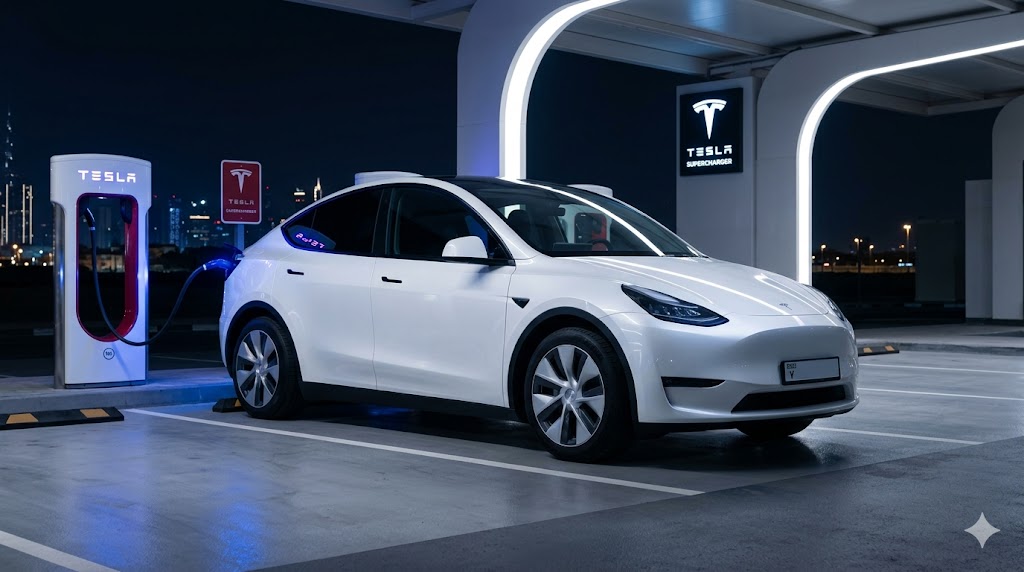
This is where the comparison stops being about driving dynamics entirely and becomes a question about your daily logistics and infrastructure. The Model 3, as a fully electric vehicle, requires access to charging, whether through home charging equipment or public charging infrastructure, and Tesla's own Supercharger network has generally been regarded as one of the more reliable and extensive fast-charging networks available, which meaningfully reduces road-trip anxiety compared to some other EVs on the market. Electric vehicles also generally require less routine maintenance than gas-powered cars, since there's no oil to change and fewer moving parts in the drivetrain overall, though tire wear can be a real consideration given the instant torque and additional weight of the battery pack.
The 3 Series requires the traditional gas-car ownership routine — regular oil changes, more complex drivetrain maintenance over time — but offers the simplicity of refueling anywhere with a gas station, with no dependency on charging infrastructure or planning around charge time on longer trips. For buyers without reliable home charging access, or who frequently take long road trips through areas with sparser charging infrastructure, this remains a legitimate practical consideration in the Model 3's column, even as charging networks have expanded significantly.
Technology and Software Approach Reflect Two Different Eras of Car-Making
Tesla's approach to over-the-air software updates, which can add features or improve performance characteristics after purchase without a dealer visit, represents a genuinely different ownership model than the traditional automotive industry has offered. This has become one of the Model 3's most distinctive selling points, since the car can meaningfully evolve after you've bought it. BMW has expanded its own over-the-air update capabilities in recent years, narrowing this gap somewhat, but Tesla's execution and the breadth of what it updates remotely is still generally considered more extensive.
BMW counters with its own strengths in driver-assist technology and infotainment polish, and its iDrive system, refined over many generations, is generally well regarded for balancing touchscreen functionality with physical controls in a way some owners find more usable day to day than Tesla's touchscreen-only approach.
Resale Value and Long-Term Cost Considerations
Both vehicles have shown reasonably strong resale value within their respective categories, though EV resale value as a category has shown more volatility in recent years than traditional gas-powered luxury sedans, partly tied to shifts in EV pricing, incentive availability, and rapid technology iteration. Specific current pricing, incentive eligibility, and resale projections should be checked directly at the time of shopping, since these figures move more quickly for EVs than for established gas-powered nameplates.
Which One Actually Fits You
Choose the Model 3 if you want genuinely quick acceleration, lower running costs, a minimalist tech-forward interior, and you have reliable access to charging. Choose the 3 Series if you want a more traditional luxury driving experience with richer physical materials, class-leading steering feel, and the simplicity of gas-station refueling without any charging logistics to plan around. Both are excellent at being exactly what they set out to be — this comparison rewards knowing which experience you actually want, not searching for an objective winner that doesn't exist.
Key Takeaways
- The Model 3 offers immediate, often startling acceleration, while the 3 Series still generally wins on steering feel and traditional handling engagement.
- Tesla's minimalist, touchscreen-dominant interior polarizes buyers, while BMW retains more physical controls and richer traditional materials.
- EV ownership brings lower routine maintenance but requires reliable charging access, while the 3 Series offers familiar gas-station simplicity.
- Tesla's over-the-air update system remains more extensive than BMW's, though BMW has narrowed the gap in recent years.
- Resale value and incentive eligibility shift faster for EVs than for gas-powered luxury sedans, so verify current figures before buying.
- Pick based on which ownership experience and driving character you actually want, since both cars excel within their own distinct philosophies.