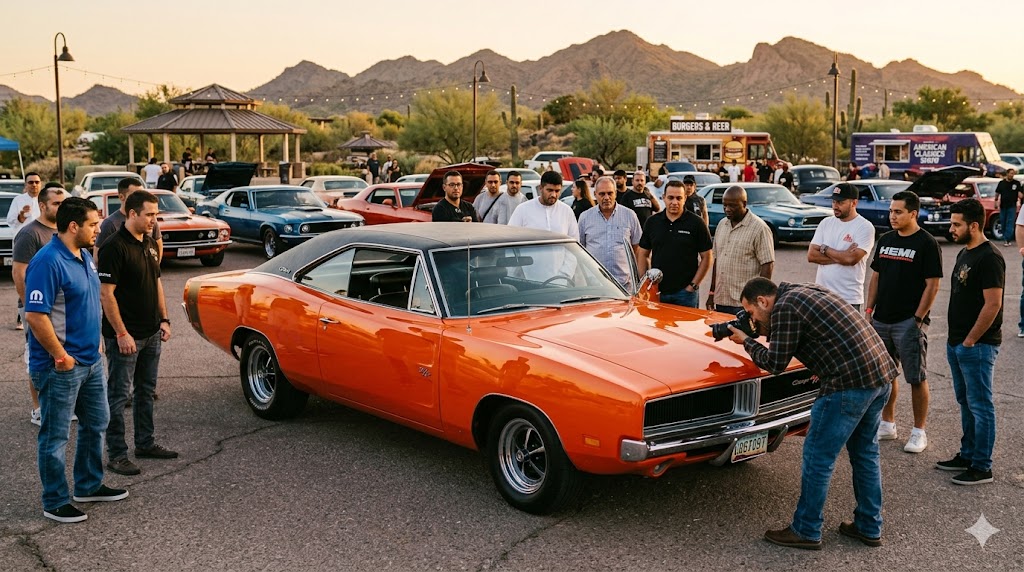
Put a dusty, faded, original-paint 1969 Camaro next to a glossy, obsessively rebuilt one on the same show field, and watch what happens. The crowd gravitates to the shiny car. The serious buyers linger at the dusty one, checking door jambs, flipping up the trunk mat, hunting for a build sheet stapled to the springs. That split reaction is the whole debate in miniature: restoration wins the room, but originality can win the argument, and increasingly, the money.
This isn't a new disagreement, but it has hardened into something closer to two separate markets with their own vocabulary, their own judging categories, and their own buyers. Understanding why a car with chipped paint and a worn driver's seat can outprice a flawless rotisserie restoration isn't intuitive, and it's exactly why the debate refuses to die.
What "Survivor" Actually Means, and Why It's Not Just "Old and Dirty"
The word gets thrown around loosely by sellers who simply mean "unrestored," but the collector hobby treats survivor status as a much narrower claim. A true survivor retains its original paint, original interior, and original major mechanical components, and it hasn't been substantially altered from how it left the factory. Honest wear is not just tolerated, it's the point. A worn steering wheel, a faded trunk liner, a bit of surface rust in a rocker panel, these are read as proof of authenticity rather than flaws to be corrected.
Organizations built entire judging frameworks around this idea. Bloomington Gold, the Corvette-focused event, popularized a formal "survivor" recognition alongside its more famous certification for correctness, explicitly separating cars that are original from cars that merely look correct because someone rebuilt them to spec. Other marque clubs and general muscle car shows have followed with their own original/unrestored classes, usually judged on different criteria than concours classes: instead of scoring flawless finish, judges look for factory markings, original fasteners, date-coded components, and evidence that the car hasn't been touched beyond routine maintenance. A car can lose points in a survivor class for looking too good, which is a strange sentence until you understand the logic. Perfection under this lens is suspicious.
Documentation Is the Currency That Actually Separates the Two Camps
Here's where the debate gets concrete rather than philosophical. A restored car is judged largely on execution: how well did the shop match factory paint codes, reproduce trim, and replicate assembly-line details. A survivor car is judged largely on paperwork and physical evidence, because the whole claim rests on proving nothing has been changed.
This is why terms like Protect-O-Plate, broadcast sheets, and build sheets carry so much weight in these transactions. A Protect-O-Plate, used by General Motors as a warranty and parts-reference card tied to a specific vehicle, helps confirm factory-installed options and production details when it survives with the car. Broadcast sheets and build sheets, the paperwork that traveled down the assembly line with a given chassis, list the options, colors, and equipment that were supposed to go on that car, and sometimes turn up tucked behind seats or inside door panels decades later. None of these documents guarantee anything by themselves, and buyers should always have claims cross-checked against the vehicle's actual trim tag, cowl tag, or VIN-decoded data rather than taking paperwork at face value. But when the physical car and the paper trail agree, you have something a restoration can never fully replicate: a continuous, verifiable chain of originality from the factory floor to your driveway.
A restoration, no matter how well documented with photos and receipts, is a story about what a shop did in year X. A survivor is a story about what the factory did, preserved. Collectors who prize authenticity aren't being sentimental snobs; they're recognizing that originality is a non-renewable resource. You can restore a car again next decade. You cannot un-restore one back to factory-original once it's been repainted and retrimmed.
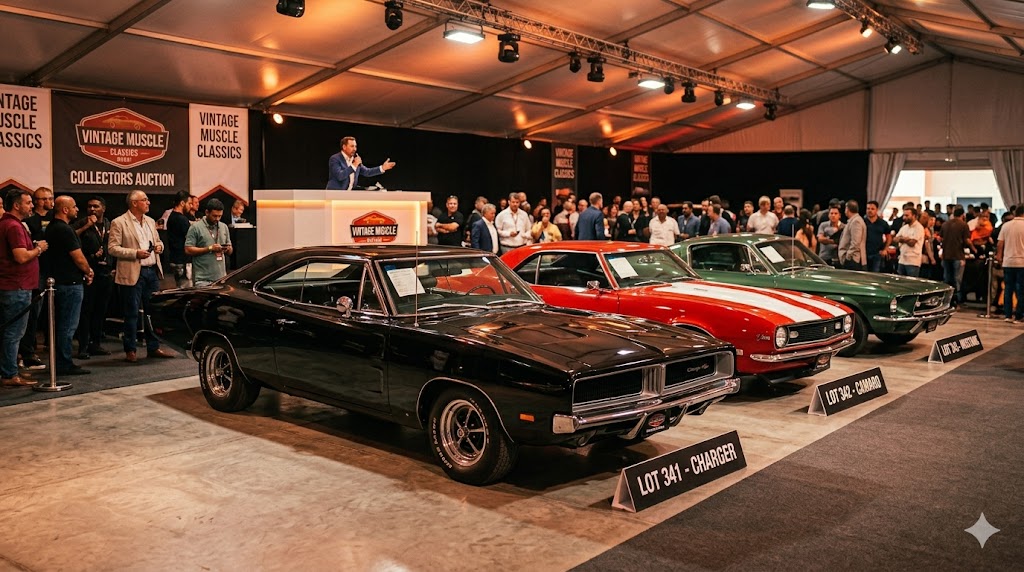
How This Plays Out at Auction
Auction results are where the abstract argument turns into hard numbers, though the pattern matters more than any specific sale price. Exceptional, well-documented survivors of significant models, especially low-mile examples with intact original paint and interior, routinely draw premiums over comparable restored cars of the same model and options. The reasoning bidders give is consistent: a great restoration can theoretically be repeated by anyone with enough money and the right shop, but an untouched 50-year-old car with matching numbers and original finish cannot be manufactured after the fact at any price.
That said, this premium isn't universal or automatic. A mediocre survivor, one with faded paint, a torn interior, and no documentation, will often lose to a beautifully executed restoration of the same model, because most buyers still want a car that looks good and drives well. The survivor premium tends to concentrate at the top of the market: rare options, low production numbers, exceptional documentation, and condition that's remarkable rather than merely intact. Buyers should check current auction results and price guides for the specific model they're chasing rather than assuming survivor status alone guarantees a number; the effect is real but it's concentrated, not evenly distributed across every dusty barn find.
The Over-Restoration Problem
Restoration shops face a temptation that the best ones resist and the worst ones don't: making a car better than it ever was from the factory. Panel gaps tighter than Detroit ever achieved, paint with a mirror depth no assembly line produced, chrome brighter than period-correct plating allowed. This is over-restoration, and it's increasingly recognized as a value problem rather than a badge of honor.
The issue is that over-restoration erases the very details that prove authenticity. A car with impossibly perfect panel fit raises the question of what got replaced or reshaped to achieve it. A trunk finished more smoothly than the factory ever bothered to finish it stops looking like a 1970 assembly line product and starts looking like a modern craftsman's fantasy of one. Judges in serious concours and correctness-focused classes have grown sharper about penalizing this, because the goal in correctness judging isn't "as good as possible," it's "as it left the factory," including the factory's actual sloppiness, overspray, and assembly marks. A shop that doesn't replicate those details isn't restoring the car; it's replacing it with a nicer-looking impostor wearing the original title.
This is also where the two camps talk past each other most. A buyer chasing visual perfection sees an over-restored car as the pinnacle of the hobby. A buyer chasing authenticity sees the same car as compromised, its history smoothed away along with its flaws.
Choosing Between Them: Driver, Investment, or Both
None of this means one path is objectively correct, because survivors and restorations serve different owners well. If you want to drive the car regularly, take road trips, and not flinch every time gravel kicks up near the rocker panels, a quality restoration or a well-sorted driver-quality car makes more sense. Original mechanical components on a 40- or 50-year-old survivor often need sympathetic attention regardless of how "original" they are, and a restoration gives you the chance to address safety-related wear items properly while retaining a period-correct look.
If your priority leans toward long-term value preservation and you have the patience to store, insure, and baby a car rather than use it hard, an exceptional, well-documented survivor is the harder asset to replace and the one likely to hold its distinct market position best. The catch is that genuine, high-quality survivors are scarce and only becoming scarcer as decades pass, so entry cost and the effort of authentication both run higher.
Many serious collectors end up owning both types for different reasons, treating the survivor as an appreciating, mostly static asset and the restoration as the car that actually earns its keep on weekend drives. That split isn't a cop-out; it's an honest acknowledgment that the survivor-versus-restored debate isn't really about which is better. It's about which job you're hiring the car to do.
Key Takeaways
- Survivor status refers narrowly to original paint, interior, and mechanicals with only honest wear, not simply an old, unrestored car.
- Judging programs like Bloomington Gold's survivor category and marque-club original classes reward unaltered factory evidence, sometimes penalizing cars that look "too perfect."
- Documentation such as Protect-O-Plates, broadcast sheets, and build sheets is the evidence that separates a credible survivor claim from a good story, and should always be cross-checked against the car itself.
- At auction, survivor premiums concentrate in rare, exceptional, well-documented examples rather than applying evenly to every unrestored car.
- Over-restoration, exceeding factory finish quality, can erase authenticity cues and hurt value among correctness-focused buyers even as it wins casual admiration.
- Bottom line: buy restored if you plan to drive and enjoy the car regularly, buy an exceptional documented survivor if long-term originality-driven value matters most, and don't assume either path is wrong for the other buyer's goals.