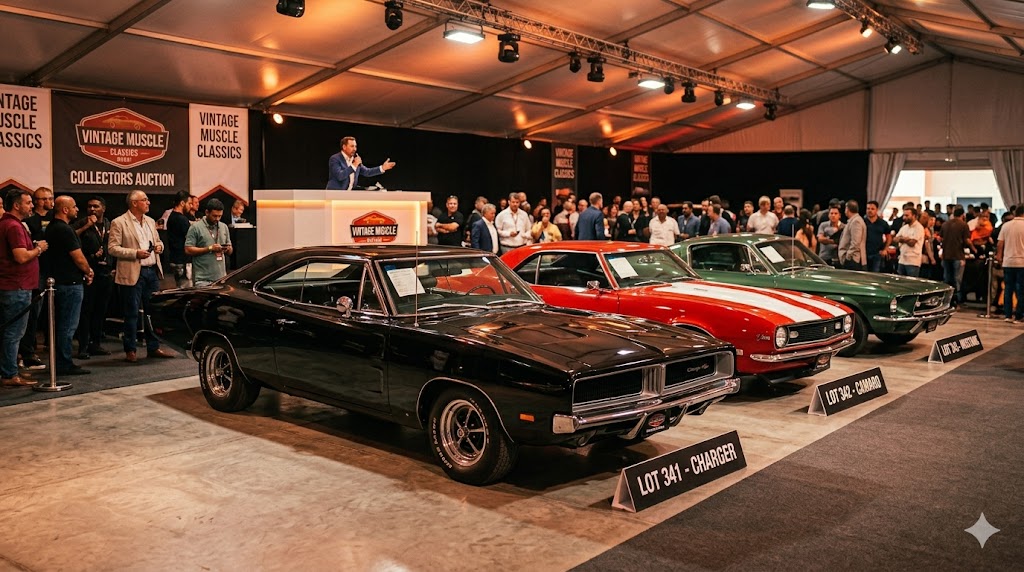
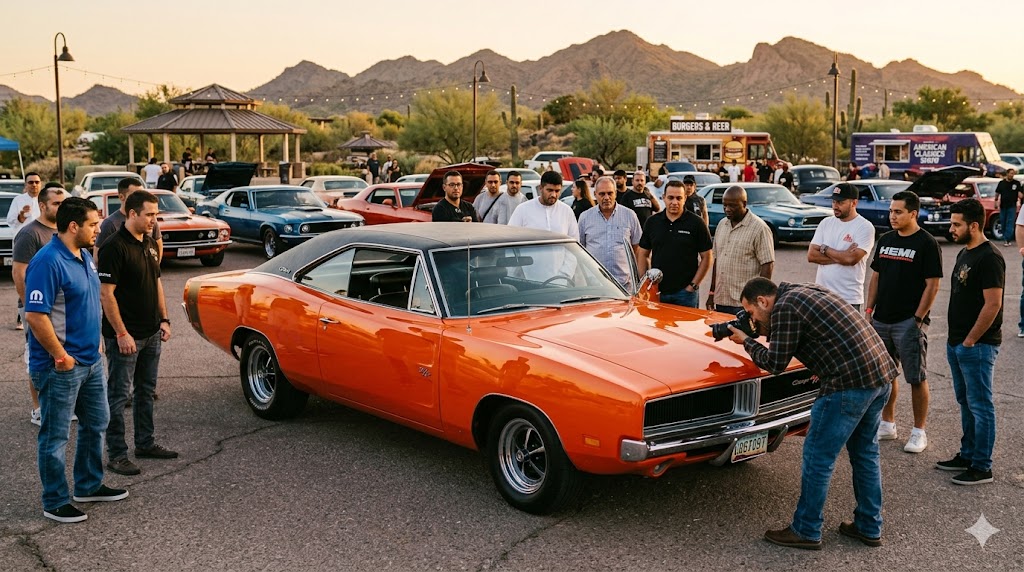
Two muscle cars can sit side by side at an auction, look nearly identical, and sell for wildly different amounts, and the reason often comes down to two phrases that get thrown around casually but mean fundamentally different things: numbers matching and restored. Buyers who treat these terms as interchangeable, or who assume a great restoration automatically implies numbers-matching originality, are setting themselves up to overpay or misjudge exactly what they're buying. The distinction isn't academic hobbyist trivia. It's one of the single biggest drivers of value in the collector muscle car market, and understanding it changes how you should evaluate every listing you look at.
What Numbers Matching Actually Means
Numbers matching refers to whether the major components of a car, most importantly the engine and often the transmission and rear axle, are the original components that were installed on that specific chassis when it left the factory. Manufacturers stamped or cast identifying codes into these components, and researchers and registries have spent decades documenting how those codes correspond to specific production dates, plants, and vehicle identification numbers. A numbers-matching car is one where those codes still align with the car's original build documentation, meaning the drivetrain you see is the drivetrain that car was born with.
This matters enormously to collectors because it speaks to authenticity and historical integrity rather than just appearance or performance. An engine is a mechanical assembly, and mechanically it doesn't matter whether a numbers-matching engine or a correct-type replacement engine sits in the bay; both can run the same, sound the same, and perform identically. But to a serious collector, the numbers-matching engine represents an unbroken chain of history connecting the car in front of them to the specific day it was built, and that unbroken chain is exactly what a portion of this hobby is built around preserving. It's worth being honest that this premium is about history and provenance rather than function, since a numbers-matching car isn't necessarily a better driver or a more reliable one.
What Restored Actually Means, and Why It's a Different Question
Restoration describes the condition and process a car has gone through, not the originality of its components. A restored car has had work done, sometimes minor and sometimes a complete frame-off rebuild, to bring it back to a certain appearance and functional standard, whether that standard is showroom-new or a lightly cleaned-up driver-quality result. Critically, a car can be beautifully, meticulously, expertly restored while having a replacement engine, replacement body panels, or other components that break its numbers-matching status. Restoration quality and numbers-matching status are simply answering different questions, and a listing that emphasizes one doesn't tell you anything reliable about the other unless it explicitly addresses both.
This is where buyers most commonly get confused or misled, sometimes by sellers who aren't being deliberately deceptive but who use the terms loosely because they don't fully understand the distinction themselves. A seller might genuinely believe their car is numbers matching because it has a period-correct engine of the right type, without realizing that "correct type" and "the actual original unit" are not the same claim. Learning to ask specifically which claim a seller is making, and asking them to support it with documentation rather than general assurance, is one of the most valuable habits you can develop in this hobby.
Why the Market Prices These So Differently
All else being equal, a genuinely numbers-matching car will typically command a real premium over an otherwise comparable example with a replacement drivetrain, and that premium tends to widen for rarer or more historically significant models where originality carries extra weight. A stunning restoration on a car that isn't numbers matching can still be a fantastic car to own and drive, and depending on the model and market, a superbly executed restoration might even outperform a numbers-matching car that's been poorly maintained or incorrectly restored. But when comparing two examples of similar quality, originality is usually what separates the merely good result from the exceptional one in terms of value.
This pricing gap exists because numbers-matching status is largely fixed and verifiable, while restoration quality exists on a sliding scale that's partly subjective. You can always restore a car again, better, if the current restoration isn't up to standard. You can never restore originality back into a car once its original components have been replaced; that chain of history, once broken, is gone permanently. Collectors price that permanence and irreversibility into what they're willing to pay, which is why originality tends to anchor value even when the restoration on a non-matching car is objectively excellent.
The Trade-offs Buyers Actually Face
None of this means buyers should chase numbers-matching status regardless of cost or condition. A numbers-matching car with tired paint, mismatched body panels from accident repairs, or years of deferred maintenance can be a worse ownership experience and a riskier purchase than a properly restored car with a correct but non-original drivetrain. Originality is one input into value, not the only one, and a car that's numbers matching but mechanically neglected may need as much or more investment to bring it up to an enjoyable, reliable standard as a well-restored car needs to reach numbers-matching status, which it never can.
Buyers also need to weigh their own goals honestly. If your plan is to drive the car regularly, enjoy it, and eventually sell it to someone with similar priorities, a well-restored car with strong mechanical condition may serve you better and cost less than chasing numbers-matching perfection. If your plan is long-term appreciation, museum-quality preservation, or building a collection aimed at serious enthusiasts and institutional buyers, originality likely deserves more weight in your decision. Neither approach is wrong, but conflating the two goals, or assuming a restored car will appreciate the same way a numbers-matching example will, is a common and costly miscalculation.
Verifying Claims Before You Commit
Because the financial stakes of this distinction can be significant, verification should never rest on a seller's word alone. Casting numbers, date codes, and other stamped identifiers on the engine, transmission, and rear axle can be cross-checked against the car's documented build information, and organizations and registries dedicated to specific makes and models often maintain reference data that can help confirm whether components are consistent with what a particular chassis should have. A qualified marque specialist or independent appraiser can perform this verification far more reliably than a buyer working from online forum posts and guesswork, and their fee is a small fraction of what a misjudged six-figure or even five-figure purchase can cost you.
It's worth restating plainly that this article is general information rather than financial or legal advice, and anyone considering a significant classic car purchase should arrange an independent inspection or professional appraisal before finalizing any transaction. The cost of that verification is trivial compared to the cost of discovering after the fact that a car described as numbers matching wasn't, or that a "restoration" involved more shortcuts than the seller disclosed.
Making Sense of the Two Together
The healthiest way to think about numbers matching and restoration is as two separate axes describing a car, not two points on the same scale. A car can be high on both, low on both, or high on one and low on the other, and each combination represents a legitimately different product with a different appropriate price. The mistake isn't preferring one type of car over another; it's failing to recognize which combination you're actually looking at, or assuming that strength in one category implies strength in the other. Once you separate these two questions clearly in your own evaluation process, you'll read listings more accurately, negotiate more confidently, and end up with a car that actually matches what you set out to buy.
Key Takeaways
- Numbers matching describes whether major components are original to that specific chassis, while restored describes the condition and work performed on the car; the two are independent questions.
- A beautifully restored car can still lack numbers-matching status, and a numbers-matching car can still be poorly maintained or incorrectly restored.
- Originality typically commands a real premium because it's permanent and verifiable, while restoration quality can theoretically be redone or improved over time.
- Your priorities should guide which factor matters more: originality tends to matter most for long-term appreciation and serious collecting, while restoration quality matters more for regular driving and enjoyment.
- Always verify specific claims through casting numbers, date codes, and documentation rather than a seller's general assurance, and this is general information, not financial or legal advice.
- Bottom line: get an independent inspection or appraisal before buying, and never assume one term implies the other.