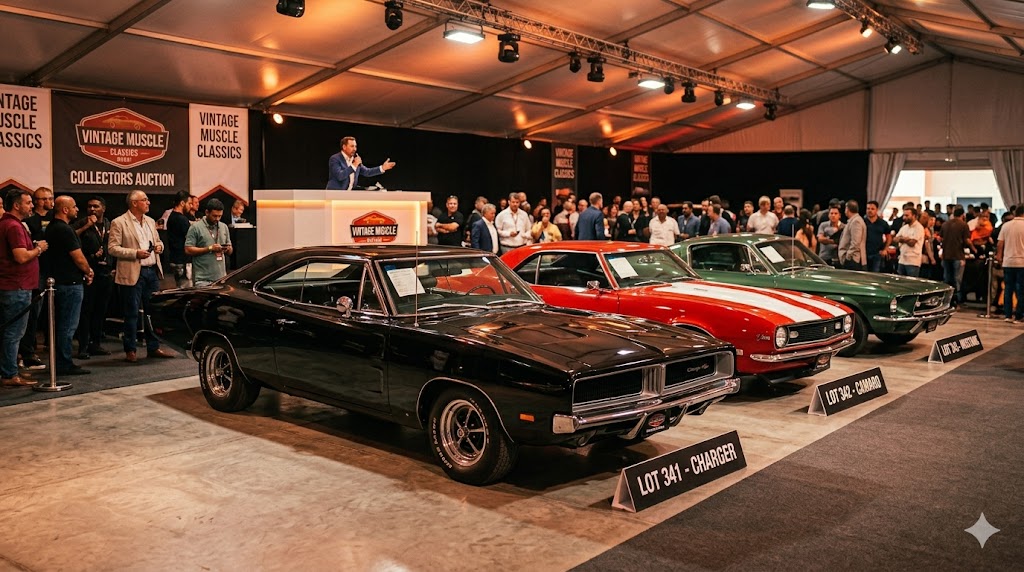
Two nearly identical classic cars can roll across the same auction block an hour apart and sell for wildly different sums, and the buyers bidding on the more expensive one often can't point to a single visible difference that explains it. The gap lives in a place most people never look: the engine block's stamped pad, a tag riveted to the firewall, a partial VIN etched into the transmission case. Numbers matching isn't a cosmetic detail or a nice-to-have footnote in a listing — it's the single factor that most reliably separates a car treated as a genuine historical artifact from one treated as a collection of period-correct parts wearing the right body.
What "Numbers Matching" Actually Verifies
At its core, a numbers-matching claim asserts that the major components on the car today — typically the engine, transmission, and sometimes the rear axle or carburetor — are the actual components installed at the factory when that specific car was built, not later replacements of the correct type and year. This is verified by cross-referencing stamped codes on those components against the car's VIN or a factory build sheet, when one survives, along with date codes that should fall within a plausible window before the car's build date. The distinction that trips up newcomers is that a numbers-matching car is not necessarily better built, faster, or more reliable than one with a period-correct replacement engine of the identical specification — mechanically the two can be indistinguishable. What numbers matching verifies is provenance: that this specific engine has been in this specific car since it left the factory, which makes the car a more complete and verifiable piece of history rather than a reconstruction. That distinction is exactly why the premium exists, and why it can't be manufactured after the fact no matter how correct the substitute parts are.
Why the Premium Is So Large
The financial gap between numbers-matching and non-matching examples of the same model can be substantial, particularly for cars where original engines were frequently swapped, raced hard, or blown up and replaced decades ago, making surviving matched examples genuinely scarce rather than just theoretically special. Scarcity alone doesn't fully explain the premium, though — the other half is trust. A numbers-matching car gives a buyer confidence that the rest of the car's history is more likely to be honestly represented too, because an owner who preserved the original drivetrain through decades of ownership changes was probably not the type to disguise accident damage or swap a VIN tag. In effect, matching numbers function as a proxy for the overall integrity of the car's history, even though technically they only confirm the drivetrain. This is why appraisers and serious collectors will comb through stampings before they even look closely at paint or interior condition, and why a fresh, beautiful restoration on a non-matching chassis will still be valued in a completely different bracket than a rough but numbers-matching survivor, even one that clearly needs mechanical attention.
Where the Stampings and Tags Actually Live
Every manufacturer had its own scheme, and part of doing this correctly is knowing exactly where to look and what a legitimate stamp is supposed to look like for your specific model and year. Engine codes are typically stamped into a machined pad on the block itself, often near the front of the engine or along a cylinder bank, and the format usually encodes the plant, the date of manufacture, and sometimes the engine's displacement or output configuration. Transmission codes appear on a tag or stamped directly into the case, and rear axle codes are often found on a tag at the housing or stamped into the housing itself. The body or cowl tag, separate from the engine and drivetrain numbers, ties the body shell to its original trim, color, and options as built, and mismatches here can reveal a car that's been recolored or re-trimmed from its factory configuration even if the drivetrain is untouched. Because these locations and formats are specific to each make and often changed between model years, verifying authenticity requires model-specific reference material or expert consultation rather than a general rule of thumb, and relying on general knowledge of "how numbers matching works" without checking the specifics for your exact car is one of the most common mistakes buyers make.
How Restorers Accidentally Destroy Matching Numbers
The uncomfortable truth is that well-intentioned restoration work is one of the leading causes of damaged or illegible stampings, not deliberate fraud. Aggressive glass bead blasting or aggressive machining during an engine rebuild can erase or blur a stamped pad if the shop doesn't know to mask or hand-finish that specific area, and this kind of damage is often done by a machine shop that has no idea the numbers on that block carry six figures of value. Resurfacing a block deck too many times over multiple rebuilds can also eventually reach the depth of the stamping and remove it entirely, which is why a numbers-matching engine with a long rebuild history sometimes shows a stamp that's shallow, partial, or has been carefully re-stamped by a specialist to preserve legibility. Tags riveted to the firewall or radiator support can be lost entirely during bodywork if a restorer doesn't remove and preserve them before stripping the area, and reattaching a tag with the wrong style of rivet is itself a red flag to anyone checking authenticity closely. If you're sending a numbers-matching car's components out for machine work or media blasting, telling the shop explicitly to protect the stamped areas, and inspecting the work before and after, is not excessive caution — it's the only way to prevent an irreversible loss of value through simple carelessness.
Verification, Fraud, and Why You Should Get an Expert Opinion
Because the financial stakes are high, numbers matching is also one of the more commonly misrepresented claims in the classic car market, ranging from honest sellers who misunderstand their own car's history to deliberate re-stamping of engine pads to create a fraudulent match. Legitimate factory stampings have specific characteristics in font style, spacing, and stamping depth that are difficult to replicate convincingly by hand, and marque-specific clubs and independent appraisers who specialize in a given model often can spot inconsistencies that a general mechanic or even an experienced restorer of other makes would miss. If you're buying a car specifically for its numbers-matching status, or restoring one where you intend to preserve and eventually sell on that basis, having the stampings verified by someone with deep expertise in that specific model — ideally before you spend money on a full restoration — is worth the cost many times over. It's also worth remembering that a partial mismatch, such as a replaced carburetor of the correct original type while the engine and transmission remain original, is common and generally treated far more leniently by the market than a fully mismatched drivetrain, so the picture is rarely simply matching or not matching.
Living With and Restoring a Matching-Numbers Car
If you're fortunate enough to own a genuinely numbers-matching example, the restoration approach shifts noticeably from what you'd do with a parts-correct but non-original car. Rebuilding the original engine rather than replacing it, even when a period-correct crate engine would be cheaper and easier, preserves the very thing that makes the car special, and any rebuild should be done by a shop with explicit experience protecting stamped components. Keeping the car's original components together as a set, storing any parts you swap out for reversible upgrades, and maintaining meticulous documentation of every mechanical intervention all protect the asset you're sitting on. It's a different mindset than restoring a car purely for how it drives or looks, because with a numbers-matching example, the historical integrity of the components is itself part of what you're restoring, arguably as much as the paint and upholstery.
Key Takeaways
- Numbers matching verifies that a car's original factory-installed engine and transmission are still in the car, which confirms provenance rather than mechanical superiority.
- The value premium exists because matching numbers signal both genuine scarcity and broader trustworthiness of the car's full history, not just the drivetrain.
- Stamping and tag locations, formats, and codes are specific to each make and model year, so verification requires model-specific expertise rather than general knowledge.
- Careless machine shop work, over-aggressive blasting, and repeated deck resurfacing during rebuilds are common accidental causes of lost or damaged stampings.
- Fraudulent re-stamping exists in the market, so any high-value numbers-matching claim should be independently verified by a specialist before you buy or restore based on it.
- If your car is genuinely numbers matching, prioritize rebuilding original components over replacing them and document every intervention to preserve the provenance that makes the car valuable.