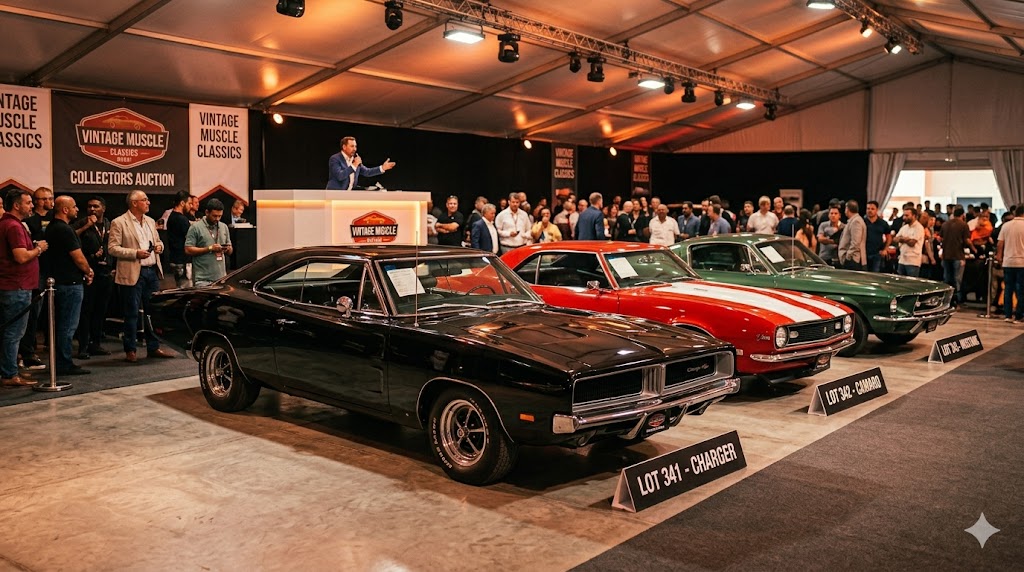
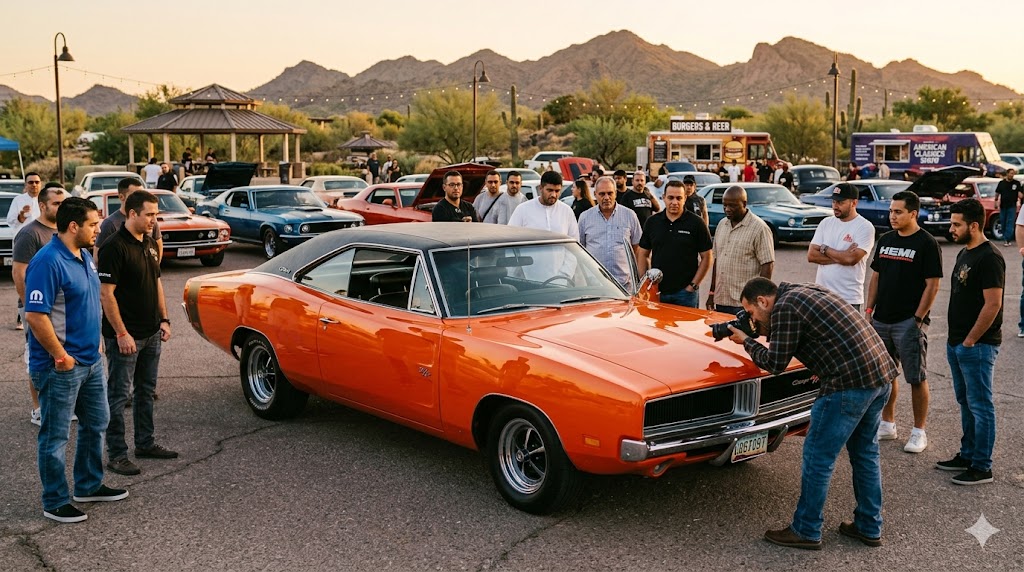
No other car auction on the calendar comes close to Kissimmee for sheer volume. Over roughly ten days each January, Mecum runs thousands of vehicles across the block at the Osceola Heritage Park in central Florida, a scale so large that even seasoned collectors describe it as less like an auction and more like a marathon with a gavel. If you're looking for the exact dollar figures from the 2025 event, the accurate move is to pull them from Mecum's own published results, which list hammer price and lot detail for every car once the sale closes and figures are confirmed. What's genuinely useful to unpack beforehand, and to reread afterward with the real numbers in hand, is why Kissimmee's format produces the specific kind of results it does, and which categories of cars tend to generate the sales everyone ends up discussing.
Scale Is the Whole Story at Kissimmee
Where Scottsdale trades on curation and television polish, Kissimmee trades on sheer breadth. Mecum routinely consigns several thousand vehicles for this single event, spanning everything from unrestored barn finds and mid-range muscle cars to seven-figure exotics and one-off customs, all crossing the same auction blocks over the course of the week. That volume changes the character of the results in a meaningful way. Instead of a tightly curated set of marquee lots designed to each generate a headline, Kissimmee produces a wide distribution of outcomes, and the "top sales" that eventually get highlighted are genuinely the outliers at the top of a very long list, not the entire point of the sale. This matters when you're evaluating what a strong or weak result actually signals: a handful of exceptional sales at the top of the sheet can coexist with a broad middle market that's flat or softening, and Kissimmee's scale is one of the few auctions large enough to show you both stories in the same week.
The No-Reserve Format and What It Does to Pricing
A large share of Mecum's Kissimmee docket runs without reserve, meaning the consignor has agreed the car will sell to whoever bids highest regardless of whether that number meets their expectations. This format is central to why Kissimmee results get watched so closely. No-reserve bidding removes the option for a seller to quietly protect a car that isn't attracting the interest they hoped for, so every sale that happens is a real transaction at a real market-clearing price, not a number massaged by a hidden floor. That transparency is valuable for anyone trying to gauge genuine demand, but it also means results can occasionally surprise on the downside, with well-known or historically significant cars selling for less than pre-auction chatter suggested, simply because the room didn't show up for it that day. Both outcomes, the surprising high sale and the surprising soft one, are part of what makes a no-reserve, high-volume event like this a more honest gauge of the market than a smaller sale where consignors can protect their cars with reserves.
Categories That Traditionally Anchor the Top of the Sheet
Certain kinds of cars have a long track record of anchoring Kissimmee's highlight reel, and it's worth knowing them going in so you can judge this year's results against a real baseline rather than guesswork. American muscle from the late 1960s and early 1970s, especially rare factory-optioned cars with matching numbers and thorough documentation, remains a perennial draw, since Kissimmee's scale means even a deep bench of buyers chasing a specific model can show up in the same week. Corvettes across generations, from early solid-axle cars to modern high-performance variants, tend to move in significant volume given how large and organized the Corvette collector community is. Resto-mods and pro-touring builds, where classic sheet metal is paired with modern running gear, have grown into one of the most consistently strong categories industry-wide, and Kissimmee's size means there are usually dozens of well-executed examples to compare directly against each other. Increasingly, modern collectibles, low-mileage trucks, SUVs, and even certain 1980s and 1990s cars that have aged into collector status round out the mix, reflecting the way the buyer base at Kissimmee skews broader and younger than at some of the more exclusive concours-adjacent sales.
Estimates, Records, and Why They're Easy to Misread
Pre-auction estimates published for individual lots are informed guesses built from recent comparable sales, condition reports, and specialist judgment, not guarantees, and at an event the size of Kissimmee you should expect a wide spread of outcomes relative to those estimates simply due to the volume of lots involved. When a car sells well above its estimate, that's a genuine data point about demand for that specific model and configuration, but it's not automatically a "record" in the strict sense unless it actually surpasses the previous highest verified public sale of a directly comparable example. Because Kissimmee runs so many cars, it will almost certainly produce several genuinely record-setting results in a given year purely as a function of volume and the breadth of rare cars consigned, alongside plenty of other strong sales that get informally labeled records in headlines without meeting that bar. The responsible way to read any "record" claim coming out of the event is to check whether it names the specific prior sale being beaten and whether the comparison is apples-to-apples on configuration, condition, and documentation.
What the Headline Numbers Leave Out
As with any major auction, the hammer price is not the full financial picture. Mecum's buyer's premium adds a meaningful percentage on top of the winning bid, and that combined figure is what actually gets reported as the sale price in most coverage, so it's worth knowing which number you're looking at when you compare results across years or auction houses. Sellers face their own costs, including consignment fees and the expense of transporting a car to central Florida and preparing it for the block, which narrows the gap between what a car sells for and what its owner actually walks away with. Condition is another variable that a single sale price can't convey on its own. Kissimmee's scale means the docket includes everything from professionally restored, documentation-heavy cars to project vehicles sold as-is, and buyers who don't attend in person or study the condition reports carefully can end up disappointed by a car that looked identical to a higher-selling comparable in photos but wasn't in the same league mechanically. Auction atmosphere plays a role too; competitive bidding in a room full of enthusiasts can push emotionally resonant cars, a specific childhood favorite or a rare factory color combination, well past what calm, private negotiation would have produced.
How to Check the Real Results
Once the week wraps, Mecum publishes official results by lot, including hammer price and often additional detail on options and documentation, and that listing is the authoritative source for anything you read secondhand. Enthusiast outlets and general news coverage will inevitably highlight a handful of standout sales, and those are worth reading for context, but they represent a small fraction of the total lots that crossed the block. If you're trying to understand where the broader market is heading rather than just which single car made the most news, look at sell-through rates and how entire categories performed relative to their estimates, not just the ceiling set by the top few sales. That broader view is where Kissimmee's scale actually becomes an advantage over smaller, more curated sales, because there's enough data in a single week to say something real about demand across dozens of categories at once.
Key Takeaways
- Mecum Kissimmee's massive lot count, typically thousands of vehicles over about ten days, makes it the best single-event gauge of breadth in the collector car market.
- Its heavy no-reserve format means most results reflect genuine market-clearing prices rather than seller-protected minimums.
- Muscle cars, Corvettes, resto-mods, and increasingly modern collectibles are the categories that traditionally anchor the top of the results sheet.
- A legitimate "record" requires beating a specific, comparable prior sale, not just exceeding a pre-auction estimate or a headline hoped-for number.
- Buyer's premiums, consignment costs, and wide condition variance mean the hammer price alone understates the real cost and risk on both sides of a deal.
- Bottom line: use Mecum's own published lot-by-lot results to confirm any specific 2025 sale or record claim, and judge the market by sell-through and category trends, not just the top few headline cars.