A car that has sat under one roof for forty years, driven only to church and back by a retiree who kept every receipt in a shoebox, is not something you find on a dealer lot. It surfaces when that owner passes away and the family finally opens the garage door. Estate sales are one of the last reliable channels for collector cars that were never flipped, never modified, and never subjected to the wear of a used-car life. Finding one takes patience and a different kind of searching than browsing classified listings, but the payoff can be a genuinely original example of a model that almost never appears that way on the open market.
Why Estate Sales Produce Different Cars Than Auctions or Dealers
The collector car market is full of vehicles that have passed through several owners, each adding miles, modifications, or shortcuts in maintenance. Estate sale cars break that pattern because they often come from a single owner who bought the car new or bought it early and kept it for decades. That owner frequently reached an age where driving slowed down substantially, so the car accumulated only a few hundred miles a year in its final stretch. It sat in a garage rather than on the street, shielded from sun and road salt. And because the owner cared enough to keep the car that long, they usually cared enough to document it: service records, original window stickers, purchase paperwork, and sometimes even the original tires stored in a corner. None of that is guaranteed with a car that has already changed hands three or four times, where documentation tends to thin out with each transaction.
This is not to say every estate car is a hidden gem. Plenty of estates include vehicles that were neglected in later years, especially if the owner's health declined before the car was sold or if heirs let a garage sit unheated and humid for a few years after death. The distinction that matters is provenance, not sentimentality. A single-family ownership history with real records behind it is worth more to a serious buyer than a vague story about how "grandpa loved that car."
Where These Cars Actually Surface
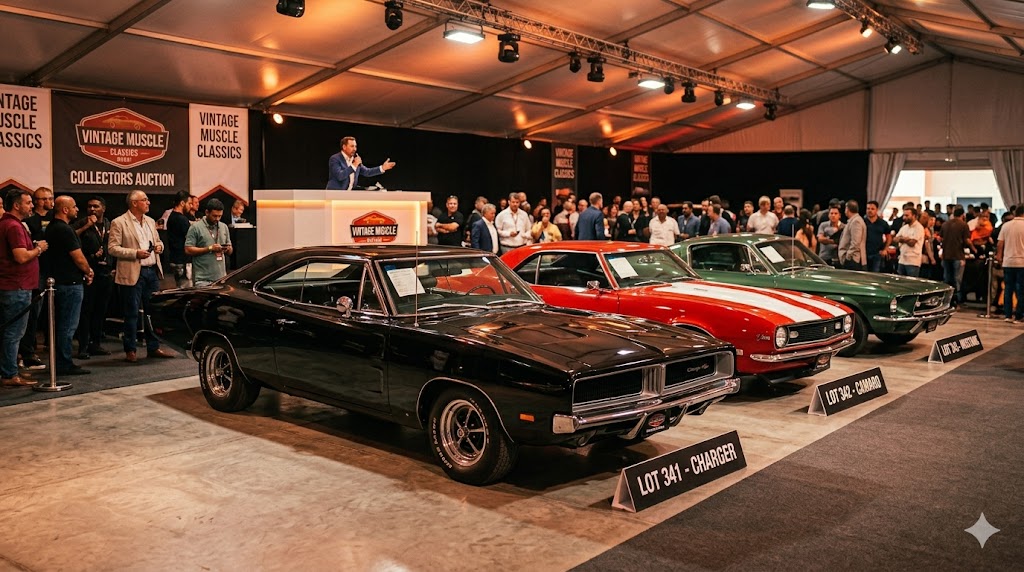
Estate sale companies that handle full household liquidations are one of the most consistent sources, since they are hired specifically to catalog and disperse everything an estate owns, vehicles included. These firms often post inventory previews before the sale date, and a classic car tucked in with furniture and tools can be easy to miss if you are not watching listings closely. Probate auctions, run either by the court system or by auction houses retained by an estate's executor, are another avenue, particularly when a will did not specify who inherits the car or when heirs simply want it liquidated as part of settling the estate.
Estate attorneys and executors themselves can be a source worth cultivating a relationship with, especially if you focus on a specific marque or era, because they sometimes know about a car before it is ever advertised publicly. Classic car clubs are underrated for this same reason: club newsletters and member networks frequently carry word of a fellow member's passing along with a mention that the family is looking to sell the car to someone who will appreciate it rather than to a stranger off the street. Local newspaper obituary and estate notices, though old-fashioned, still occasionally mention a vehicle directly, especially in smaller communities where the deceased was known for owning something notable. Online estate sale listing platforms have also become a legitimate hunting ground in general terms, since they aggregate sale announcements from companies across a wide area and let you filter or search by keyword.
What Makes These Cars Genuinely Desirable
Low mileage is the most obvious draw, but the more meaningful factor is often how the mileage accumulated. A car with 40,000 miles put on evenly over ten years of regular driving is a different animal than one with 40,000 miles from decades of short, infrequent trips followed by long dormancy. The first has been exercised and maintained through consistent use. The second may have suffered from fuel system varnish, dried-out seals, and rubber components, even though the odometer looks fantastic. Garaged storage matters enormously here too, since a car shielded from direct sun and precipitation ages far more gracefully in both cosmetic and structural terms than one left outside.
The documentation angle deserves its own emphasis. An owner who kept a car for thirty or forty years often built a paper trail that tells the vehicle's entire life: original purchase invoice, dealer service records, insurance paperwork, even old photographs of the car in earlier years. That kind of file lets you verify claims instead of taking a seller's word for them, and it materially affects value to serious collectors who care about authenticity as much as appearance.
Due Diligence Before You Pay
Title and legal status should be your first checkpoint, not an afterthought. A car tied up in probate cannot always be sold cleanly until the estate is legally settled, and paying for a car whose title is still tangled in court proceedings can leave you without clear ownership for months or expose you to a dispute among heirs later. Ask directly whether the estate has been through probate, who has legal authority to sell the vehicle, and whether that person can provide a title or an executor's deed that a motor vehicle department will accept.
A pre-purchase inspection remains essential even when a car looks pristine and the mileage is low, because "uncirculated" describes use, not mechanical condition. Fuel lines, brake components, and rubber seals degrade with age and inactivity regardless of how few miles were driven, and a car that has not run in years may need meaningful recommissioning before it is safe to drive. Researching the deceased owner's documented history with the car, when records exist, can also help you confirm the story matches the paperwork rather than relying on family recollection alone. Finally, approach negotiations with awareness that you are dealing with people who are grieving, not simply liquidating an asset. Pushing too hard on price too quickly can come across as exploitative even when your offer is fair, and that can cost you the deal entirely.
The Unique Negotiating Dynamics of Estate Sales
Families and executors are frequently motivated to settle an estate efficiently rather than to extract maximum value from a single asset, which can work in a buyer's favor if you are patient and respectful. At the same time, some family members are deeply attached to a parent's or grandparent's car and may price it emotionally rather than realistically, or conversely may have no idea what it is worth and either overprice it based on nostalgia or underprice it out of a desire to be done with the process. Both situations require reading the room carefully. You should also expect competition: dealers and flippers who specialize in this exact niche monitor estate sale companies and probate listings aggressively, sometimes reaching out to families before a car is ever publicly listed, so acting promptly once you learn of a promising vehicle matters.
This article offers general information for collectors and buyers and is not legal advice; estate, probate, and title matters vary by state and situation, so consult a qualified attorney or title professional before finalizing a purchase involving an estate.
- Estate sales produce collector cars with long single-family ownership, low annual mileage, and garaged storage that used-car channels rarely offer.
- Estate sale companies, probate auctions, estate attorneys, car clubs, and estate notices are the practical channels to watch, not general classified ads.
- Confirm probate status and legal authority to sell before paying anything, since a tangled title can delay or derail the deal.
- Always get a pre-purchase inspection, because long dormancy can hide mechanical problems that low mileage alone does not reveal.
- Expect a mix of highly motivated sellers and emotionally attached or uninformed ones, and negotiate with patience and sensitivity to family dynamics.
- Bottom line: estate sales remain one of the best sources for authentic, original collector cars, but only careful buyers who verify paperwork and mechanical condition come out ahead.