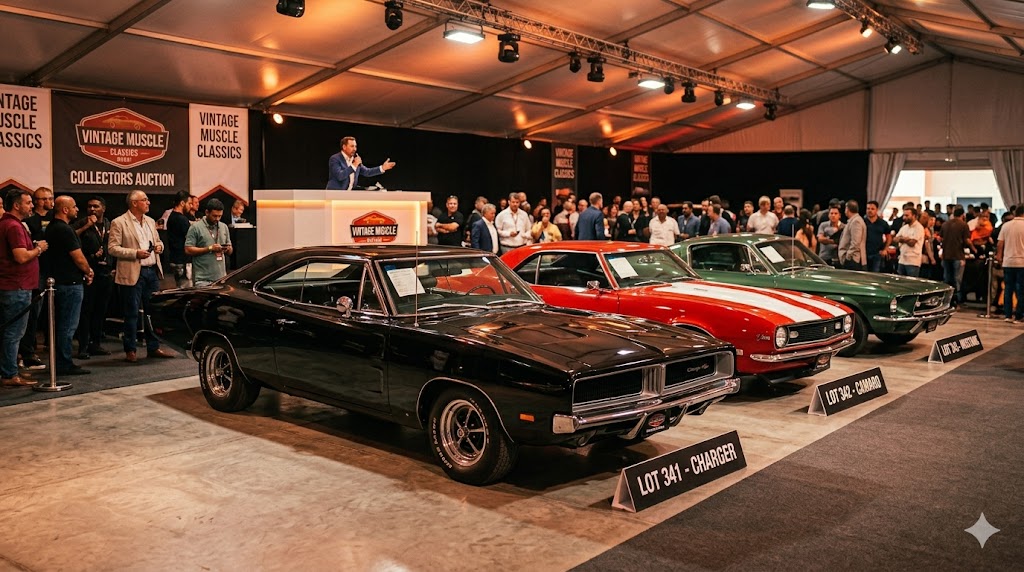
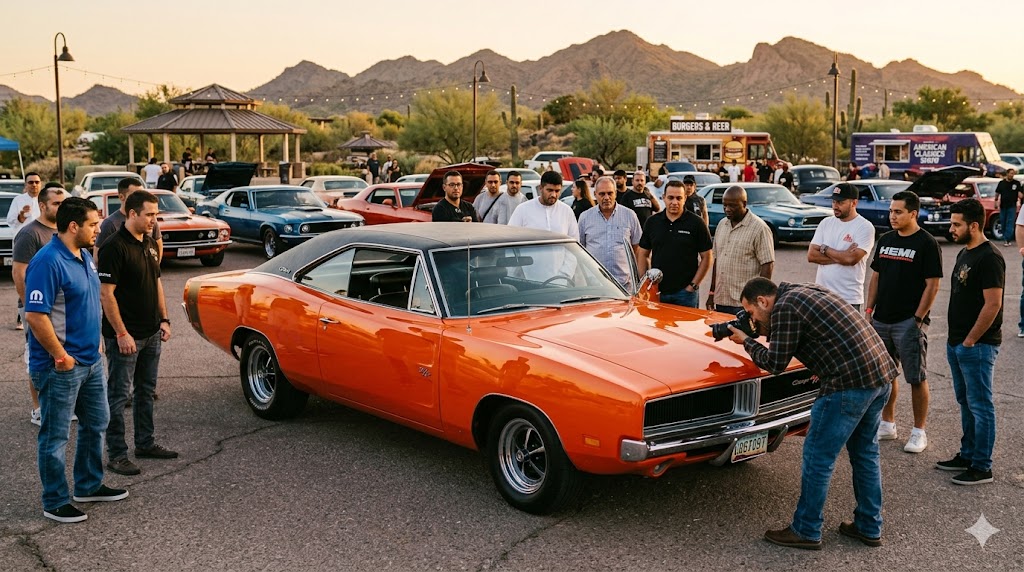
Park a big block Chevelle next to a small block Camaro at any cruise night and you'll hear the argument start before the engines even cool down. One owner swears nothing beats the seismic shove of a big block off the line. The other insists a well-sorted small block will out-corner, out-brake, and ultimately out-drive the big-inch car everywhere that isn't a dragstrip. Both are right, which is exactly why this debate has never actually been settled and never will be.
The big block versus small block question isn't really about which engine family is "better" in some abstract sense. It's about which set of compromises you're willing to live with. Big blocks—the Chevy 396 and 454, Ford's FE and 385 series, Mopar's 440 and Hemi—were built to move enormous amounts of air and produce the kind of low-end torque that presses you into the seat before you've even finished flooring the throttle. Small blocks—the Chevy 302 and 350, Ford's 289 and 302, Mopar's 340 and 360—were lighter, revvier, and often nearly as quick in the right chassis, especially once you factor in what all that extra iron up front does to a car's balance.
The Case for Big Block Muscle
There's a reason big block cars became the halo models of nearly every manufacturer's muscle lineup. The sheer displacement advantage translates into torque that arrives early and stays flat across the rev range, which is exactly the sensation most people associate with classic muscle car power. You don't need to wind a big block out to redline to feel it working; it pulls hard from just off idle, which made these cars feel effortlessly quick in everyday street driving and devastating in a stoplight-to-stoplight matchup.
That low-end character also suited the way these cars were actually used. Muscle car buyers in the late 1960s weren't autocrossing their Chevelles and GTOs—they were driving them to work, cruising the strip on Friday night, and occasionally lining up against a rival at the local drag strip. For that use case, a torque-heavy big block that didn't require constant shifting or high-rpm theatrics was arguably the more practical performance solution, ironic as "practical" sounds applied to a 4,000-plus-pound muscle coupe.
The trade-off shows up the moment you turn the wheel. A big block sitting ahead of the front axle adds substantial weight exactly where you don't want it if you care about turn-in response or front tire wear. Nose-heavy handling, longer stopping distances on drum-braked cars, and a noticeably different weight transfer under hard acceleration and braking are the price of that torque. Big block cars also tend to be thirstier, harder on components like transmissions and rear ends that have to absorb all that torque, and more expensive to maintain given the size of components like water pumps, radiators, and exhaust systems scaled to feed a larger engine.
The Case for Small Block Muscle
Small block advocates make a compelling counter-argument, and it starts with the word "balance." A small block engine is meaningfully lighter than its big block counterpart, and that weight savings sits over the front wheels—the single location where mass does the most damage to a car's handling manners. A small block Camaro or Mustang turns in more eagerly, changes direction with less protest, and generally rewards a driver who wants to do more than just launch in a straight line.
Small blocks also rev more freely. Where a big block often feels like it's building a wall of torque, a good small block builds power more progressively and typically enjoys spinning to a higher redline, which suits road course and autocross use far better. This is part of why small block-powered cars have historically found favor with drivers who care about lap times and cornering grip as much as, or more than, outright straight-line thrust. The Z/28 Camaro and Boss 302 Mustang exist specifically because Chevrolet and Ford recognized that a smaller, higher-revving engine paired with the right suspension and brake package could out-handle bigger-engined siblings on a road course, even while giving up some straight-line bragging rights.
There's also a cost and complexity argument in the small block's favor. These engines are generally cheaper to rebuild, lighter on fuel, easier to find parts for given how many were produced across multiple platforms for decades, and gentler on ancillary components that weren't designed to handle big block torque loads. If you're planning to actually drive your muscle car regularly rather than trailer it to shows, that ownership equation matters more than most enthusiasts want to admit at first.
Where the Debate Actually Gets Decided: Insurance, Weight, and Real-World Use
Beyond the shop talk about torque curves and reciprocating mass, the big block versus small block choice has consequences that show up on paper long after you've bought the car. Insurance carriers and collector-market appraisers both tend to value big block cars—especially rare factory big block combinations—more highly than comparable small block cars, which drives up both purchase price and insurance premiums. That's simple supply and demand: fewer big block cars were built in top factory trim, and the ones that exist command a premium precisely because they represent the top of a manufacturer's performance hierarchy.
That premium cuts both ways. A numbers-matching big block car is a bigger financial commitment to insure, maintain, and repair, and any mechanical issue tends to cost more to fix given the scale of the components involved. A small block car, meanwhile, is often the more sensible choice for someone who wants genuine muscle car character without the insurance bill and parts costs that come with the flagship engine option. Plenty of experienced collectors will tell you the small block car is the one they'd actually choose to drive on a Saturday, while the big block sits in the garage as the appreciating asset.
Weight distribution differences also affect braking, and this is where the debate moves from personal preference into genuine safety territory. A nose-heavy big block car needs more stopping power to arrest the same speed as a small block car, which is why upgraded brake packages were often optional or standard on big block trims. If you're shopping for a driver-quality classic rather than a numbers-matching investment piece, it's worth checking whether the car you're considering has had its braking system upgraded to match whatever's under the hood.
Which One Actually Made the Best Muscle Cars?
The honest answer is that the best muscle cars came from manufacturers who understood which engine suited which mission. A drag-strip-focused model benefits from a big block's torque; a road-course-focused model benefits from a small block's balance. The GTO, the Chevelle SS, and the Road Runner all built their reputations largely on big block variants, while the Z/28 and Boss 302 built theirs on small block precision. Neither approach is objectively superior—they're different tools built for different kinds of driving, and the muscle car era was smart enough to offer both.
If you're deciding which type suits you as an owner rather than as a historian, the calculus comes down to how you intend to use the car. Chasing straight-line drama and that classic torque-heavy muscle car feel points you toward a big block, budget and maintenance realities allowing. Chasing a more balanced, tossable driving experience—and a gentler bill when something needs fixing—points you toward a small block. Check published specifications and verified production data for any specific car you're considering, since claims about exact output and rarity vary widely between sources and are frequently exaggerated in casual listings.
Key Takeaways
- Big block engines deliver stronger low-end torque and a classic muscle car feel but add nose-heavy weight that hurts handling and braking.
- Small block engines are lighter, rev more freely, and generally produce a better-balanced, more tossable driving experience.
- Big block cars typically command higher collector value and insurance costs due to their rarity and flagship status.
- Small block cars tend to be cheaper to maintain, own, and drive regularly, making them a practical choice for daily enjoyment.
- Neither engine family is objectively "better"—the right choice depends on whether you prioritize straight-line torque or overall balance.
- Bottom line: choose a big block for maximum drag-strip character and collector prestige, and a small block if you want a more affordable, better-handling car you'll actually drive often.