A pre-war Duesenberg or a matching-numbers 1967 Ferrari never belonged to the average enthusiast, but there was a time when a decent Shelby clone, an air-cooled 911, or a first-generation muscle car sat within reach of someone with a good job and a willingness to save. That window has largely closed at the very top. The cars that defined the golden age of collecting have been bought, catalogued, and locked into portfolios and museum collections, and their prices reflect scarcity that only gets worse with time. What hasn't closed is the tier just beneath it, and that's where 2025 gets genuinely interesting.
Under $50,000 today, you can still buy real performance, real history, and real scarcity — you just have to shift your frame of reference a couple of decades forward. The cars worth watching right now aren't the ones your grandfather coveted. They're the ones a 45-to-55-year-old buyer coveted as a teenager or young adult, and that generation is now hitting peak earning years with disposable income and a very specific nostalgia. Understanding why this bracket behaves differently from the blue-chip market above it is the key to buying well in it.
Why This Price Bracket Is Where the Action Is
Every collector car cycle follows buyers as they age into their prime spending years, generally somewhere in their 40s and 50s, chasing the cars they wanted but couldn't afford when they were young. That cohort is no longer chasing muscle cars from the 1960s or European exotics from the same era — those buyers have largely aged out, and the cars have migrated into estate collections, museums, or the hands of buyers treating them as trophy assets rather than drivers. The buyers active in the market right now grew up idolizing 1980s and 1990s performance cars, and increasingly the early 2000s too. That shift in demand is not a theory; it shows up plainly in which cars generate bidding energy at auction, which get discussed on enthusiast forums, and which are being restored rather than parted out.
At the same time, the 25-year import rule keeps expanding the pool of what's legally available in the United States, pulling in Japanese and European models that were never federalized when new. Each January 1st, another model year's worth of previously unobtainable cars becomes eligible, and that steady drip of newly legal, genuinely desirable metal keeps injecting fresh interest into the segment without diluting the appeal of what's already established. Combine generational buying power with expanding availability and you get a market segment with more genuine, organic demand than one driven purely by speculation or scarcity marketing.
The other structural advantage of this bracket is that it hasn't been fully financialized the way six- and seven-figure classics have. Cars at the very top of the market increasingly trade among people who view them as alternative assets first and driving machines second, which distorts pricing in ways that can decouple from enthusiast sentiment. Below $50,000, most buyers are still people who intend to drive the car, join a club, and attend track days. That keeps values tethered to actual desirability rather than pure financial engineering, which historically makes for a healthier long-term market even if the ceiling on returns is lower.
American Muscle: The Less-Rare Variants Still Have Room
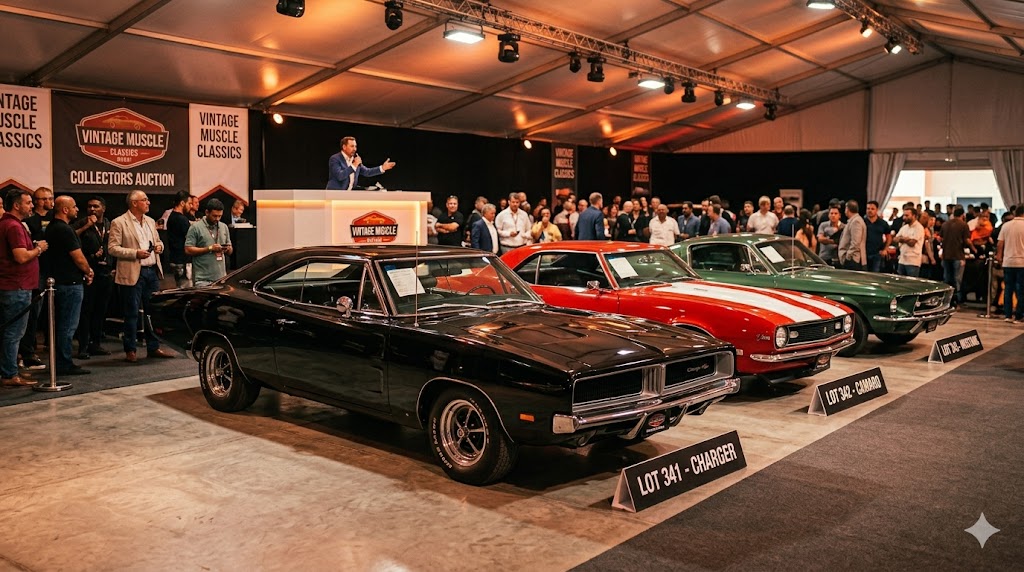
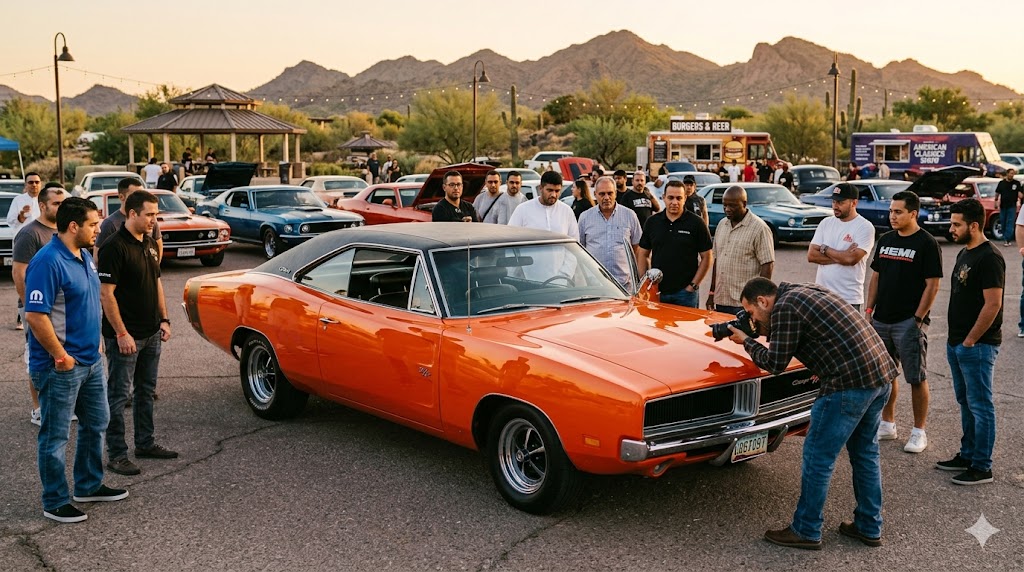
The most collectible first-generation muscle cars — numbers-matching, rare-option, low-production examples — left this price bracket years ago. What remains achievable are the more common variants and later iterations of the same nameplates: a six-cylinder or small-block car from a marque famous for its big-block variants, a well-optioned example from a production year that wasn't the most storied, or a car from the extended muscle era that ran into the early 1970s before emissions rules reshaped performance.
These cars matter to the investment conversation because the badge and shape carry brand equity even when the specific configuration isn't the one that commands headlines. As the rarest, most desirable versions of any given model continue to climb out of reach, buyers looking for the same styling and soundtrack tend to trade down into the more common variants of the same car rather than abandon the segment entirely. That trickle-down effect has repeated across nearly every collector category and there's little reason to think muscle cars are exempt. When you're evaluating a candidate here, originality and documentation matter more than raw horsepower figures — a well-preserved, mostly original car with full history tends to hold its footing better than a heavily modified example, even a quick one, because modifications narrow the pool of future buyers.
European Sports Coupes and Convertibles From the 1980s and 1990s
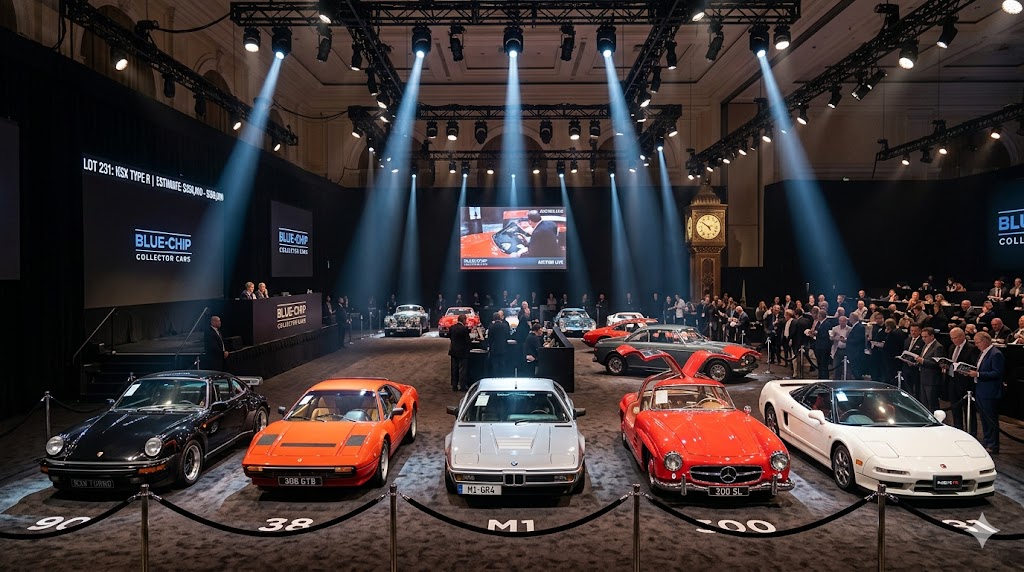
This is arguably the deepest bench in the sub-$50,000 category. Air-cooled sports cars from Germany, small-displacement Italian coupes, and British roadsters from this window all offer a case where the engineering and design pedigree is unquestionable, but production numbers were high enough, and depreciation deep enough, that plenty of clean examples still trade well under the ceiling of this budget.
The investment logic here rests on brand durability. These marques built reputations over decades, and that reputation doesn't reset every time a new model line launches — it accumulates. As the most iconic and limited variants from these same manufacturers move into seven figures, the more attainable coupes and convertibles from the same era inherit some of that halo effect simply by wearing a related badge and sharing basic architecture or styling cues. The caveat, and it's a significant one, is that European cars from this era are notorious for maintenance costs that scale quickly if deferred. A car that looks like a bargain purchase can become an expensive lesson if the timing belt, suspension bushings, or electrical system haven't been sorted. For this segment specifically, a thorough pre-purchase inspection and a realistic accounting of ownership costs matter more to the eventual return than the purchase price itself.
Japanese Performance Icons Still Climbing the Ladder
No segment has moved faster over the past decade than Japanese performance cars from the late 1980s through the early 2000s, and the more important point for 2025 is that the movement isn't finished. The genuinely rare, factory-special editions of the most famous nameplates have already been recognized and priced accordingly by an increasingly global buyer pool. But the broader lineup beneath those halo trims — standard production performance variants, later model years, and cars just becoming import-eligible under the 25-year rule — still trades in a range that leaves room for continued appreciation if the historical pattern holds.
What makes this category compelling from an investment standpoint isn't nostalgia alone; it's the growing recognition among collectors worldwide that these cars represented genuine engineering achievements for their era, not just fast, disposable cars aimed at a young audience. That reassessment has already played out for a handful of iconic nameplates and appears to be extending to their less-celebrated siblings and successors. Unmodified, well-documented examples with low modification history tend to command the most durable interest, since the tuner-car culture that made these cars famous also means a large share of the surviving population has been altered in ways that hurt long-term collectibility.
What "Investment" Should Actually Mean Here
None of this should be read as a guarantee, and it isn't financial or investment advice — it's general commentary and opinion on a hobby market that carries real risk, and collector car values can fall as well as rise. Predicting which specific models will appreciate is inherently speculative; markets shift with fuel prices, cultural moments, generational turnover, and macroeconomic conditions in ways nobody can forecast precisely. The categories discussed here reflect current patterns of demand, not certainties.
It's also worth being honest about the costs that sit on the other side of the ledger. Storage, insurance, routine maintenance, and the inevitable larger repair bill all chip away at whatever paper appreciation a car generates, and for most owners those costs are never fully recovered even when the car itself gains value. A car that needs a garage, a battery tender, and periodic exercise to stay healthy isn't free to own just because it's appreciating on paper.
The buyers who tend to do best in this bracket are the ones who would want the car even if it never appreciated a dollar. Buying something purely for a hoped-for return, without genuine enthusiasm for driving and maintaining it, is one of the more reliable ways to end up disappointed — both financially and otherwise. The cars discussed above happen to sit at an unusually favorable intersection of demand, supply, and price right now, but that's a reason to shop this segment thoughtfully, not a reason to treat any purchase as a sure thing.
Key Takeaways
- The sub-$50,000 bracket is compelling in 2025 because it sits at the intersection of generational demand (buyers now in peak earning years chasing 1980s-2000s cars), expanding import eligibility, and a market still driven by enthusiasts rather than pure financial speculation.
- American muscle candidates worth watching are the less-rare variants and later production years of iconic nameplates, where originality and documentation matter more than outright power.
- 1980s-1990s European sports coupes and convertibles offer strong brand-pedigree upside but carry real maintenance-cost risk that can erode any paper gains if deferred.
- Japanese performance icons below the halo-trim tier still appear to have room to appreciate as global collectors reassess the broader lineup, provided cars are unmodified and well documented.
- This is general commentary, not financial advice; collector values can decline as well as rise, and ownership costs regularly offset paper appreciation.
- The soundest approach is buying a car you'd want to own and drive regardless of resale outcome, in one of these three segments, with clean history and minimal modifications.