Hour six of a road trip has a way of revealing exactly what a car is made of. The seat that felt fine in the dealership starts pressing on your lower back, the trunk that looked spacious empty is suddenly a puzzle of suitcases and cooler bags, and if you're driving something with a shorter range, you're recalculating fuel or charging stops more often than you'd like. Choosing a road trip car well means weighing three things that rarely get equal attention in a typical test drive: how your body feels after hours in the seat, how far you can go before you need to stop, and how much you can actually pack without leaving half the family's luggage behind.
Comfort Is About Endurance, Not First Impressions
A seat that feels great for the ten minutes of a test drive can feel completely different after four hours, and that gap is exactly what separates good road trip cars from merely comfortable-seeming ones. What actually matters over distance is lumbar support that holds its shape rather than collapsing, seat bottoms long enough to support your thighs without pressure points behind the knees, and enough width and bolstering to keep you stable without pinching. Multi-way power adjustment, including adjustable lumbar support and seat cushion tilt, lets you make small position changes throughout a long drive, which matters more for fatigue than most buyers realize until they're several hours into a trip without that flexibility.
Cabin noise plays an outsized role in how tired you feel by the end of a driving day, even though it's rarely the first thing shoppers evaluate. Sustained road and wind noise contributes to a kind of low-grade fatigue that builds gradually and leaves you feeling drained even if the drive itself was uneventful, so vehicles with strong acoustic insulation, thicker glass, and good door sealing tend to leave passengers feeling noticeably fresher after a full day behind the wheel. Larger sedans, three-row SUVs, and midsize crossovers generally have an edge here over smaller cars, simply because their larger cabins and longer wheelbases tend to isolate road imperfections and wind buffeting more effectively.
Rear-seat comfort deserves just as much attention as the driver's seat if you're traveling with passengers, since a road trip that's comfortable up front but cramped in the back creates real friction over a multi-day trip. Reclining rear seatbacks, adequate legroom even with the front seats pushed back, and rear climate vents all make a meaningful difference for anyone riding in the second row for hours at a stretch, and they're worth testing in person with actual passengers rather than assuming based on a spec sheet's legroom number alone.
Range: The Number That Actually Determines Your Trip
Range dictates the rhythm of a road trip more than almost any other factor, and it means different things depending on the powertrain. For gasoline and hybrid vehicles, real-world range depends heavily on highway speed, terrain, and whether you're running climate control heavily, so the EPA-estimated figure on the window sticker is a reasonable starting point but should be treated as an upper bound for ideal conditions rather than a guarantee. Hybrid powertrains often deliver a meaningful range advantage over comparable gasoline-only vehicles, particularly in stop-and-go traffic at the start or end of a trip, though the gap narrows at sustained highway speeds where a hybrid's efficiency advantage is smaller.
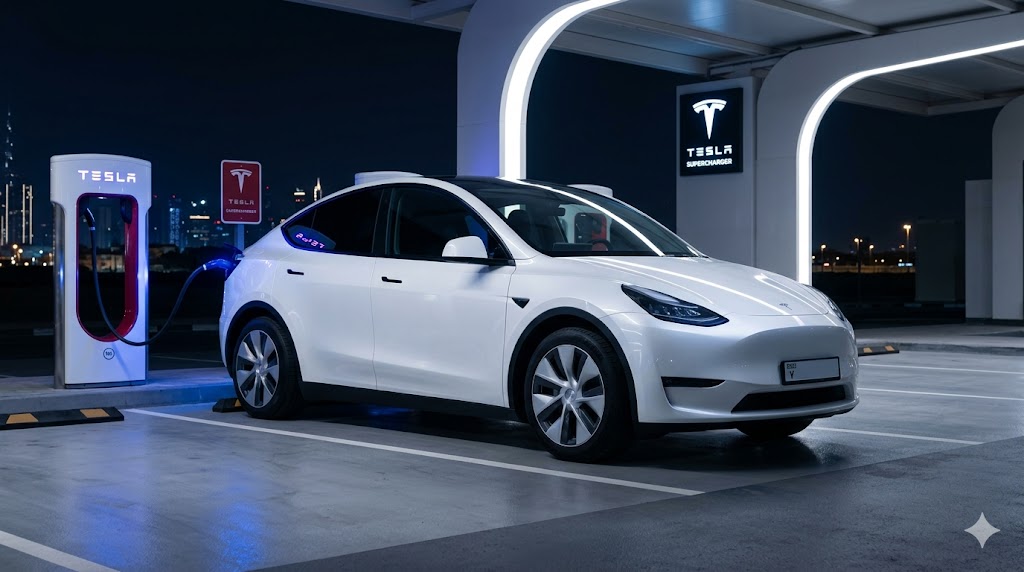
Electric vehicles change the road trip calculation more fundamentally, since range and charging infrastructure both become part of trip planning in a way gasoline never requires. A road trip in an EV can work extremely well on well-traveled interstate corridors with dense fast-charging networks, but it requires more deliberate planning on rural routes or through regions with sparser charging infrastructure. Cold weather also reduces real-world EV range more noticeably than it affects a gasoline vehicle's fuel economy, which matters if your road trips regularly cross into winter conditions. None of this makes an EV a poor road trip choice, but it does mean the "range" question for an EV is really a question about your specific route and the charging network along it, which is worth researching for your actual trip rather than assuming based on the advertised range figure alone.
Cargo Space: Where Real Trips Get Won or Lost
Advertised cargo volume numbers are useful for comparison but notoriously bad at predicting how a trunk will actually swallow real luggage, because rigid suitcases and awkwardly shaped items like coolers or camping gear don't pack with the same efficiency as the foam blocks manufacturers use to measure cargo volume. A wider, more rectangular cargo area, common in wagons, hatchbacks, and midsize to large SUVs, generally accepts real luggage more efficiently than a similarly rated but narrower or more oddly shaped trunk found in some sedans, even when the raw cubic-foot figures look comparable on paper.
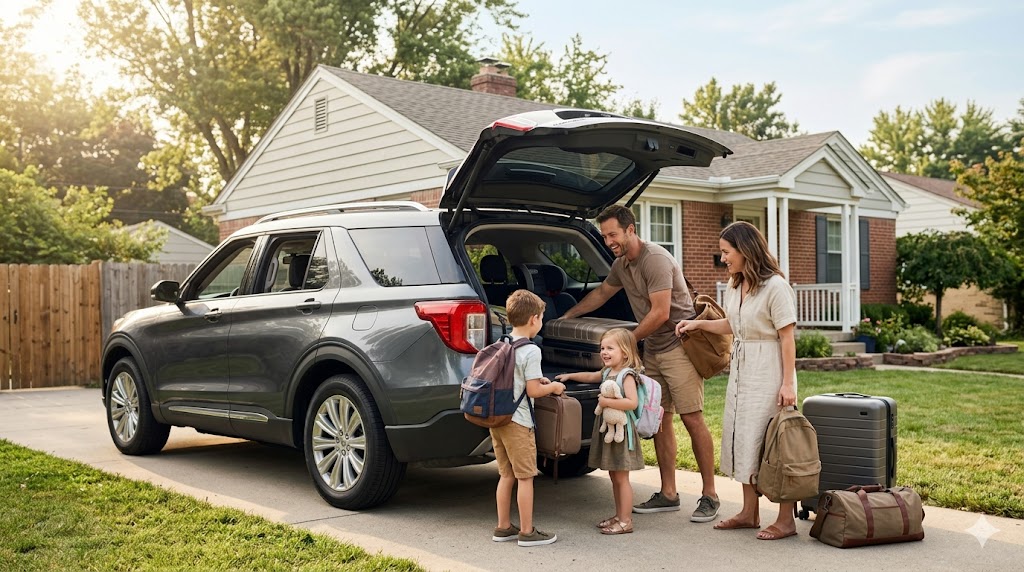
Underfloor storage, a low liftover height for lifting heavy items, and split-folding rear seats that let you carry extra cargo while still seating passengers all matter more in practice than the headline cargo number. Three-row SUVs offer particularly strong flexibility here, since you can fold the third row for a road trip with fewer passengers and gain substantial cargo room, or leave it up for a full family trip with everyone's luggage compressed into a smaller space behind the second row. If you're regularly road-tripping with more than two people and real luggage rather than just an overnight bag, it's worth physically loading your own bags into a candidate vehicle at the dealership rather than trusting the spec sheet, since this is one area where hands-on testing reveals far more than a comparison chart.
Balancing All Three Without Overspending
The honest trade-off is that no single vehicle category dominates all three priorities equally. Large sedans often deliver excellent ride comfort and efficiency but compromise on outright cargo volume compared to an SUV. Three-row SUVs offer the most cargo flexibility and often strong comfort but typically cost more to fuel and can feel less agile on winding mountain roads that are part of many classic road trip routes. Midsize crossovers frequently land as the most balanced compromise, offering solid comfort, respectable cargo space, and reasonable efficiency without excelling dramatically in any single category. Deciding which trade-off matters most for your specific trips, whether that's interstate cruising with minimal luggage or a family camping trip with gear stacked to the ceiling, is the real question road trip shoppers need to answer before comparing specific models.
Key Takeaways
- Long-distance comfort depends more on lumbar support, cabin noise insulation, and rear-seat space than on how a seat feels during a short test drive.
- Real-world range for gasoline and hybrid vehicles varies with speed and climate control use, while EV road trips require actual route-specific charging research.
- Advertised cargo volume numbers often fail to predict how real luggage packs, so physically loading your own bags is the best test.
- Three-row SUVs offer the most cargo flexibility, while large sedans often win on comfort and efficiency at the cost of ultimate cargo space.
- Midsize crossovers tend to be the most balanced choice across comfort, range, and cargo space without excelling dramatically in any one area.
- Bottom line: match the vehicle category to your specific trip pattern rather than chasing a single best-in-class number in comfort, range, or cargo alone.