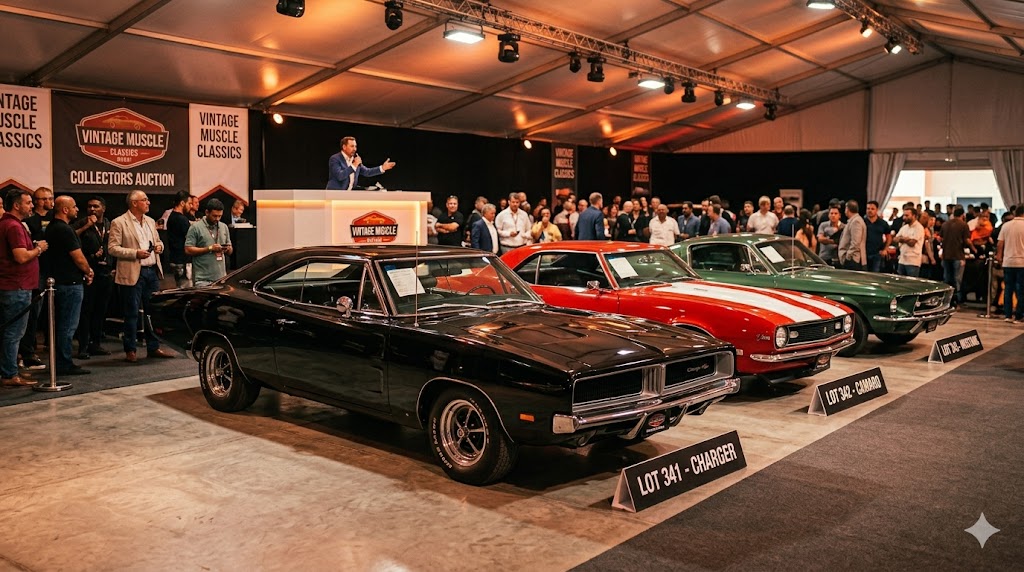
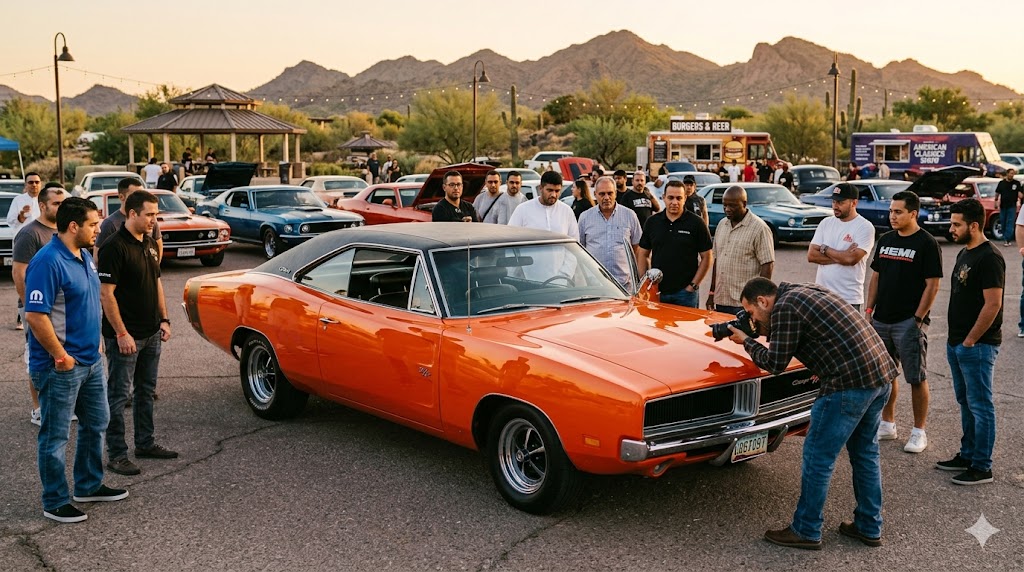
Every January, a stretch of desert land at WestWorld in Scottsdale, Arizona, turns into the closest thing the collector car world has to a Super Bowl. Tens of thousands of bidders, spectators, and television cameras descend on the event for a week, and by the time the gavel falls on the final lot, the auction has once again reminded everyone why it's treated as a bellwether for where the classic car market stands. If you're searching for the specific dollar figures from the 2025 sale, the responsible answer is to go straight to Barrett-Jackson's own results archive, since final hammer prices, buyer's premiums, and charity lot totals are published and verified there after the event closes. What's worth unpacking here instead is why this auction consistently produces headline numbers, which categories of cars tend to generate them, and how you should read "record" claims when they surface.
Why Scottsdale Carries Outsized Weight in the Hobby
Barrett-Jackson built its reputation on a no-reserve format for the majority of its lots, which means nearly every car that crosses the block at Scottsdale sells to the highest bidder that day, full stop. That structure creates genuine tension in the room and on the broadcast, because sellers can't quietly walk a car back if bidding stalls. It also means the sale results function as a real-time referendum on demand rather than a curated highlight reel of pre-negotiated deals. Combine that with the sheer scale of the event, typically well over a thousand vehicles crossing the block across six or seven days, and you get a dataset large enough that trends in muscle cars, trucks, or resto-mods actually mean something statistically, not just anecdotally. Television coverage on networks reaching a national audience amplifies every eye-catching sale, which is part of why Scottsdale results ripple through insurance valuations, private-sale asking prices, and even parts markets for months afterward.
The Categories That Typically Draw the Biggest Money
If history is a guide, a handful of categories reliably produce the sales people talk about after the tent comes down. Numbers-matching Hemi-powered Mopars, particularly rare Six Pack and Hemi convertible variants from the late 1960s, tend to draw intense bidding from a collector base that has chased these cars for decades and knows exactly how few survive in original condition. First-generation Ford Broncos and early Bronco-based resto-mods have become a fixture of the top-sellers conversation over the past several years, reflecting a broader surge in interest in vintage 4x4s that crosses over into a younger buyer demographic than the traditional muscle car crowd. Professionally built resto-mods, where a classic body sits over a modern chassis, drivetrain, and interior, also consistently land near the top of the results sheet, since they offer usability that numbers-matching originals can't match without risking irreplaceable factory components. Add in celebrity-owned vehicles, low-mile modern supercars, and the occasional one-off custom build from a marquee builder, and you have the recipe for whatever ends up labeled a "top sale" once the week wraps.
How "Records" Actually Get Established in This Hobby
The word "record" gets used loosely in car-auction media coverage, so it helps to know what it actually requires. A legitimate model-specific record means a particular example, verified by chassis or body number, sold for more at public auction than any documented prior sale of that same model and configuration. That's a narrow, specific claim, and serious auction houses and price-guide services cross-reference it against historical databases before repeating it. A broader claim, like an event setting a record for total sales across the week, is a different and easier bar to clear, since it can be influenced simply by adding more consignments or higher-value lots to the docket rather than by genuine appreciation in per-car values. When you see "record" attached to a Scottsdale result, it's worth asking which kind of record is being claimed, and checking whether the auction house's own release specifies the comparison point. Barrett-Jackson typically publishes lot-by-lot results with hammer price and buyer's premium included, which lets you verify any headline number against the primary source rather than a secondhand summary.
Reading the Sale Price: What the Number Doesn't Tell You
A hammer price is the start of the financial story, not the end of it. Buyer's premiums at major auction houses typically run somewhere in the high single digits to low double digits as a percentage of the hammer price, meaning the total a buyer actually pays can run meaningfully higher than the number flashed on the screen. On the seller's side, consignment fees and transportation costs eat into proceeds as well, so a headline sale price rarely reflects what either party actually nets. Condition reporting also matters enormously and is easy to overlook in the excitement of a live sale. Cars at Scottsdale range from concours-level restorations backed by extensive documentation to driver-quality cars with cosmetic touch-ups, and the difference in long-term ownership cost between those two tiers can be substantial even when the hammer prices land close together. Auction fever, the well-documented tendency for competitive bidding to push a price past what either bidder would have paid in a private, unhurried negotiation, is real and shows up most often on cars with emotional pull, like a childhood-dream muscle car or a low-production special edition.
What to Watch For and Where to Verify It Yourself
If you want to follow this year's results with a clear head, treat the live broadcast and social media chatter as color commentary rather than the record of truth. Barrett-Jackson posts official results on its website by lot number, typically within days of each session closing, and that listing is the version worth bookmarking. Price guide services and enthusiast publications that track auction data over time, cross-referencing multiple sales of the same model across different auction houses and years, are a better source for understanding whether a given result reflects a genuine market shift or a one-off outlier driven by two determined bidders. It's also worth watching which categories underperform relative to expectations, since a soft result for a segment that has historically done well, say, a certain era of muscle car, often tells you more about where the market is heading than another eye-popping outlier at the top of the sheet. Scottsdale's results, taken as a whole rather than cherry-picked into a highlight reel, are one of the better available snapshots of collector sentiment at the start of each year.
The Trade-Offs Bidders and Sellers Should Keep in Mind
For anyone tempted to consign or bid based on what they read about Scottsdale, a few practical trade-offs deserve attention. Consigning to a no-reserve sale offers speed and certainty of sale but removes the safety net of a reserve price, meaning a car can sell for less than a private buyer might have paid with more time to shop it around. Bidding in person or online carries its own risk, since the pace of a live auction leaves little room for the kind of deliberate due diligence a private purchase allows, and pre-auction inspection windows, while available, are shorter than most buyers would prefer for a six-figure purchase. Restoration costs are another factor that headline sale prices obscure entirely: a car that sells for a striking number may have absorbed a restoration budget that dwarfs the eventual sale price, meaning the seller's actual return looks far less impressive than the headline suggests. None of this makes Scottsdale a bad venue for buying or selling; it makes it a venue where reading past the top-line number is essential before you draw conclusions about value.
Key Takeaways
- Barrett-Jackson Scottsdale's no-reserve format and massive lot count make its results a genuine, closely watched signal of collector-market demand each January.
- Hemi-powered Mopars, vintage Broncos, and professionally built resto-mods are the categories that most consistently generate the sales people talk about afterward.
- A true "record" refers to a specific model's documented all-time high at auction, which is a narrower and more verifiable claim than a broad event-wide sales record.
- Buyer's premiums, consignment fees, and restoration costs mean a headline hammer price rarely equals what either party actually nets.
- Verify any specific 2025 sale price or record claim against Barrett-Jackson's official published results rather than secondhand recaps.
- Bottom line: treat Scottsdale as a valuable barometer of collector sentiment, but confirm the actual numbers at the source before you let any single "record" sale change your view of the market.