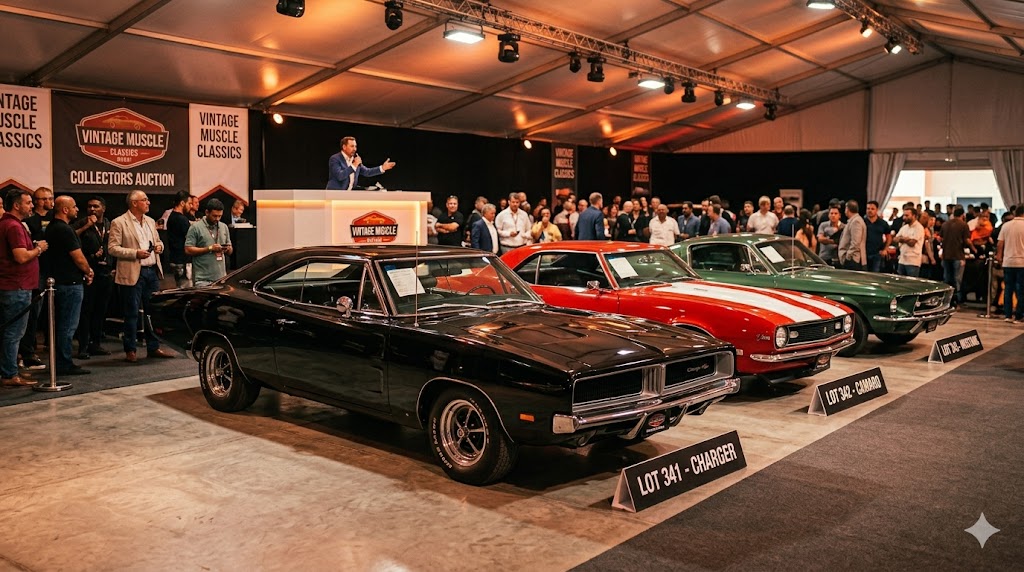
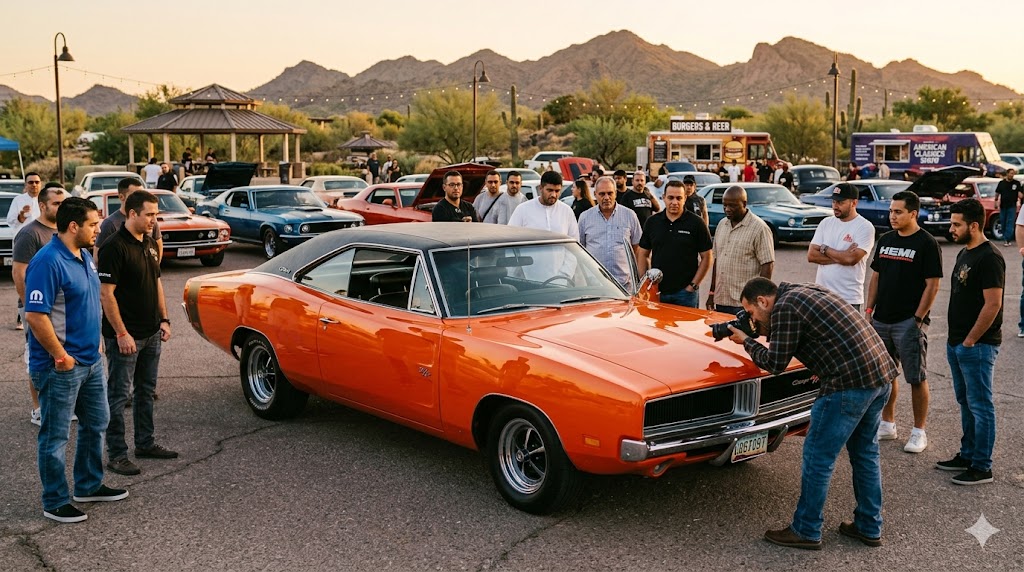
A dust-caked coupe rolls across an auction stage with cobwebs still clinging to the mirrors, and the crowd leans forward the way people do at a magic show. Everyone assumes the hammer price is going to be a story for the ages. Then the number lands, and it's often lower than what a clean, driver-quality example of the same car brought the week before at a different sale. That gap between the spectacle of discovery and the actual settlement price is where most people misunderstand barn find economics.
The romance of a barn find is real, but the math behind it is unglamorous. Buyers at these auctions are not paying for a story; they are paying for a car with unknown mechanical condition, likely rust in places nobody has inspected closely, a title that may need work, and a restoration bill that hasn't been written yet. That uncertainty gets priced in, and it usually gets priced in aggressively.
Why the Discovery Premium Is Smaller Than People Expect
The instinct is to assume rarity plus mystery equals a bidding frenzy. Sometimes it does, especially when a car is a genuinely significant example with clear providence and a body that presents better than expected once the grime is wiped away. But the more common outcome is that experienced bidders treat a barn find as a parts car or a restoration project first and a piece of history second. They run their own numbers: estimated cost to recommission or fully restore, plus the purchase price, compared against what a finished example of that same model already sells for in the current market. If the total exceeds the ceiling value of a nicely restored car, the bidding stalls quickly.
This is the central math that governs every barn find sale. A buyer calculates purchase price plus restoration cost and checks it against the top of the market for that model in excellent condition. Sellers and auction houses often market these cars with language suggesting untapped value, but the room full of bidders is doing subtraction, not dreaming.
What Drives the Number Up
Certain factors do push barn finds into surprising territory, and it's worth being specific about what they are rather than treating every dusty car as equally desirable. Original, matching-numbers drivetrains matter enormously, because a numbers-matching barn find retains a kind of authenticity that a car with a replacement engine can never recapture, no matter how well restored. Documented ownership history, especially a single-family chain of custody with fuel receipts, service records, and old registration paperwork, reduces the buyer's uncertainty and therefore reduces the discount they demand. Low, verifiable mileage does the same thing, since a barn find with 19,000 original miles is a fundamentally different proposition than one with an odometer nobody trusts.
Body condition also matters more than people assume going in. Surface rust and faded paint are cosmetic and priceable. Structural rust in the frame rails, floor pans, or unibody sections is a different category entirely, because it turns a restoration estimate into a guess and pushes many serious buyers to walk away rather than bid up. The cars that generate real premiums tend to be dry-climate finds, stored indoors, with intact glass and trim, because those details compress the unknowns that otherwise get baked into a lower bid.
Where the Discount Comes From
Every barn find carries what amounts to an unknown-condition tax, and estimating its size is the actual skill in this corner of the hobby. A car that hasn't run in twenty years has fuel system components, brake lines, and rubber seals that are presumed shot until proven otherwise. Tires need replacement regardless of tread depth because rubber degrades with age even when a car never moves. Batteries, belts, and hoses are assumed dead. None of that is exotic knowledge, but it adds up fast, and serious bidders build a rough recommissioning budget into their max bid before the gavel ever falls.
Then there's the title and paperwork question, which trips up more buyers than any mechanical issue. Cars that have sat for decades sometimes carry lapsed registrations, salvage brands from an incident nobody mentioned, or ownership gaps that require real legwork to resolve. Auction houses vary widely in how thoroughly they vet this before a car crosses the block, so buyers who skip their own title research are taking on risk that doesn't show up in the glossy catalog photo.
The Auction House's Role in Setting Expectations
Auction houses have gotten skilled at marketing the discovery narrative because it drives foot traffic and bidder registration even when it doesn't necessarily drive the final price. Catalog copy leans on phrases like "untouched since 1974" or "first time offered in fifty years," and that language does real work in generating interest. But the smart consignors and auction specialists will tell you privately that presale estimates for barn finds tend to be wide and conservative precisely because condition is so hard to verify from photos and a brief walk-around. The gap between low and high estimate on a barn find lot is usually much wider than on a known, documented, driver-quality car, and that width is itself a signal about how much uncertainty is baked into the pricing.
This is also why barn finds sometimes sell below the low estimate, which happens more often than auction house marketing would suggest. When bidders in the room collectively decide the recommissioning math doesn't work, the lot can go for a number that disappoints the consignor even as it generates a viral headline about "attic find" and "decades of dust."
What This Means If You're Bidding
If you're chasing a barn find at auction rather than watching from the sidelines, the practical takeaway is to do your own subtraction before you register a paddle. Get a realistic estimate of recommissioning costs from a shop that specializes in the marque, research what clean examples of the same car are currently bringing at auction, and treat any number above that ceiling minus your restoration budget as money you're paying for the story rather than the car. That's not necessarily irrational if the story has value to you personally, but it should be a conscious choice rather than an accident of auction-room adrenaline.
It's also worth remembering that not every dusty car is actually rare. Plenty of barn finds are common models that happen to have survived in a shed, and survival alone doesn't create value if thousands of better examples already exist on the market. The genuinely valuable barn finds are the ones where rarity, originality, and documentation intersect, and those cars are far less common than the volume of "barn find" auction listings would suggest.
Key Takeaways
- Barn find prices are usually set by bidders subtracting estimated restoration costs from the ceiling value of a finished example, not by story-driven excitement alone.
- Numbers-matching drivetrains, documented ownership history, and verifiable low mileage push prices up more than dust and cobwebs do.
- Structural rust and unresolved title issues create the biggest discounts because they turn cost estimates into open-ended guesses.
- Wide presale estimate ranges on barn find lots reflect genuine uncertainty about condition, not just cautious marketing.
- Many barn finds are common models whose rarity is really just survival, which doesn't guarantee strong bidding on its own.
- Bottom line: calculate your own recommissioning budget against current market ceiling prices before bidding, and treat any premium above that as the cost of the story, not the car.