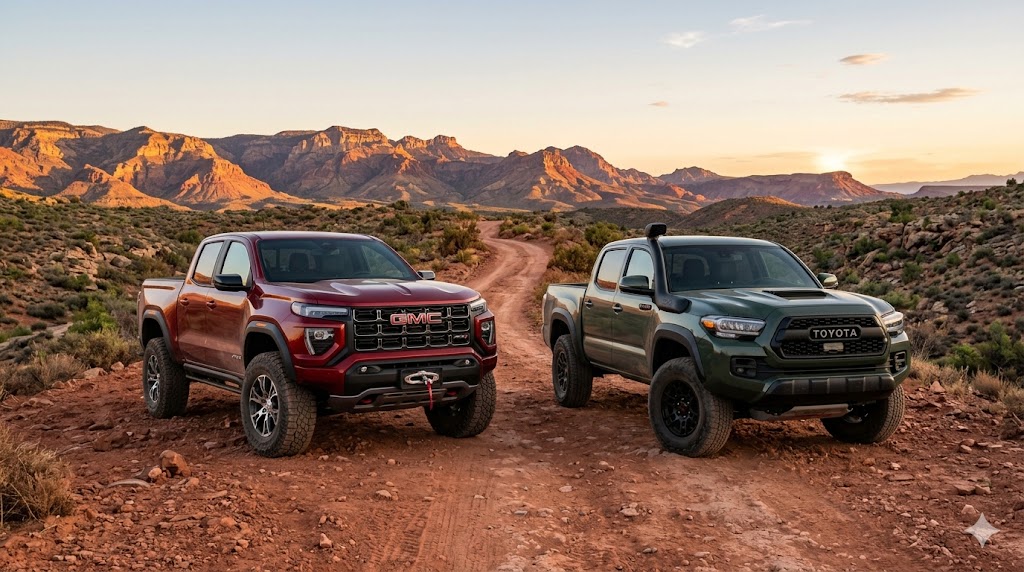
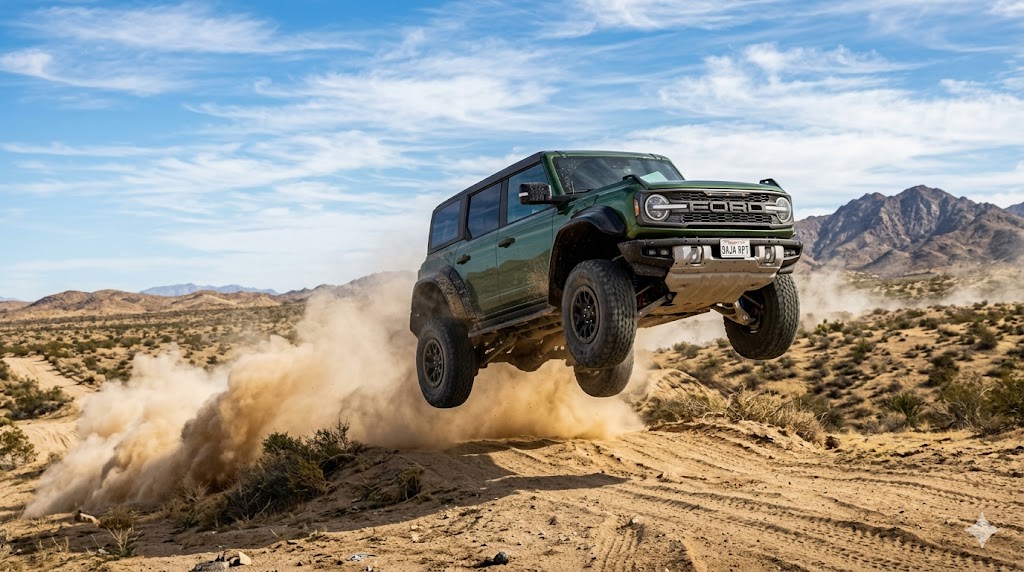
Every few years, another automotive writer predicts the 4Runner's demise, certain that Toyota will finally cave to the unibody crossover trend sweeping the midsize SUV segment. Every few years, Toyota proves them wrong by continuing to build a body-on-frame SUV that sells steadily to a customer base that has never asked for a smoother ride or a quieter cabin. The redesigned 4Runner, now sharing its bones more closely with the current Tacoma and Land Cruiser, finally brings some overdue modernization. What's notable is how selectively Toyota applied that modernization, keeping the traits that made the old 4Runner beloved while fixing the ones that made it feel dated.
The TRD Pro sits at the top of the off-road-focused trim ladder, and it exists specifically for buyers who want factory-installed hardware capable of handling real desert running and technical trail work without immediately voiding a warranty through aftermarket modifications. That's a narrower mission than "best 4Runner for everyone," and the TRD Pro executes it with the kind of focus that suggests Toyota's off-road engineers, rather than its marketing department, had the final say on the spec sheet.
Still Body-on-Frame, and That's the Point
The decision to keep the 4Runner on a traditional body-on-frame platform, shared with the Tacoma and Land Cruiser, is the single most important fact about this vehicle. Body-on-frame construction is heavier and generally rides worse on pavement than a unibody alternative, but it offers superior durability for towing, repeated off-road abuse, and the kind of frame-twisting stress that technical trails inflict on a vehicle over years of ownership. Buyers who cross-shop the 4Runner against unibody competitors are making a real trade-off, not just choosing between two flavors of the same thing.
The new platform brings a fully boxed frame that's stiffer than the outgoing generation's, which pays dividends both in on-road composure and in off-road durability, since a stiffer frame resists the flex that eventually leads to squeaks, misalignment, and fatigue cracking in vehicles that see hard trail use over their lifespan. Toyota also finally moved to a more modern suspension design on many trims, though the TRD Pro's setup remains tuned specifically for off-road absorption rather than on-road sharpness.
What the TRD Pro Actually Adds
The TRD Pro package brings Fox-tuned suspension components specifically calibrated for high-speed off-road driving, the kind of desert-running capability that soaks up whoops and washboard sections without beating up the chassis or the occupants. This is a different discipline from rock crawling, and the TRD Pro leans harder into it than a Trailhunter or TRD Off-Road trim does, even though it still retains meaningful low-speed crawling ability thanks to standard four-wheel-drive hardware, a locking rear differential, and Toyota's Multi-Terrain Select and Crawl Control systems on relevant trims.
Underbody protection, a functional hood scoop for engine bay ventilation on certain configurations, all-terrain tires, and a wider stance all contribute to a vehicle that looks aggressive and largely backs it up. Ground clearance and approach angle are strong for the segment, though buyers expecting Rubicon-or-Bronco-Sasquatch-level rock crawling specs should recognize the TRD Pro's calibration favors speed over articulation to a meaningful degree. It is an excellent desert runner and a capable trail vehicle, but its personality leans toward the former.
The Cabin Finally Catches Up
Previous 4Runner generations lagged badly on interior technology and materials, feeling more like a preserved artifact than a current product by the time this generation finally arrived. That gap has closed substantially. The redesigned cabin brings a modern infotainment system with a much larger, more capable touchscreen, improved materials, and a dashboard layout that no longer feels borrowed from a decade-old parts bin. It's a genuine leap, and buyers who found the previous 4Runner's interior to be its weakest link will notice the difference immediately.
That said, Toyota didn't chase segment-leading quietness or plushness, and rightly so — that's not what this vehicle is for. Road noise remains more present than in a crossover-based competitor, and the ride, even on non-TRD-Pro trims, prioritizes durability and off-road composure over the last word in comfort. It's a reasonable trade for the target buyer, but families cross-shopping purely on daily comfort should test drive both before deciding.
Efficiency and Powertrain Reality
The 4Runner's available powertrains, including a turbocharged four-cylinder and a hybrid variant on certain trims, represent a real step forward from the aging naturally aspirated V6 that powered the previous generation for its entire run. Buyers should check current published fuel economy and output figures for their specific configuration, since the lineup spans multiple powertrain choices with different characters — some prioritizing towing capacity and low-end torque, others prioritizing efficiency. What matters for the TRD Pro shopper specifically is that the added weight of the off-road hardware and wider tires will affect real-world efficiency somewhat compared to lighter trims, a reasonable trade for the capability gained.
Where the 4Runner TRD Pro Fits
This is not a vehicle for buyers chasing the smoothest highway cruiser in the segment, and it never has been. It's for buyers who want something that will still be running reliably after years of washboard roads, dust, mud, and the kind of neglect that would eventually expose weaknesses in a more delicate crossover. Toyota's reputation for long-term durability, even if not every individual component is perfect, remains a real factor in the buying decision for this vehicle in a way it simply isn't for many competitors. The 4Runner TRD Pro doesn't try to be everything. It tries to be dependable, capable at speed off-road, and true to a formula that has quietly outlasted most of its critics.
Key Takeaways
- Toyota kept the 4Runner body-on-frame, trading some on-road refinement for towing durability and long-term off-road resilience.
- The TRD Pro's Fox-tuned suspension is calibrated for high-speed desert running more than pure rock-crawling articulation.
- The redesigned interior finally closes a long-standing technology and materials gap versus competitors.
- Powertrain choices have modernized meaningfully, but buyers should confirm current output and efficiency figures for their specific trim.
- Bottom line: the TRD Pro suits buyers prioritizing long-term durability and desert-speed off-road capability over cabin refinement or maximum low-speed crawling ability.