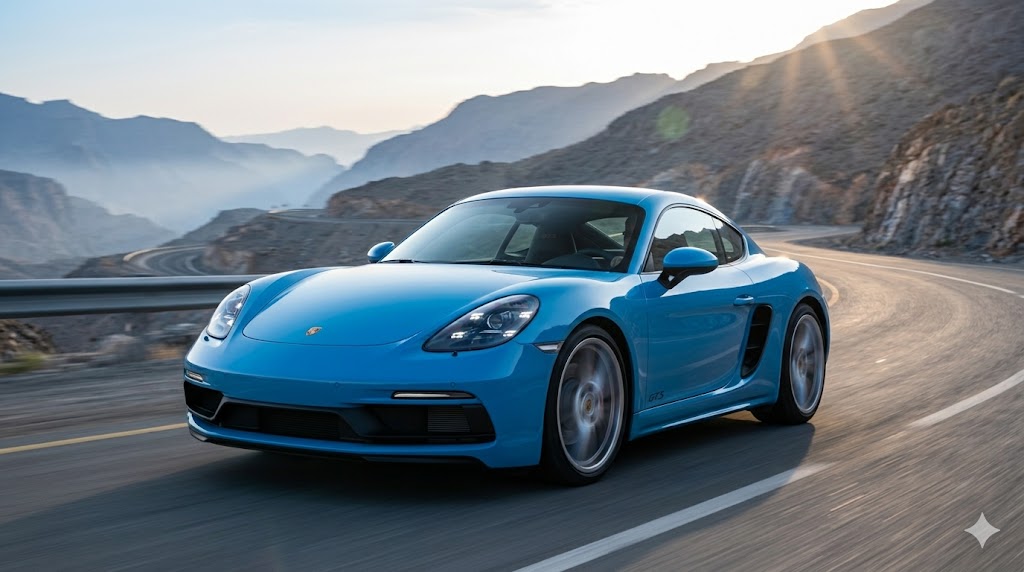
Most cars marketed as "race car for the road" are exercises in exaggeration, a firmer suspension and a few carbon panels dressed up with racing language. The Porsche 911 GT3 is one of the rare exceptions where the phrase is close to literal fact. Its engine shares its architecture with Porsche's GT3 Cup racing program, its aerodynamics are functional rather than decorative, and its chassis tuning philosophy prioritizes lap time and feel over comfort in a way almost no other road-legal car still commits to. The 2025 model continues that tradition, and after decades of GT3 generations, it remains the benchmark against which every other track-focused sports car gets measured.
The Engine Is the Whole Argument
At the heart of the GT3's appeal is a high-revving, naturally aspirated flat-six that traces its lineage directly to Porsche's racing programs, and in an era when nearly every performance car manufacturer has moved to turbocharging for efficiency and emissions reasons, that naturally aspirated character is itself a statement. There's a directness to how the engine responds to throttle input, an immediacy without the slight delay or non-linear power delivery that even well-tuned turbo engines exhibit, and it revs to a redline high enough that using the full rev range on a track or a favorite road becomes part of the car's central experience rather than an occasional indulgence. Porsche has continued to refine this engine generation over generation rather than replacing the fundamental formula, and that patience shows in how complete and sorted the powertrain feels. Exact power, torque, and acceleration figures shift between model years and trims, so it's worth checking Porsche's current published specifications rather than relying on numbers from prior generations, but the character of the engine, urgent, vocal, and linear, has remained consistent across recent GT3 iterations.
Chassis and Aerodynamics That Actually Do Something
What separates the GT3 from a merely fast 911 is how seriously Porsche treats the aerodynamic package and suspension tuning as functional race-derived engineering rather than styling exercises. The prominent rear wing, the front splitter, and the underbody aerodynamic treatment are there to generate real downforce at speed, not to suggest performance the car doesn't have, and that downforce translates into cornering confidence at the kind of speeds where a standard 911 would start feeling less planted. The suspension, developed with direct input from Porsche's motorsport division, delivers a level of body control and steering precision that makes the car feel like it's reading the road surface in far more detail than most road cars bother to process, at the cost of a ride quality that's firm enough to make daily driving on rough roads a genuine consideration rather than an afterthought.
Porsche also continues to offer the GT3 with a manual transmission alongside its dual-clutch PDK option, which by itself sets it apart from nearly every other current-generation performance car in this segment. The manual doesn't outperform the PDK in outright lap times, and Porsche's own data has generally shown the PDK to be the quicker option around a track, but the manual exists because Porsche recognizes that some buyers value the engagement of rowing their own gears over outright speed, and offering both is a rare acknowledgment that not every performance metric needs to be optimized to the exclusion of driver involvement.
Where the Compromises Actually Show Up
Calling the GT3 a race car for the road isn't pure praise; it comes with the honest trade-offs that phrase implies. Ride quality on anything less than smooth pavement is firm to the point of being tiring on longer drives, and this is not a car that disguises its track-focused suspension tuning with a comfort mode that meaningfully softens the experience. Road noise and mechanical noise are prominent by design, since sound deadening that would dull the connection to the drivetrain and road has been deliberately minimized. Interior amenities, while not spartan, are clearly secondary to the car's performance mission, and buyers expecting the plush, quiet cabin of a Panamera or even a standard Carrera will find the GT3's cabin more focused on function, weight savings, and connection to the driving experience than outright luxury.
Practicality is also limited in ways that matter for daily use. Rear seats, where fitted, are token at best, cargo space is modest, and the car's low ride height and aggressive front aerodynamics demand real caution around speed bumps, steep driveways, and uneven parking surfaces. None of this will surprise anyone shopping specifically for a GT3, but it's worth stating plainly for anyone considering it as a sole daily driver rather than a dedicated enthusiast car with occasional daily use.
How It Compares to Its Own Stablemates
Within Porsche's own lineup, the GT3 occupies a specific niche that's worth understanding before cross-shopping. It's more track-focused and less forgiving than a Carrera S or Turbo model, both of which prioritize a broader usability window alongside strong performance. It's also, in most enthusiast assessments, a more purely engaging and analog experience than the GT3's own more track-extreme siblings that add additional aerodynamic aggression and stiffer tuning at the further expense of everyday usability. The GT3 essentially sits at the sweet spot within Porsche's own range: focused enough to feel genuinely race-derived, but still, with reasonable expectations about ride quality and daily practicality, usable as a road car on a regular basis.
Why It Still Earns the Superlatives
What ultimately justifies the "done to absolute perfection" framing isn't any single spec or feature, but the consistency of the car's execution across every system that matters to how it drives. The engine, chassis, aerodynamics, steering, and brakes all feel like they were developed together with a single mission in mind, rather than assembled from a parts bin and tuned to hit a marketing target. Competing manufacturers have occasionally matched individual aspects of the GT3's performance, a rival engine that revs as high, a rival chassis that corners as flatly, but few have matched the completeness of how those elements work together as a single, coherent driving experience. That completeness, more than any individual number, is why the GT3 continues to draw comparisons to genuine race cars rather than just fast road cars wearing race car styling.
The Bottom Line
The 2025 911 GT3 is not for buyers who want a comfortable daily driver with occasional sporting pretensions; it's for buyers who want the most track-capable, engagement-focused version of Porsche's sports car formula and are willing to accept firm ride quality, prominent noise, and limited practicality as the price of admission. For that specific audience, it remains close to unmatched, and the continued availability of a manual transmission alongside its razor-sharp naturally aspirated engine makes it feel like a deliberate holdout against industry trends, in the best possible sense.
Key Takeaways
- The GT3's naturally aspirated, motorsport-derived flat-six remains its defining feature in an era when most rivals have moved to turbocharging.
- Its aerodynamic package and suspension tuning are functional race-derived engineering, generating real downforce and cornering confidence rather than styling flourishes.
- Ride quality, noise, and practicality are all genuinely compromised in favor of track performance, making it a poor choice as a sole comfort-focused daily driver.
- Porsche's continued offering of a manual transmission alongside PDK is a rare and meaningful nod to driver engagement over pure lap-time optimization.
- Within Porsche's own range, it sits as the sweet spot between everyday usability and genuine track focus, more extreme than a Carrera, more usable than its most hardcore siblings.
- For buyers prioritizing driving engagement and track capability over comfort, the GT3 remains one of the most complete performance cars available; check current published specs before buying, as figures evolve between model years.