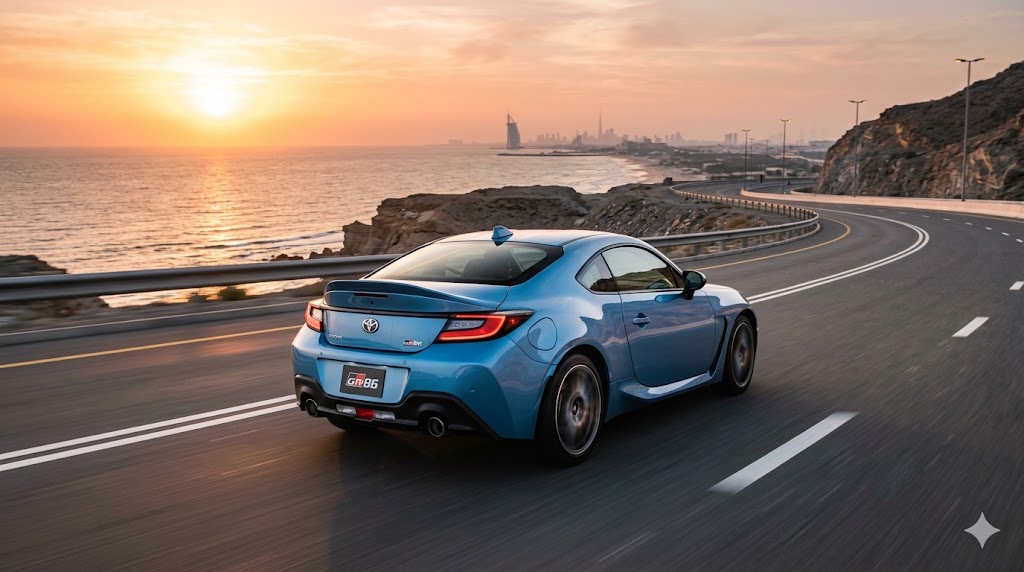
Point the G70 into a decreasing-radius on-ramp and something happens that doesn't happen in most of its rivals anymore: the car tells you exactly what the rear tires are doing, in real time, through the wheel and the seat of your pants. That single trait, more than any spec sheet line, is why the G70 has held onto its title as the best driver's sedan under $50,000 for several model years running, even as BMW has revised the 3 Series, Alfa Romeo has kept the Giulia limping along, and Cadillac has tried to make the CT4 stick. The G70 is the oldest design in this comparison set, and it is still the one enthusiasts reach for.
That "still" is doing real work in this review's premise, and it deserves scrutiny rather than a pass. Genesis is a brand with essentially no motorsport pedigree and no decades of "Ultimate Driving Machine" marketing behind it. It launched the G70 in 2019 as a underdog swinging at BMW's home turf, and the assumption at the time was that Hyundai's luxury arm would nail the value proposition — more content, lower price — while falling short on the actual driving experience that justifies a sport sedan's existence in the first place. That assumption turned out to be backwards. Genesis's engineers, several of whom came from BMW M and Lotus, tuned a chassis that feels more analog and more communicative than the 3 Series it was built to chase, and in the years since, Genesis hasn't had to chase very hard because nobody else has closed the gap.
The Chassis and Steering Case, Restated for 2025
The core of the G70's driving appeal hasn't changed for 2025, and that's the point: this isn't a car that needed a dramatic mid-cycle rethink because the fundamentals were right from the start. The steering rack is quick without being twitchy, weights up naturally as you load the front tires, and — critically — doesn't mute the small corrections and texture changes that most modern electric power steering systems filter out in the name of a smooth, isolated feel. In the 3 Series, steering feel has been gradually dialed back over successive generations in favor of comfort and refinement; in the Giulia, it's excellent but paired with a chassis and electronics suite that can feel less resolved and less consistently sorted. The G70 splits the difference in a way that rewards a driver who actually wants to feel the road.
The rear-wheel-drive platform (all-wheel drive is available and sensible for snow-belt buyers, though it dulls some of the purity) puts power down through a limited-slip differential on the sportier trims, and the car rotates predictably at the limit rather than understeering into safety the way a lot of front-biased luxury sedans do. Ride quality on the adaptive dampers manages to stay composed on broken pavement without going soft, which matters because a genuinely great driver's car has to be livable every day, not just on a smooth test track. This is where the G70 separates itself from cars that are merely quick in a straight line — the CT4-V trims are legitimately fast and have their own steering charm, but the overall chassis polish and damper tuning in the Genesis feel a half-step more finished.
Why "Under $50,000" Is the Real Battleground
The price ceiling in this title isn't incidental — it's the entire competitive frame. Above $50,000, you're in a different conversation involving M340i-adjacent performance variants, Quadrifoglio money, or fully loaded configurations where content and badge prestige start to matter more than chassis tuning. Under that number, you're buying into the compact sport sedan segment at a price point where Genesis has structured its trims specifically to embarrass German rivals on value. A well-equipped G70 at this price includes leather, a suite of driver-assistance features, and finishes that a similarly priced 3 Series often can't match without stacking options packages that push the final number well past where this comparison lives.
That value calculus is precisely why the G70 wins this specific fight rather than a broader one. Genesis doesn't need to beat BMW's flagship performance trim; it needs to beat what a realistic buyer can actually afford, and on that battlefield the G70's combination of chassis talent and included content is tough to argue with. Alfa Romeo's pricing has been erratic and incentive-dependent, which makes direct comparisons messy, while Cadillac has had to lean on discounting to move CT4 volume at all — both tacit admissions that neither nameplate has the pricing power Genesis has built by simply offering more car for the money.
Where the G70 Gives Ground
None of this makes the G70 the objectively superior car in every dimension, and pretending otherwise would do readers a disservice. The back seat is tight, genuinely tight, in a way that will matter if you regularly carry adult passengers rather than occasional ones; taller riders in the second row will find their knees closer to the front seatbacks than they'd like. Trunk space is similarly modest compared to some rivals, and the G70's exterior dimensions overall read smaller than a 3 Series in a parking lot, which some buyers will read as agile and others will read as cramped.
Resale value remains the more uncomfortable trade-off. Genesis has only existed as a standalone brand since 2015, and while its reliability record and dealer experience have both been strong, the brand hasn't yet built the kind of multi-decade resale confidence that BMW's roundel carries almost automatically. Buyers financing or leasing should go in with eyes open: you may get more car per dollar at purchase, but the depreciation curve is a less known quantity, and used-market demand for a Genesis sport sedan is a thinner pool than for a used 3 Series.
The infotainment and technology suite is the other place where "still the best" needs an asterisk. Genesis's software is genuinely good — the touchscreen is sharp, the physical control wheel is a nice throwback for drivers who dislike touch-only interfaces, and the driver-assistance suite is competent. But it isn't segment-leading in the way the chassis is. BMW's latest infotainment generation is more visually ambitious, and some rivals' voice-assistant integration is more capable. The G70's tech is fine, sometimes very good, but it's not the reason you buy this car, and Genesis knows it — the company's entire pitch here has always been about the drive.
The Verdict Holds, With Honest Caveats
What makes the G70 worth still recommending in 2025 rather than treating as a legacy holdover is that its core competency — the thing the title is actually about — hasn't been leapfrogged. Rivals have had years to sharpen their steering feel and chassis response to match a Korean underdog, and by and large they haven't closed the gap in any decisive way. That's a genuine achievement for Genesis, and it's the reason enthusiast reviewers keep returning to the same conclusion even as the G70's infotainment and interior space fall a notch behind fresher competitors. A car doesn't have to win every category to be the best in its class; it has to win the categories that define the class, and for a driver's sedan, that's the chassis, the steering, and how the whole package feels when you're actually driving it hard.
If you're shopping this segment purely on space, tech polish, or resale certainty, the 3 Series or even a well-specced Accord-adjacent premium sedan might serve you better. But if the reason you want a sport sedan in the first place is the sensation of driving one, the G70 remains the one to beat, and nobody under $50,000 has beaten it yet.
Key Takeaways The G70's steering feel and rear-drive chassis balance remain the best in the sub-$50,000 sport sedan class, a title it has held for several years running. Genesis achieves this without the decades of motorsport heritage that BMW and Alfa Romeo can claim, which makes the accomplishment more notable, not less. The value equation under $50,000 specifically favors the G70, since it includes more content and refinement than rivals typically offer at the same price before options. Rear seat room and trunk space are genuinely smaller than in some competitors, so families or frequent rear-passenger carriers should test-fit before buying. Resale value is a real unknown given Genesis's shorter brand history, and infotainment, while solid, isn't the segment's most advanced. Bottom line: if driving feel is your top priority in this price range, the G70 is still the smart buy; if space and resale certainty matter more, cross-shop carefully.