Drive the 2025 Ford Escape for a week and you won't find a single glaring flaw. The ride is settled, the hybrid option is genuinely useful, and the infotainment screen responds quicker than half the class. Then you park it next to a Toyota RAV4, a Honda CR-V, or a Mazda CX-5, and a quieter problem surfaces: none of those individually solid traits add up to a reason to choose the Escape over its rivals. That's the story of this generation of Escape. It's not a bad vehicle. It's a vehicle that does enough things adequately and almost nothing exceptionally, in a segment where five or six competitors are each excellent at something specific.
Start with what the Escape actually gets right, because the case against it only lands if you accept the praise first. On the road, the Escape rides with a composure that's a step above where compact SUVs were even five years ago. Body motions are well controlled over broken pavement, the steering has a natural weight to it, and the cabin stays quiet at highway speeds. Ford also deserves credit for powertrain breadth: you can get the Escape as a standard hybrid, a plug-in hybrid, or with a turbocharged gas engine, which is a wider spread of electrified choice than the CR-V offers and comparable to what Toyota provides across the RAV4 lineup. The PHEV variant in particular is a strong short-commute proposition, capable of covering plenty of daily errands on electric power alone before the gas engine ever wakes up. Add a tech suite that includes a crisp central touchscreen, responsive software, and a reasonably intuitive menu structure, and you have a vehicle that checks the boxes a shopper glances at during a fifteen-minute test drive.
Where the Escape Quietly Falls Behind
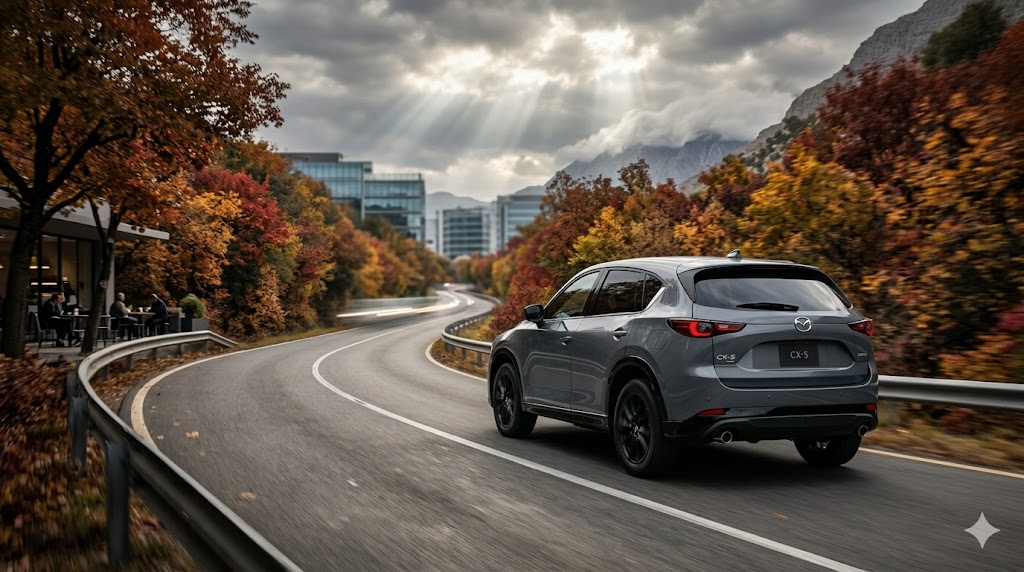
The trouble starts once you look past the headline features and into the details that separate "fine" from "best in class." Interior material quality is the first crack. Slide into a CX-5 and the cabin feels like it belongs a size class up, with padded surfaces and tight, consistent panel gaps. The Escape's cabin, by contrast, leans on harder plastics in places your hand naturally rests, and the design reads as functional rather than aspirational. It's not cheap in an offensive way, but it doesn't disguise its cost-consciousness the way rivals increasingly do.
Then there's hybrid efficiency, which should be the Escape's strongest card and instead is merely a decent one. The RAV4 Hybrid has set the benchmark in this class for years, delivering better real-world efficiency than the Escape Hybrid manages, and the gap is noticeable enough that fuel-conscious shoppers cross-shopping the two will feel it at the pump over time. Ford's hybrid system works well enough in isolation, but "well enough" isn't the same as "leading," and in a segment where hybrid efficiency has become a primary purchase driver, finishing second or third matters.
Resale value compounds the problem. Ford's broader lineup, and the Escape specifically, has historically depreciated faster than Toyota and Honda equivalents. That's not a subjective styling complaint or a matter of personal taste — it's a financial reality that shows up when you trade the vehicle in three or five years down the line. A RAV4 or CR-V holds a meaningfully larger share of its original value, which effectively lowers the true cost of ownership even if the sticker prices look similar at purchase. Shoppers doing real math on total cost, rather than just monthly payment, need to weigh this seriously.
Brand Perception Isn't Just Marketing
There's also a less tangible but real factor: brand perception in this segment has calcified around Toyota and Honda as the safe, reliable, "you can't go wrong" choices. Ford has made genuine reliability strides across recent model years, and the Escape's mechanical fundamentals are more sound than its reputation might suggest to a skeptical shopper. But perception lags reality, and in a category where buyers are often risk-averse and shopping for a vehicle they intend to keep for a decade, that lag costs Ford sales it might otherwise deserve. It's a frustrating dynamic for Ford, because the current Escape is a more credible vehicle than the brand gets credit for — it's just not different enough from its own recent past, or good enough relative to its competition, to force a reconsideration.
Inside, the Escape's cabin does offer a genuine practicality edge in specific ways: the touchscreen is mounted high and angled toward the driver in a way that keeps it easy to glance at, and Ford's climate controls remain physical rather than buried in a touch menu, which is a small mercy compared to rivals that have gone all-in on touch-capacitive surfaces. Rear seat space is competitive, if not chart-topping, and cargo versatility with the rear seats folded is genuinely useful for the way most owners actually use a compact SUV — hauling gear, not maximizing a spec sheet number.
The Verdict Is About Context, Not the Vehicle in Isolation
None of this makes the Escape a poor purchase in a vacuum. If you found one at a compelling lease deal or with a discount that closed the gap to its rivals, you would not be making a mistake. The driving experience is pleasant, the technology works, and the styling — sharper and more coherent than the outgoing generation — holds its own visually. The honest problem is that "would not be a mistake" is a low bar in a segment defined by vehicles that actively earn their spot. The RAV4 wins on hybrid efficiency and resale. The CR-V wins on interior refinement and that unkillable Honda reliability reputation. The CX-5 wins on driving feel and cabin ambiance. The Tucson undercuts on value and warranty coverage. The Escape doesn't lose badly to any one of these vehicles, but it doesn't clearly beat any of them either, and that's precisely the position you don't want to occupy in the most competitive segment in the American market.
Ford has built a genuinely competent crossover here. The frustration, for anyone cross-shopping seriously, is that competent is no longer a differentiator when the entire class cleared that bar years ago. The Escape needed a standout trait — an efficiency win, a materials leap, an unmistakable reliability story — to change the conversation, and instead it arrived as a well-rounded generalist in a field of specialists.
Key Takeaways The 2025 Ford Escape rides comfortably, offers a wider range of electrified powertrains than most rivals, and features responsive, well-placed technology. Interior materials fall short of the CX-5 and CR-V, with harder plastics in high-touch areas that undercut the cabin's overall impression. The Escape Hybrid trails the RAV4 Hybrid in real-world efficiency, weakening the strongest argument Ford could otherwise make. Faster historical depreciation than Toyota and Honda equivalents raises true long-term ownership costs beyond the sticker price. Brand perception continues to favor Toyota and Honda in this segment, even as Ford's mechanical reliability has genuinely improved. Bottom line: the Escape is a reasonable choice if the price is right, but it isn't the vehicle to seek out first in a class with several genuinely superior options.