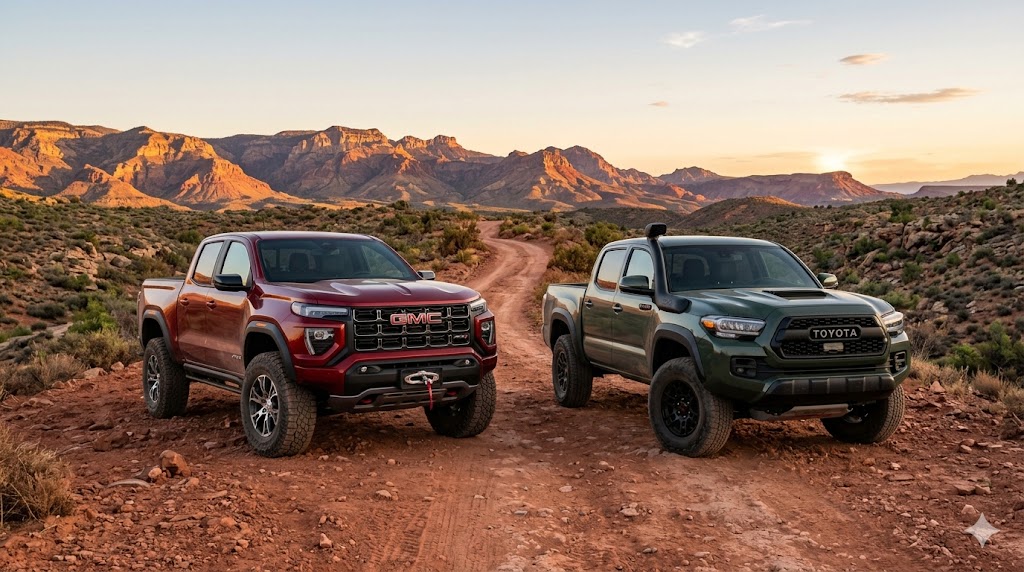
Most trucks that wear an off-road badge earned it in a marketing meeting, not an engineering one. The 2025 Chevrolet Colorado ZR2 is the exception that makes the rest look lazy. Instead of a suspension lift, some plastic cladding, and a graphics package, Chevy bolted on Multimatic DSSV spool-valve dampers lifted almost directly from its motorsports program, added front and rear electronic locking differentials, fitted a front stabilizer bar disconnect, and wrapped it all in a wide, aggressive stance riding on 33-inch off-road tires. None of it requires a trip to the aftermarket counter. You drive it home from the dealer exactly as capable as it will ever need to be for the vast majority of what off-roading actually demands.
That matters because the midsize truck segment has spent the better part of a decade selling "trail-ready" trims that were really just cosmetic upgrades over a standard suspension. The ZR2 flips that script, and it does so specifically to go after the Toyota Tacoma TRD Pro and the Ford Ranger Raptor, two trucks that built their reputations on exactly this kind of no-compromise factory hardware. Chevy isn't positioning the ZR2 as a rugged-looking commuter. It's positioning it as a machine you could reasonably drive to a trailhead in the desert and use hard, then drive home.
The Hardware That Actually Matters
The heart of the ZR2 story is the Multimatic DSSV damper. Spool-valve technology has been a fixture in high-end racing suspensions for years because it manages damping force with far more precision than a traditional shim-stack shock, especially across a wide range of compression speeds. In practical terms, that means the ZR2 can stay controlled and compliant when you're picking through a rock garden at walking pace, then absorb a much harder hit at speed over whooped-out desert trail without bottoming out harshly or kicking the rear end sideways. This isn't a shock tuned by a supplier catalog. It's a piece of equipment that genuinely changes what the truck can survive.
Pair that with the front and rear locking differentials and you have a truck that can put power to a wheel even when the opposite wheel on that axle has no traction at all, which is the difference between crawling over an obstacle and getting stuck on it. The front stabilizer bar disconnect, meanwhile, lets the front axle articulate far more than a standard truck would allow, which keeps tires planted on uneven terrain instead of hanging in the air. Add a wider track and a factory-approved suspension lift, and the ZR2 has genuine underbody clearance and approach and departure angles that hold up against the segment's best.
Under the hood, the turbocharged engine gives the ZR2 real, usable power rather than a spec-sheet number chasing a headline. Chevy has leaned into torque delivery low in the rev range, which is exactly what you want when you're modulating throttle over uneven rock rather than trying to build speed on pavement. You should check the latest published horsepower and torque figures directly, since Chevy has continued to refine the powertrain, but the character of the engine on the trail is confident rather than frantic, and it never feels like the weakest link in the off-road equation.
Living With It On-Road
Here's where the honest trade-offs start. All that off-road hardware doesn't disappear when you point the ZR2 down a regular street, and you feel it. The ride, while dramatically better controlled over rough pavement than you'd expect from a truck with this kind of suspension travel, is still firm and occasionally busy at low speeds on smooth roads. The DSSV dampers are a huge upgrade over a generic off-road shock, but they can't fully disguise the fact that this is a truck built around a wide stance and aggressive off-road tires, not a commuter tune. Highway cruising is composed and stable, but you notice more road noise and a stiffer secondary ride than you'd get in a standard Colorado trim.
Fuel economy is the other bill that comes due. The wider stance, the more aggressive off-road tires, and the added weight of the locking differentials and reinforced components all conspire against efficiency. Expect noticeably worse real-world fuel economy than a standard Colorado, and don't expect to match the EPA figures of the more street-oriented trims. This is a truck that's upfront about the trade-off: capability like this isn't free, and it shows up every time you fill the tank.
Interior: Function Over Flash
Step inside and the ZR2 makes its priorities clear. This is still fundamentally a work-truck cabin dressed up with better bolstering, ZR2-specific trim, and a few off-road-relevant gauges. The materials are solid and the layout is sensible, with the infotainment system responsive and easy to navigate, but you won't mistake it for a luxury cabin. Chevy has improved perceived quality generation over generation, and the seats in particular do a good job of holding you in place over rough terrain, but there's a workmanlike feel to the switchgear and lower trim panels that reminds you where the engineering budget actually went. If you're cross-shopping against a loaded luxury truck interior, the ZR2 will feel like a step down. If you're cross-shopping against other off-road-focused midsize trucks, it holds its own comfortably.
How It Stacks Up Against the Segment's Best
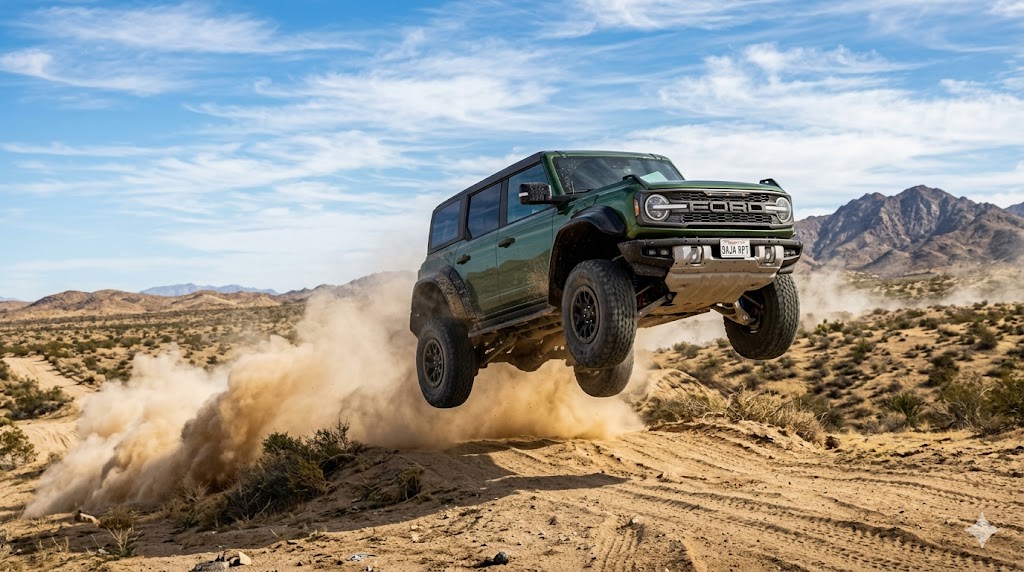
The comparison to the Tacoma TRD Pro is inevitable, and the ZR2 comes out of it looking strong. Toyota's off-road hardware is excellent and its reputation for reliability carries real weight with buyers, but the ZR2's Multimatic dampers are widely regarded as class-leading, and the locking differential setup gives it an edge in situations where you need guaranteed traction rather than just a well-tuned suspension. Against the Ranger Raptor, the comparison shifts. The Raptor brings more outright power and a wider, more purpose-built stance for high-speed desert running, and it can feel like the more track-day-for-dirt option. The ZR2 answers with a tighter package that's arguably more versatile for technical, low-speed rock crawling, where damper sophistication and differential locking matter more than horsepower.
Who This Truck Is Actually For
The ZR2 rewards buyers who will genuinely use what it offers. If your idea of off-roading is a gravel driveway and the occasional dirt road to a campsite, you're paying for capability you'll rarely tap, and a lower Colorado trim would serve you just as well at a lower cost and with better fuel economy. But if you actually run trails, need a truck that can handle genuine rock crawling or high-speed desert two-track, and want that capability without immediately budgeting for aftermarket suspension work, the ZR2 is close to the best factory answer in its class. It's not a truck pretending to be something it isn't, and in a segment full of trucks that do exactly that, the honesty counts for a lot.
Key Takeaways
- The 2025 Colorado ZR2 delivers genuine off-road hardware from the factory, including Multimatic DSSV dampers, front and rear locking differentials, and a front stabilizer bar disconnect, with no aftermarket upgrades needed.
- Its turbocharged engine prioritizes low-end torque and trail usability over headline horsepower numbers, and you should verify current published specs rather than assume older figures still apply.
- On-road ride quality is firm and road noise is elevated compared to standard Colorado trims, and fuel economy takes a real hit from the wide stance and aggressive tires.
- The interior is competent and durable but leans work-truck rather than luxury, so buyers expecting a plush cabin should look elsewhere.
- Against the Tacoma TRD Pro and Ford Ranger Raptor, the ZR2 holds its own particularly well in technical, low-speed terrain thanks to its damper and differential setup.
- Bottom line: buy the ZR2 if you'll actually use serious off-road capability regularly; skip it if your driving stays mostly on pavement, where a standard Colorado trim makes more financial sense.