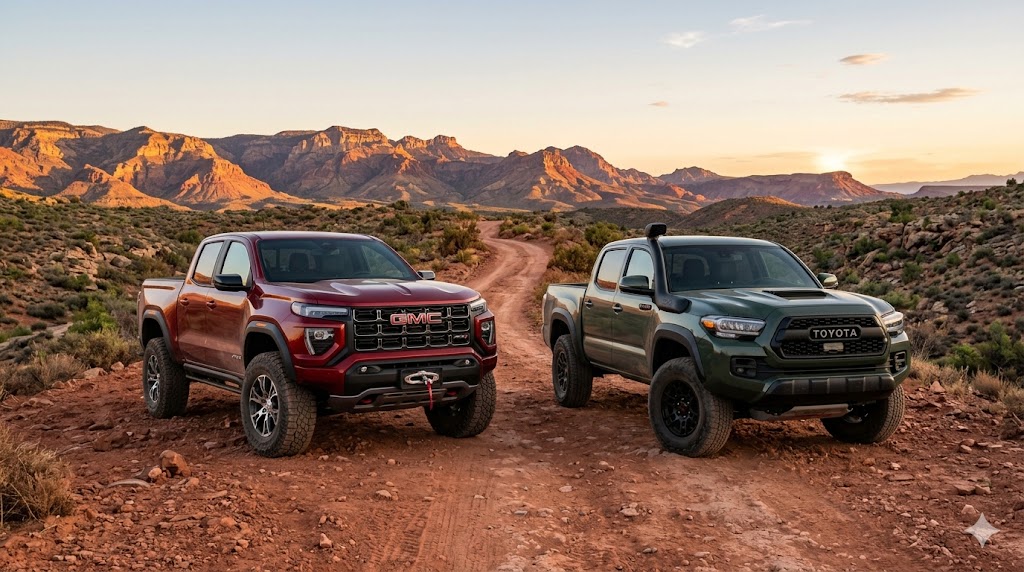
Calling any production vehicle "the toughest" invites an argument, but the ZR2 Bison makes its case through specific, verifiable engineering choices rather than marketing bravado alone. Chevrolet partnered with American Expedition Vehicles, a company with genuine credibility in the overlanding and off-road build world, to reinforce the standard ZR2's underbody protection with boron steel skid plates and stronger rocker guards, plus a slightly more aggressive stance. That partnership is the entire reason the Bison exists, and it's worth understanding what it actually changes versus the already-capable standard ZR2.
The Colorado ZR2 on its own is already among the most off-road-focused midsize trucks sold in the US, with Multimatic spool-valve dampers borrowed conceptually from motorsport applications, front and rear locking differentials, and a wider track than lesser Colorado trims. The Bison package takes that foundation and asks a specific question: what if the truck's underbody armor and mounting hardware could survive impacts that would bend or crack standard equipment during serious rock crawling or high-speed desert running?
Multimatic Dampers Are the Real Star
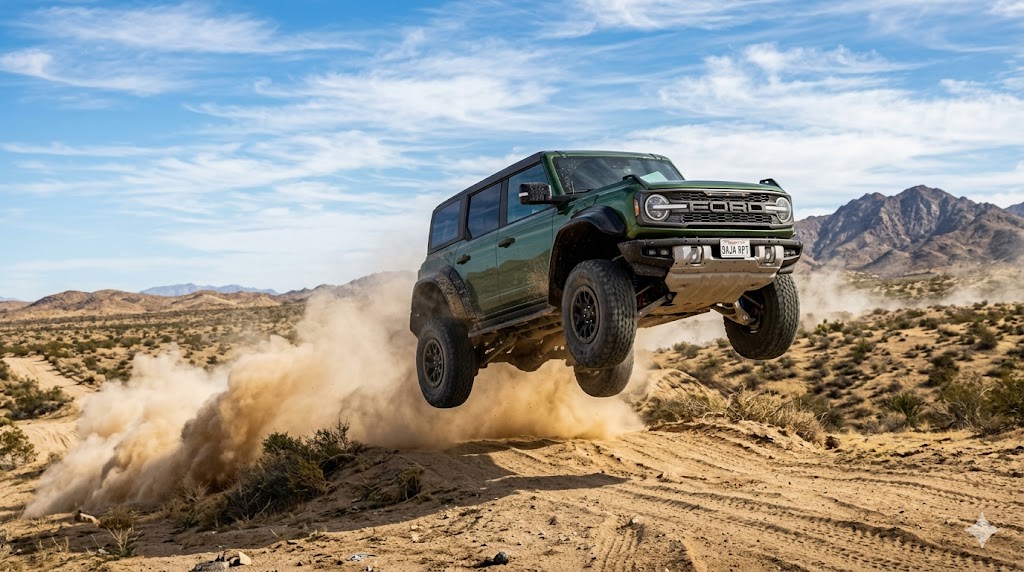
Before addressing the Bison-specific changes, it's worth dwelling on the Multimatic dampers that come on any ZR2, because they're the single biggest reason this platform handles rough terrain so well at speed. Spool-valve damper technology, developed originally for motorsport use, allows for more precise and consistent damping control across a wide range of compression and rebound speeds than a conventional shock absorber typically achieves. In practice, this means the ZR2 platform can absorb sharp, sudden impacts from rocks or ruts while also controlling body motion over long, rolling whoops sections, without the harshness or wallowing that afflicts less sophisticated suspension tuning.
This matters more for the Bison's overall character than people expect, because the toughness claim isn't just about armor plating — it's about a suspension system that lets the truck actually use that armor at speed without beating the chassis or the occupants to pieces in the process.
What AEV Actually Adds
The AEV partnership brings boron steel front and rear bumpers designed to resist denting and deformation far better than standard sheet steel, along with skid plate upgrades that protect vulnerable underbody components like the transfer case and fuel tank during serious rock contact. AEV also contributes unique wheels designed to accommodate the Bison's tire package and a slight suspension lift versus the standard ZR2, adding a bit more ground clearance for approach and departure angle gains.
These changes are genuinely functional rather than cosmetic badge-engineering, which is the detail that separates the Bison from many "off-road appearance package" trims sold across the industry. AEV's business is building off-road armor that survives real abuse, and the components they've contributed to the Bison reflect that focus specifically, down to the mounting hardware and steel gauge choices.
Powertrain and Real-World Capability
The Colorado's turbocharged four-cylinder engine, shared across the lineup, provides strong low-end torque that suits off-road crawling and towing duties well, though buyers should check current published output and towing figures for the ZR2 Bison configuration specifically, since the added weight of the AEV armor and off-road tires will affect real-world towing capacity and fuel economy somewhat compared to lighter Colorado trims. The eight-speed automatic transmission and the two-speed transfer case's low-range gearing combine with the locking differentials to give the Bison genuine crawling ability over technical obstacles, not just high-speed desert composure.
Front and rear locking differentials, standard on the ZR2 and carried over on the Bison, allow the truck to maintain traction in scenarios where an open differential would simply spin the wheel with the least resistance. This is especially valuable on the kind of loose, uneven terrain that technical off-roading actually involves, as opposed to the more predictable high-speed desert running where the Multimatic dampers do most of the heavy lifting.
Midsize Practicality Without Full-Size Bulk
One of the ZR2 Bison's genuine advantages over a full-size off-road pickup like the Ram Power Wagon or Ford F-150 Raptor is its comparatively compact footprint, which translates into a tighter turning circle and easier maneuverability on narrow, technical trails where a longer, wider truck would struggle. This is the classic midsize-truck trade-off: less payload and towing capacity than a full-size rival, in exchange for better agility in exactly the tight, technical scenarios where off-road capability matters most.
Interior space and cargo bed size remain midsize-typical, meaning buyers hauling large loads regularly may find the bed and cab space limiting compared to a full-size truck, but most buyers drawn to this specific trim are prioritizing trail capability and daily drivability over maximum hauling capacity in the first place.
Value Relative to the Standard ZR2
The Bison package commands a real premium over the standard ZR2, and buyers should weigh honestly whether they need the reinforced armor or whether the standard ZR2's already-strong capability suffices for their actual use case. Casual off-roaders who mostly encounter moderate trails and the occasional rocky section may find the standard ZR2 delivers nearly identical on-trail performance for meaningfully less money, since the core suspension and differential hardware is shared between both. The Bison earns its premium specifically for buyers who repeatedly push into terrain aggressive enough to risk real underbody damage, where the reinforced armor will eventually pay for itself in avoided repairs.
Key Takeaways
- The Bison's Multimatic spool-valve dampers, shared with the standard ZR2, are the biggest reason this truck handles rough terrain at speed so composedly.
- AEV's boron steel bumpers and skid plates are functional reinforcements built to survive real rock contact, not cosmetic add-ons.
- Standard front and rear locking differentials give the Bison genuine low-speed crawling capability beyond its high-speed desert composure.
- The midsize footprint trades payload and towing capacity for meaningfully better maneuverability on tight technical trails versus full-size off-road trucks.
- Bottom line: choose the Bison if you regularly push into terrain aggressive enough to risk underbody damage; otherwise the standard ZR2 offers nearly the same trail performance for less money.