Somewhere in the world sits a small handful of 1971 Plymouth Hemi 'Cuda convertibles, and collectively they represent one of the tightest bottlenecks in American automotive history. Not a rare model. Not a rare option. A rare intersection of three things that almost never overlapped on the same build sheet: Chrysler's 426 Hemi engine, the convertible body style, and 1971's one-year-only styling and color palette. When all three line up on a single genuine car, you're no longer looking at a muscle car in any conventional sense. You're looking at a blue-chip collectible that happens to have a back seat, and auction results in the millions of dollars reflect just how narrow that intersection really is.
To understand why this specific combination commands the kind of money it does, you have to look at each ingredient separately, because it's the stacking of scarcities—not any single one—that creates the ceiling.
Three Rare Things Stacked on Top of Each Other
Plymouth built the 'Cuda as the performance-focused version of the Barracuda, and by 1971 the car had been redesigned with a distinctive front end featuring quad headlights and a more aggressive stance than the 1970 model. That 1971-only front fascia, combined with a run of famously bold "High Impact" color options, makes the 1971 cars visually distinct from any other Barracuda year—instantly recognizable to anyone who knows the model, and instantly dated to a single twelve-month production window.
Layer onto that the 426 Hemi engine option, which was already a low-take-rate choice across Chrysler's entire lineup by 1971. The Hemi was expensive, harder to insure, and increasingly out of step with a market starting to worry about insurance premiums and, soon after, emissions regulations. Few buyers checked that box in any Mopar that year, let alone in a Barracuda.
Then layer on the convertible body. Convertible sales across the entire muscle car segment were already declining industry-wide by the early 1970s, squeezed by rising insurance costs and shifting consumer taste, and Plymouth built only a limited number of Barracuda/'Cuda convertibles for the 1971 model year in the first place.
Multiply those three narrow slices together—one model year of styling, one rarely-ordered engine, one increasingly unpopular body style—and you arrive at a production number so small that surviving, documented examples can essentially be counted on your fingers. That's not marketing language. That's just what happens when you stack independent scarcities on top of each other.
Why the Market Values This Combination So Highly
Collector car values generally track some combination of originality, documentation, condition, and scarcity, but for a car like the 1971 Hemi 'Cuda convertible, scarcity so thoroughly dominates the equation that it changes the entire nature of the transaction. You're not really buying a car in the way you'd buy any other vintage Mopar. You're buying one of a handful of surviving objects that can never be replicated, because Plymouth is not going to build another 1971 Hemi 'Cuda convertible and the styling, engine, and body combination is permanently locked to that single model year.
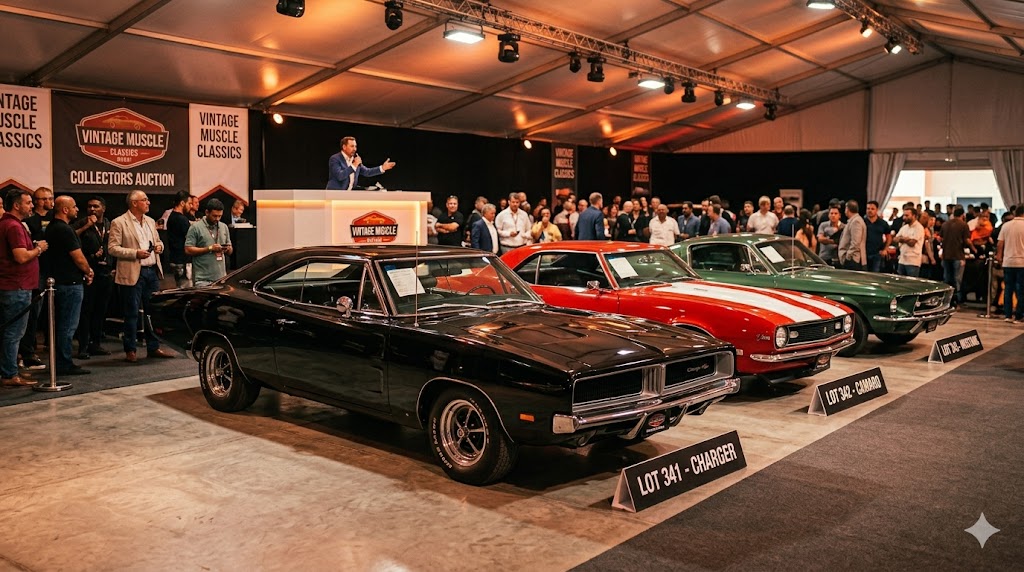
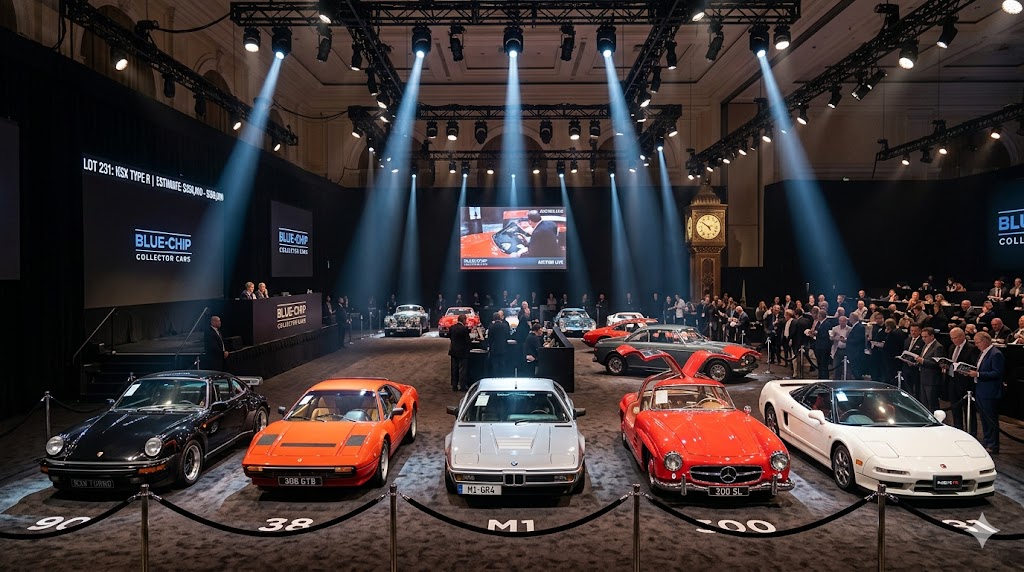
This is why examples of this specific combination have sold at major collector auctions in recent decades for prices that reach well into seven figures, with the best-documented, most original cars pushing toward the kind of numbers referenced in this article's title. If you want the specific hammer prices, sale dates, and venues for individual cars, those are publicly recorded in collector car auction archives and are worth looking up directly, since values for individual sales vary based on documentation, originality, and condition, and citing a single number as representative of the whole market would be misleading.
What's consistent across these sales, though, is the underlying logic: buyers at this level aren't pricing the car as transportation or even as a typical muscle car. They're pricing it as an irreplaceable artifact, closer in market behavior to fine art or rare timepieces than to the rest of the muscle car hobby, where even genuinely desirable cars can still be found in the tens or low hundreds of thousands of dollars.
Documentation Becomes the Whole Game
Because the money at stake is so large, and because the number of genuine cars is so small, authentication becomes the central drama around any 1971 Hemi 'Cuda convertible that surfaces. Fender tags, broadcast sheets, engine block casting numbers, and build records all get scrutinized at a level most muscle cars never experience, because the financial gap between a numbers-matching original and a well-executed clone or re-creation is enormous. It's not unusual for these transactions to involve independent verification from recognized Mopar authentication specialists before serious money changes hands.
This is also where the hobby's cautionary tales live. Given the value gap between a genuine Hemi convertible and a car that's been modified to look like one, buyers who skip rigorous document verification expose themselves to real financial risk. If you're ever in the market for a car like this, or even just evaluating a story about one, treat unverified claims of originality with real skepticism and expect—demand, even—a paper trail that a recognized authority in Mopar history has reviewed.
What It's Actually Like to Own One
Here's the part that gets lost in the auction headlines: once a car crosses into this financial territory, it stops functioning as a car in any ordinary sense. Most owners of a genuine 1971 Hemi 'Cuda convertible are not putting meaningful miles on it. They're not driving it to work, not taking it on road trips, and often not even driving it to most car shows without serious consideration of transport logistics, insurance riders, and security. The car's value is now so disconnected from its utility as transportation that using it as intended—top down, engine working, covering real miles—becomes an act that actively erodes its financial position through wear, exposure to the elements, and accumulated risk.
That's the real trade-off buried under the impressive numbers. As a driving experience, a Hemi-powered Barracuda convertible is genuinely special: strong low-end torque, a menacing exhaust note, and open-air motoring in one of the more dramatically styled Detroit muscle cars of its generation. But as an owner of one of the most valuable examples in the hobby, you're incentivized to do almost none of that. The car spends most of its life in a climate-controlled space, insured as a static asset, brought out for the occasional concours appearance or high-profile sale rather than a weekend cruise. It's a strange position for what was originally conceived as a performance convertible aimed at young buyers who wanted to feel the wind and hear the Hemi at full song.
Rarity as the Whole Story
The 1971 Hemi 'Cuda convertible isn't valuable because it's dramatically better engineered than other Mopars of its era, and it isn't valuable purely because of nostalgia. It's valuable because Plymouth inadvertently created a nearly irreproducible combination of styling, engine, and body configuration in a single production year, and decades of hindsight have turned that narrow production window into one of the most sought-after intersections in the entire muscle car hobby. If you're drawn to this car, understand what you're actually buying: not a driver, but a documented, verified piece of automotive history that happens to still run.
Key Takeaways
- The 1971 Hemi 'Cuda convertible's value comes from three scarcities stacking together: the 426 Hemi engine, the convertible body, and 1971's one-year-only styling and colors.
- Very few of these cars were built with this exact combination, making surviving, documented examples extraordinarily rare.
- Values in the millions reflect scarcity-driven collector demand rather than any claim about the car's outright performance superiority over other Mopars.
- Authentication and documentation—fender tags, broadcast sheets, casting numbers—matter enormously given the financial gap between genuine cars and re-creations.
- Owning one at this value level generally means treating it as a static, insured asset rather than a car you actually drive.
- If you're pursuing one, prioritize verified originality and expert authentication over any single quoted price, and go in understanding you're buying a collectible first and a driving experience a distant second.