Start a Chevrolet Corvette at a stoplight and you can feel it in your sternum before the light even turns green. That low, uneven idle, the slight shake through the chassis, the sense that something large and mechanical is holding its breath just past your knees. Now sit in almost any new performance car wearing a German badge, and you get something quieter, smoother, and turbocharged, often with six cylinders doing the work eight used to do. That shift, multiplied across the entire industry, is why the V8 sports car now feels less like a category and more like an era winding down.
This isn't a eulogy written too early. Naturally aspirated and lightly boosted V8s still exist in showrooms today, and a handful of automakers are still cutting checks to keep them alive. But the trend line is unmistakable. Regulatory pressure, corporate fuel economy averages, and the economics of engineering a large-displacement engine to pass modern emissions tests have pushed manufacturer after manufacturer toward smaller turbocharged engines and electrified powertrains that can match or exceed V8 output without the fuel and compliance penalties. Understanding why that trade happened, and what actually gets lost in the swap, is the whole story here.
What Made the V8 Sports Car Format Different in the First Place
A V8's appeal was never really about the number on the spec sheet. It was about the shape of the power delivery and the texture of the noise. Eight cylinders arranged in two banks of four produce a firing order that, especially in a naturally aspirated or mildly boosted state, builds thrust in a way that feels linear and immediate rather than delayed and surging. There's no meaningful lag while a turbocharger spools, no flat spot waiting for boost to arrive. You press the pedal, and the engine simply makes more power, right now, in a straight line you can feel with your right foot.
The sound is the other half of the equation, and it's the half that's harder to replace with engineering cleverness. A big V8's exhaust note carries a bass-heavy, syncopated rumble at idle that smooths into a wall of sound at high rpm, and that acoustic signature became inseparable from the identity of cars like the Corvette, the Ford Mustang GT, and the Dodge Challenger and Charger in their V8 forms. Turbocharged engines, by contrast, tend to muffle and flatten exhaust notes because the turbo itself acts as a sound-deadening restriction in the exhaust path, which is part of why automakers now pipe in synthesized engine noise through the speakers to compensate. It works, sort of, but enthusiasts generally agree it isn't the same thing.
Why Automakers Are Walking Away From Big Displacement
None of this happened because engineers fell out of love with V8s. It happened because the regulatory and economic environment around them changed faster than the engines could evolve to match it. Corporate average fuel economy standards effectively penalize a manufacturer's entire lineup for building thirsty engines, even low-volume performance models, because the math is averaged across everything sold that year. A V8 that drinks fuel at a rate acceptable in the 1990s becomes a liability on a modern compliance spreadsheet, and every gram of tailpipe emissions from that engine has to be offset somewhere else in the fleet.
Turbocharging solved a real problem: it let a smaller-displacement six-cylinder or even four-cylinder engine produce V8-rivaling horsepower and torque while sipping less fuel at part throttle and during normal cruising, which is where most driving actually happens and where fuel economy testing places its emphasis. Add hybrid assistance, which fills in low-rpm torque electrically and allows the gasoline engine to run in its most efficient range more of the time, and you get a powertrain that can post genuinely quick acceleration numbers without the fuel and emissions baggage of eight cylinders and four or more liters of displacement. From a pure business standpoint, that math is difficult to argue with, especially when the alternative is spending enormous engineering budgets to keep a large-displacement engine legal in every market the car needs to sell in.
There's also the simple matter of engineering cost. Meeting increasingly strict emissions standards, particularly in markets like the European Union, requires exhaust after-treatment systems, precise fuel injection strategies, and thermal management that get more expensive and more complex as displacement and cylinder count grow. Spreading that cost across a six-cylinder or four-cylinder platform that also gets used in family sedans and crossovers is far more economical than developing a bespoke V8 that might only ever go into a low-volume sports car or muscle car.
What You Actually Lose in the Swap
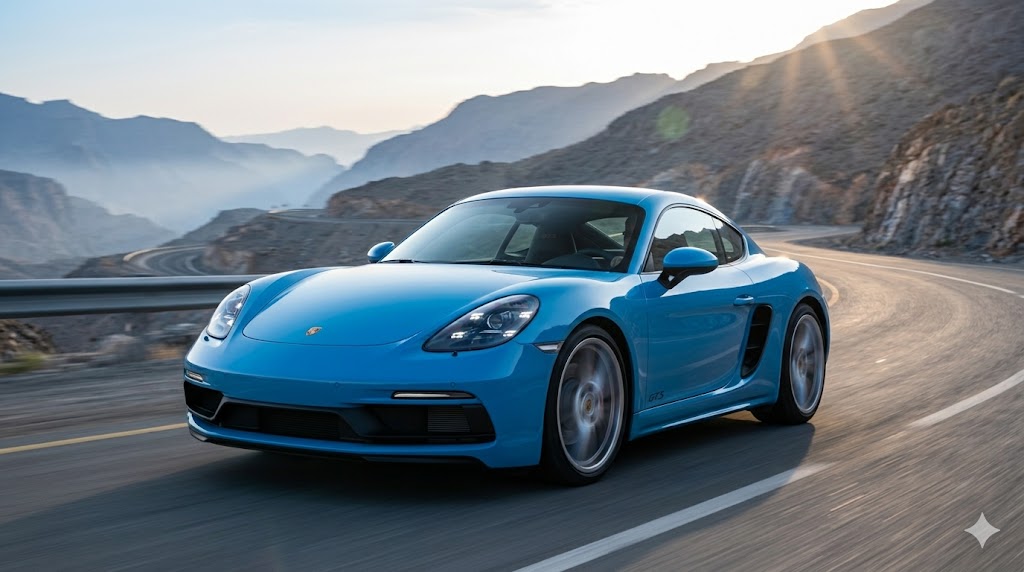
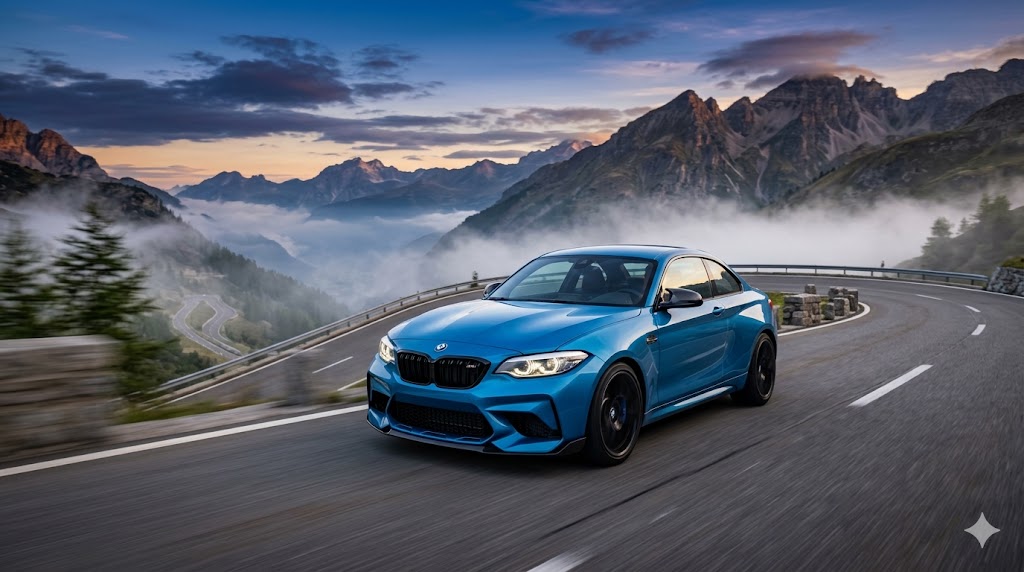
To be fair to the turbo-six and electrified crowd, a great modern powertrain can absolutely thrill you. A well-tuned turbocharged six-cylinder, the kind found in several current BMW M performance cars, can deliver savage mid-range torque and shockingly quick real-world acceleration, and a well-executed hybrid or electric powertrain can launch harder than almost any naturally aspirated V8 ever did thanks to instant, lag-free torque from the electric motors. Nobody sensible argues that these newer setups are slow or unsatisfying in a vacuum.
What changes is the character of the experience. A turbocharged engine's power tends to arrive in a rush once boost builds, which can feel thrilling but also slightly artificial, like the car is doing something to you rather than responding to you. A naturally aspirated V8's power builds in proportion to how far you press the pedal and how hard you rev it, which makes the car feel more like an extension of your right foot than a system reacting to an input. Electric and hybrid powertrains solve throttle response in a different way, delivering torque instantly with no lag at all, but in doing so they remove the sense of building momentum and mechanical effort that made a V8 feel like it was working for its speed. Some drivers prefer the immediacy. Others miss the drama.
Weight matters too, and not always in the direction people assume. A big V8 is a heavy chunk of iron or aluminum sitting up front, and it demands a chassis, brakes, and cooling system built around that mass, which is part of why classic muscle cars always felt like they needed a moment to change direction. Modern electrified performance cars often weigh even more once you add battery packs, yet they can disguise that weight with instant torque and sophisticated all-wheel-drive systems. The V8 car, ironically, sometimes feels lighter on its feet in a corner precisely because it has less technology working to mask its physics.
The Cars Still Carrying the Torch
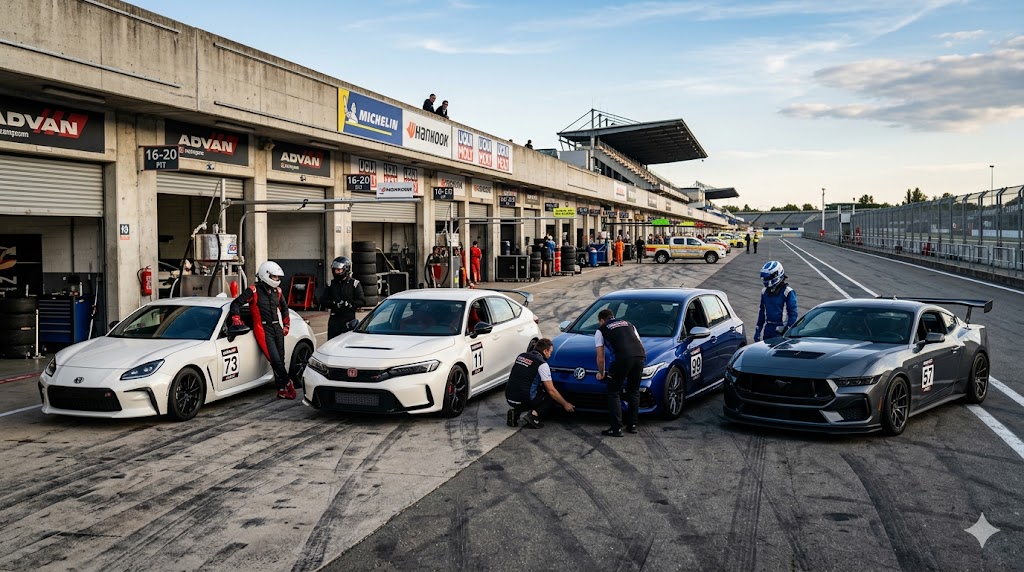
If you want the real thing today, the list is shorter than it used to be but not empty. The Chevrolet Corvette continues to offer naturally aspirated V8 power as its core identity, and the Ford Mustang GT has stuck with a V8 even as competitors abandoned the format for turbocharged alternatives. The Lexus RC F carries a naturally aspirated V8 into a segment where nearly everyone else has switched to forced induction, giving it a specific appeal to buyers who want that old-school throttle response. Dodge's Challenger and Charger built entire reputations on V8 muscle, and while the brand's future direction has shifted toward electrification and smaller turbocharged and six-cylinder options, the V8-powered versions that already exist remain sought after specifically because of what they represent. None of these cars are relics; they're deliberate choices by automakers who understand that a segment of buyers still wants the analog experience, even at a fuel economy and emissions cost.
Should You Buy One While You Still Can
The honest answer depends on what you actually want from a car. If your priority is efficiency, low running costs, or the sharpest possible acceleration figures on paper, a modern turbocharged or electrified performance car will likely outperform a V8 in nearly every measurable way, and insurance and fuel costs will typically favor the smaller-displacement or electrified option as well. But if what you're chasing is a specific sensation, the building rush of naturally aspirated power, the mechanical honesty of a big engine responding directly to your foot, and a soundtrack that no speaker system has genuinely replicated, then the remaining V8 sports cars on sale represent a format that is not coming back in the same form once it goes. Buying one isn't a rejection of progress. It's a recognition that some experiences are worth having before the option disappears entirely.
Key Takeaways The V8 sports car's appeal rests on linear throttle response and an exhaust note that turbocharging and electrification have struggled to replicate. Fuel economy regulations and the cost of engineering large-displacement engines to meet emissions standards, not lack of enthusiasm, are driving automakers toward smaller turbocharged and hybrid powertrains. Turbo-six and electrified performance cars can match or beat V8s on raw acceleration, but they deliver power differently, often with less mechanical drama and more instant, lag-free torque. Cars like the Corvette, Mustang GT, Lexus RC F, and V8-era Challenger and Charger remain the clearest examples of the format's specific character. Fuel costs, insurance, and emissions compliance genuinely favor smaller-displacement and electrified alternatives, so the V8 choice is an emotional one as much as a practical one. Bottom line: if the naturally aspirated V8 experience matters to you, buy into it now, because the remaining models represent a format the industry is not planning to replace in kind.