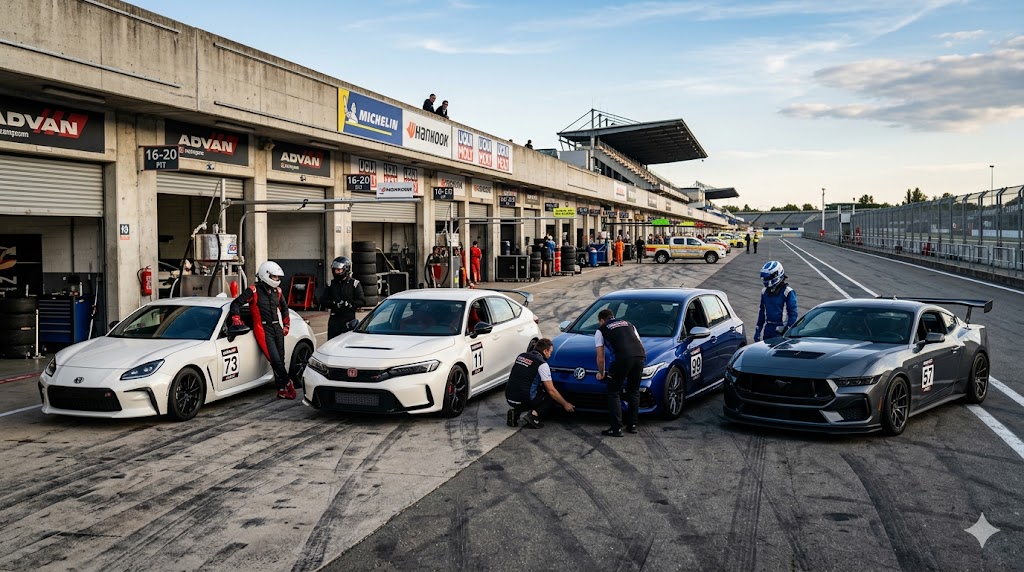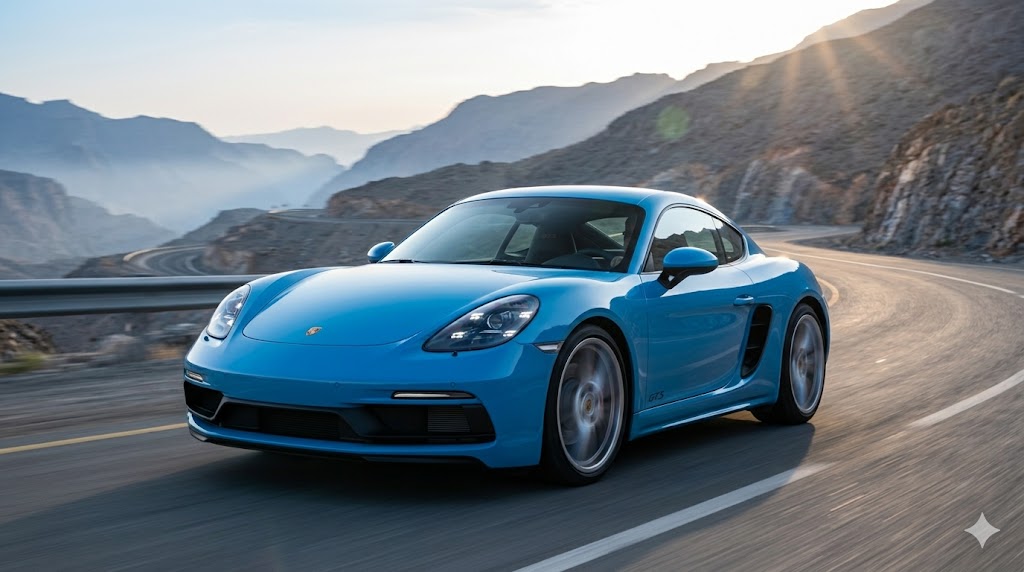
There's a strange bureaucratic requirement buried in the history of racing that explains why some of the most beloved street cars ever built exist at all: before a manufacturer could race a car in most top-tier series, it often had to prove that a certain number of essentially identical cars were available for the public to buy. That rule, homologation, turned racing regulation into an accidental engine for road-car innovation, and understanding how it works explains why certain street cars feel like they were never really designed for the street in the first place.
What Homologation Actually Requires
At its core, homologation is a certification process. Racing series, whether rally, touring car, or GT competition, set rules defining what counts as a "production" vehicle eligible to compete in a given class. To prevent manufacturers from building one-off prototypes disguised as road cars, sanctioning bodies typically require a minimum production run, sold to ordinary customers through ordinary dealerships, before the racing version can be approved. The exact numbers and rules have varied significantly across different eras and series, and homologation requirements have been revised repeatedly over the decades as manufacturers found loopholes and governing bodies closed them.
The practical effect is that a manufacturer wanting to campaign a competitive rally or touring car has to first convince its own product planners, accountants, and dealer network to sell a version of that race car to the public. This is the opposite of how most performance cars get built. Instead of taking a good road car and making a race version, homologation forces manufacturers to take a race car concept and figure out how to make it street-legal, insurable, and sellable in a minimum quantity.
Why This Produces Uncompromising Road Cars
Ordinary product development for a road car balances dozens of priorities: comfort, cost, manufacturing complexity, warranty exposure, emissions compliance, and eventually, performance. Homologation specials invert that priority list. The performance requirements come first because the entire point of building the road car is to unlock eligibility for the race car, so engineers design toward the competition rules and then retrofit just enough civility to make the car street legal and marketable in the required numbers.
This is why homologation-born road cars so often feel more raw and more focused than anything else in a manufacturer's lineup at the same price point. The aerodynamic elements aren't styling flourishes, they're functional pieces carried over from wind tunnel work done for the racing version. The suspension geometry isn't tuned for ride comfort first, it's tuned to give the racing engineers a chassis platform they can trust. Even interior choices, like lightweight seats or stripped-down sound deadening, often trace back to weight requirements set by racing regulations rather than anything a marketing department would choose on its own.
The Numbers Game Manufacturers Have to Play
Because homologation rules typically specify a minimum build quantity, manufacturers have historically had to make hard decisions about exactly how many homologation specials to build and how to price them. Build too few and risk falling short of the requirement, disqualifying the racing program entirely. Build too many and risk sitting on unsold inventory of a car that, by design, is louder, stiffer, and less accommodating than what typical buyers in that segment want. This tension has produced some genuinely uncomfortable moments in automotive history, where manufacturers scrambled to move homologation specials off dealer lots at whatever price the market would bear, only for those same cars to become fiercely sought-after collector items decades later once buyers understood what they actually were.
That reversal, from slow-selling oddity to blue-chip collectible, happens because the qualities that made these cars hard sells originally, the stiff ride, the lack of luxury features, the sometimes anti-social exhaust notes, are exactly the qualities that make them feel special and uncompromising in hindsight. Buyers today aren't cross-shopping a homologation special against a comfortable daily driver; they're buying a piece of motorsport history that happens to be street legal, and that context changes what they're willing to tolerate.
Modern Homologation Looks Different, But the Spirit Survives
Contemporary racing series have moved toward different technical regulations than the eras that produced the most famous homologation specials, and pure homologation requirements in the traditional sense are less common in top-level racing today than they were decades ago. But the spirit of the concept persists in how manufacturers market and develop certain performance models. Cars developed alongside a manufacturer's motorsport program, sharing meaningful engineering with a racing counterpart even without a strict regulatory requirement forcing that connection, still carry the homologation special's essential appeal: the sense that you're driving something whose road-going existence is really a byproduct of a racing ambition, not the primary goal.
This matters for how you should evaluate a modern car marketed with racing-inspired language. Genuine homologation-adjacent cars tend to show their motorsport influence in unglamorous ways, in chassis stiffness, in weight distribution, in how the car behaves at the limit, rather than purely in badges and aggressive bodywork. A car built to satisfy an actual racing program's needs will usually make some daily-use sacrifice somewhere, because that's the nature of the trade-off; a car that adds racing aesthetics without any corresponding mechanical sacrifice is borrowing the imagery without the substance.
What This Means for Buyers Today
If you're drawn to the idea of owning a car with genuine racing lineage, understanding the homologation concept gives you a better filter than marketing copy does. Look for the specific mechanical changes a manufacturer made to a model in order to satisfy a racing program, whether that's a specific engine internals package, a unique suspension tune, or weight-saving measures that a normal trim level doesn't get. Those details tell you whether a car earned its racing-inspired badge honestly or whether the connection is closer to branding. The history of homologation is full of cars that were commercial afterthoughts in their own era and are now regarded as some of the purest expressions of what a manufacturer's engineers were capable of when regulation, rather than a marketing brief, set the terms.
Key Takeaways
- Homologation rules require manufacturers to sell a minimum number of road-going versions of a car before it can compete in certain racing classes.
- This inverts normal product development, forcing engineers to prioritize competition needs first and street legality second.
- Many homologation specials were commercially difficult to sell when new but became prized collectibles once their motorsport connection was understood.
- Modern racing regulations rely less on strict homologation, but manufacturers still build cars that carry the same spirit of racing-driven compromise.
- When evaluating a "racing-inspired" road car, look for genuine mechanical sacrifices tied to a racing program rather than just aggressive styling.