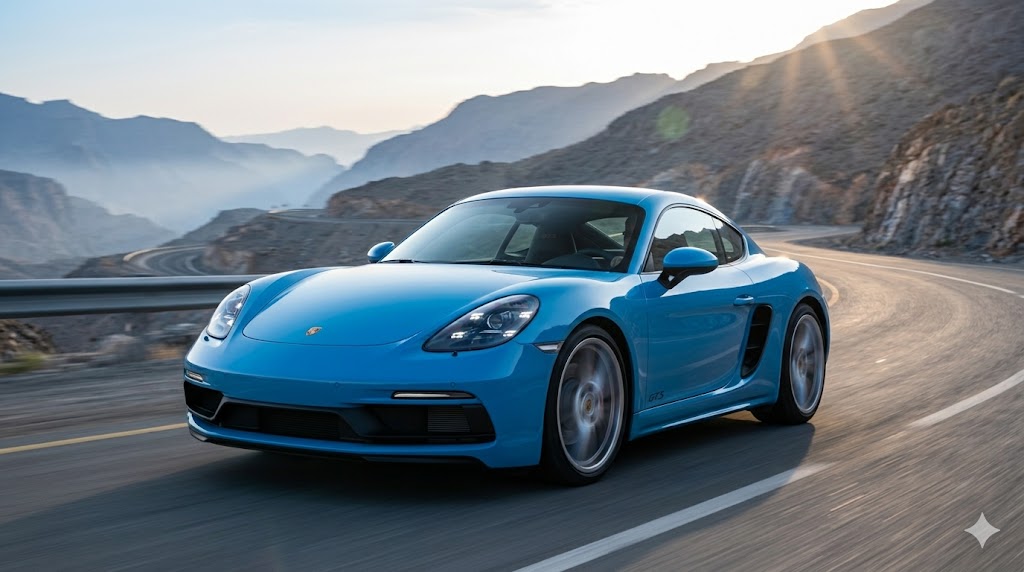
The first lap out of the pit lane in a Cayman GT4 tells you almost everything you need to know, and it does it without a single warning light or drive-mode prompt. There's no turbo lag to manage, no hybrid boost to time, no eight-speed dual-clutch shuffling ratios faster than you can think. There's just a naturally aspirated flat-six revving toward a screaming top end, a manual shifter with real mechanical resistance, and a mid-engine chassis that feels like it was tuned by someone who actually cares whether you can feel the front tires load up mid-corner. That's the entire premise of this car, and after a full day lapping one on a technical circuit, the premise holds up better than you'd expect in an era when almost every rival has moved on.
Why "Purist" Isn't Just Marketing Copy Here
Porsche could have turbocharged this car years ago and nobody outside of enthusiast forums would have complained. Most buyers wouldn't notice the difference on a public road. But the GT4 exists specifically for the subset of drivers who do notice, and every mechanical decision in this car reflects that. The engine sits behind you rather than out front, which changes the entire weight distribution and, with it, how the car rotates into a corner. The steering is hydraulically assisted in spirit even where electric systems have crept in elsewhere in the lineup, and it telegraphs exactly how much grip remains at the front axle. None of this is nostalgia for its own sake. A mid-engine layout with a high-revving, naturally aspirated engine and a manual gearbox gives you three things that matter enormously on a track and barely at all in traffic: predictable weight transfer, linear power delivery you can meter with your right foot instead of guessing where boost arrives, and total control over engine speed and gear selection at the exact moment you want it, not a half-second after a computer decides you do.
Where this matters is in the corners that separate quick cars from confident drivers. Turbocharged cars, even very good ones, ask you to manage a delay between throttle input and thrust. That delay is often small, but it's a variable, and variables erode confidence when you're trying to trail the throttle open at the apex. The GT4's response is close enough to instantaneous that you stop thinking about the engine and start thinking purely about the line. That's the purist argument in practice, not in theory.
On Track: Where the Chassis Actually Shines
The GT4 doesn't feel like a car chasing a lap time above all else. It feels like a car built to reward the driver who does the small things correctly: smooth trail braking, patient throttle application, using the whole width of the curbing rather than clipping apexes aggressively. Turn-in is immediate without being nervous, and mid-corner grip builds progressively rather than arriving all at once, which means you can adjust your line late without the rear stepping out unpredictably. On a circuit with a mix of fast sweepers and tight technical sections, the car communicates the limit of grip through the seat and the wheel well before you'd find out the hard way. That's the single most valuable trait a track car can have, because it lets you drive closer to the edge with less risk.
The brakes deserve real credit too. Pedal feel stays consistent lap after lap, and the initial bite is firm without being grabby, which makes threshold braking and trail braking equally approachable for a driver who's still building that skill. Fade is not something you'll be preoccupied with unless you're doing genuinely long, punishing sessions in extreme heat, in which case a good set of track pads and fresh fluid, as always, matters more than the car's factory setup.
The Manual Gearbox: Genuine Asset, Not a Gimmick
It would be easy to dismiss the manual transmission as a nostalgia play, something for enthusiasts who miss rowing their own gears more than they value outright speed. On track, though, the manual earns its place. A well-executed heel-toe downshift lets you settle the chassis exactly when you want, rather than trusting a dual-clutch's rev-matching software to guess your intention. The tradeoff is honest: a skilled driver in a dual-clutch-equipped rival will likely post a quicker lap time, because a computer executes shifts with a consistency human hands can't fully match under pressure. But lap time isn't the only metric that matters to the audience this car is built for. The manual gearbox turns every session into an active, physical task rather than a passive one, and that engagement is precisely what a lot of track day regulars are paying for.
Where It Gives Ground to Rivals
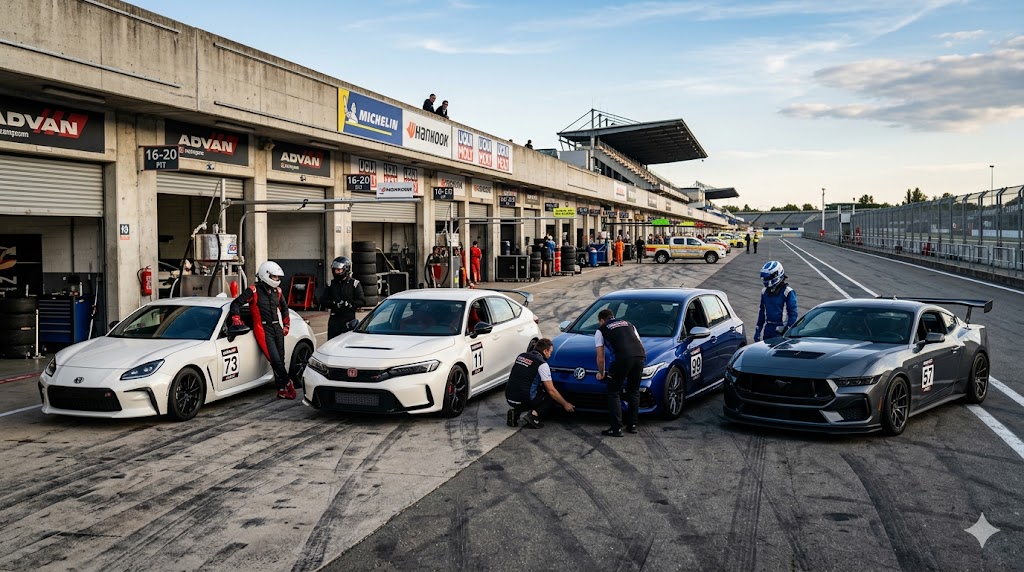
Being balanced about this car means acknowledging where it doesn't win outright. Against turbocharged competitors with more contemporary power delivery, the GT4 can feel like it's giving up outright straight-line performance, particularly exiting slower corners where a torque-rich turbo engine simply pulls harder, sooner. Cabin tech is also deliberately sparse, which purists will call a feature and everyone else will call a limitation when they're looking for a screen that mirrors their phone. And because the car leans so heavily on driver skill to extract its potential, an inexperienced driver in a GT4 may actually be slower around a track than the same driver in a more forgiving, electronically assisted rival. The car rewards competence; it doesn't disguise the lack of it.
Ride quality, if you ever have to drive this car to and from the track rather than trailer it, is firm in a way that's tolerable but never plush. That's consistent with its mission, but it's worth knowing before you commit to one as a dual-purpose road and track car.
Living With It Beyond Lapping Sessions
Track cars that only work on track aren't especially useful to most owners, and the GT4 manages daily usability better than its focus would suggest. Visibility is good for a mid-engine coupe, the cabin is comfortable for real trips, and there's enough practical storage, split between a front trunk and a rear compartment, to handle a genuine weekend away. It won't replace a family sedan, but it doesn't demand you own a separate commuter car either, which is more than can be said for some track-focused specials that are miserable outside a paddock.
Key Takeaways
- The GT4's naturally aspirated flat-six and manual gearbox deliver more linear, predictable feedback than turbocharged, automated-clutch rivals, which builds driver confidence at the limit.
- Chassis balance and progressive grip, not outright power, are this car's defining strengths on a technical circuit.
- The manual transmission is a genuine engagement asset on track, even though a skilled driver in a dual-clutch rival will likely lap quicker.
- Turbocharged competitors will generally out-accelerate the GT4 out of slow corners, and the interior trades some modern convenience for focus.
- Less experienced drivers may find the car unforgiving of mistakes since it doesn't lean on electronic aids to mask them.
- Bottom line: if you value driver feedback and mechanical engagement over outright lap times, the Cayman GT4 remains one of the purest circuit tools you can buy; check current published specs and pricing before you commit, as these details are frequently updated.