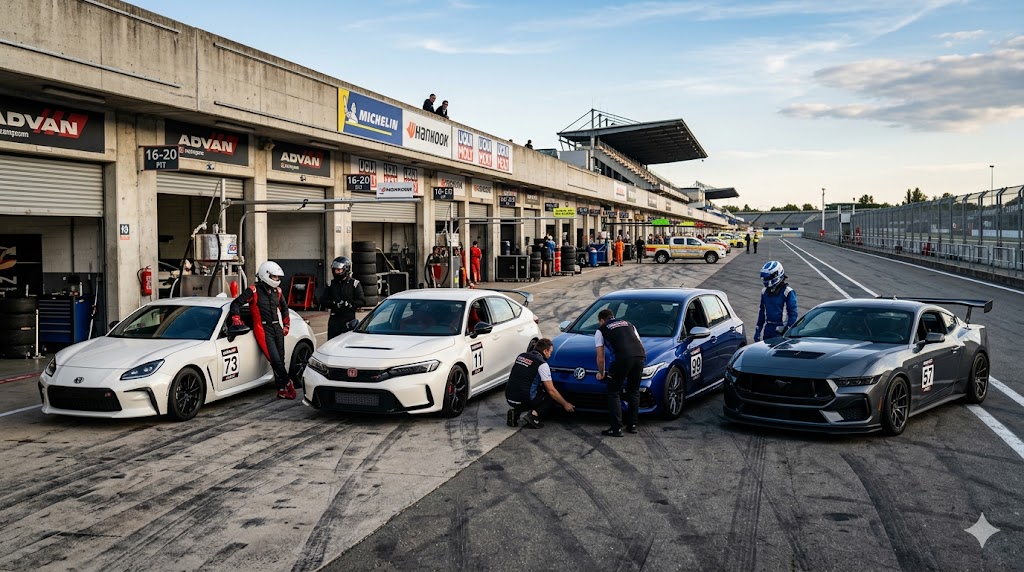
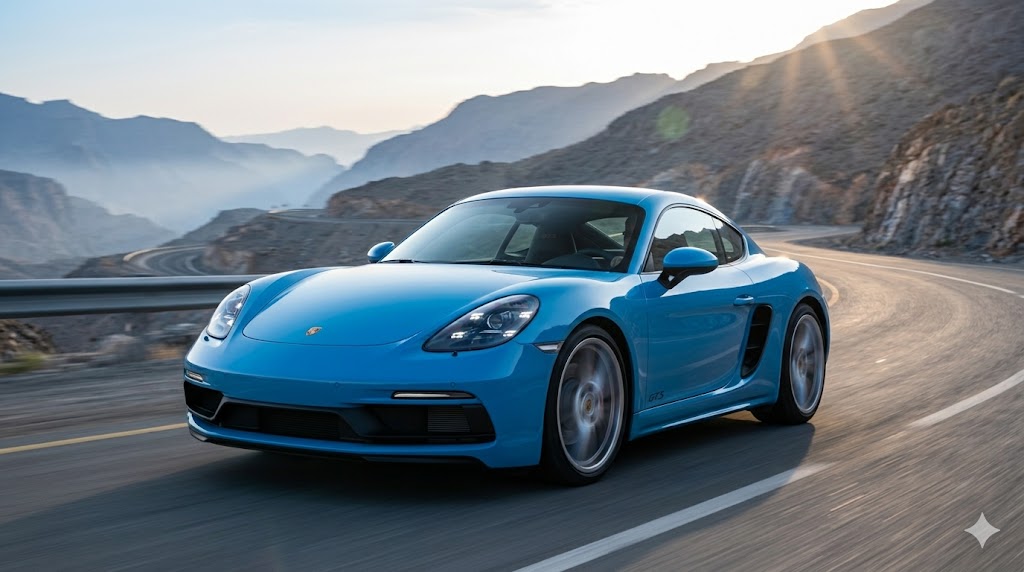
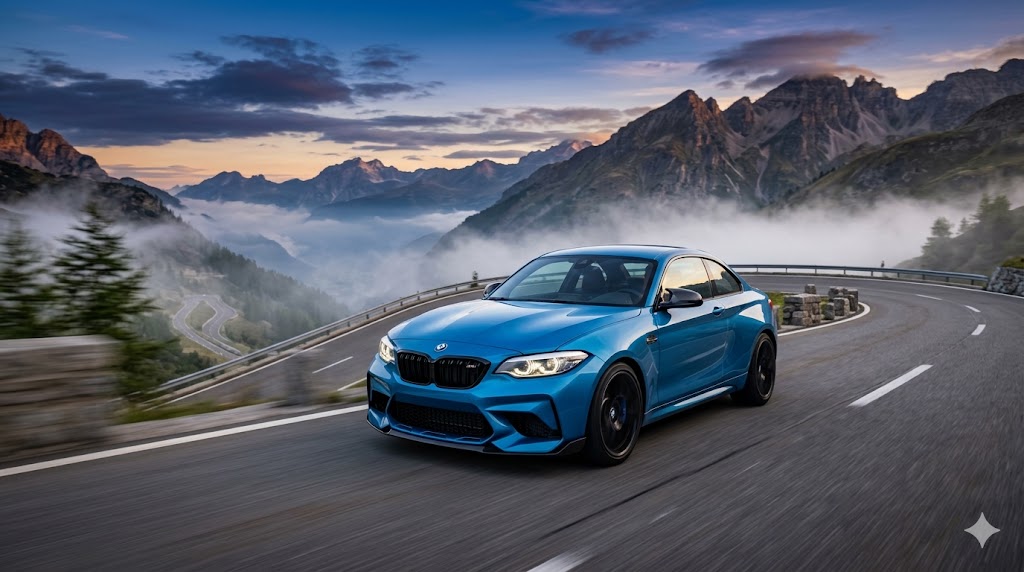
A manufacturer drops a press release with a lap time from the Nürburgring Nordschleife, a slick onboard video, and a caption implying the car has just proven itself against everything else on the road. The number gets repeated in forums, YouTube titles, and dealership talking points as though it were a lab measurement, precise and comparable down to the tenth of a second. It isn't. A Ring time is closer to a snapshot of one car, one driver, one set of tires, and one set of weather conditions colliding for about seven to eight minutes on a specific day. Change any of those variables and the number moves, sometimes by more than the gap manufacturers love to advertise between rival models.
That doesn't mean the Nordschleife is meaningless as a proving ground — far from it. But treating a published lap time as an apples-to-apples performance ranking misunderstands what the exercise actually measures. Before you let a Ring time influence how you think about a car, it helps to understand exactly what goes into producing one, and how much of that is engineering versus circumstance.
The Tires Do More Work Than You Think
The single biggest lever in any Nordschleife time isn't horsepower or chassis tuning — it's rubber. A car wearing a semi-slick, track-focused tire will post a dramatically quicker lap than the same car on a standard all-season or even a sporty street tire, and the difference isn't subtle. These specialized compounds, often homologated for road use in only the loosest sense, generate grip levels that most owners will never experience on the tires actually mounted on their car when they drive it home from the dealership. So when you see a lap time attached to a production model, the first question worth asking is what tire produced it. A manufacturer touting a time set on an optional, track-oriented tire package is not describing the car most buyers will own; it's describing a best-case configuration that may not even be available in every market. Two cars with identical power and weight can post wildly different times purely based on which tire was bolted on for the record attempt, which makes tire spec one of the most important — and most frequently glossed-over — asterisks in any published number.
Weather and Track Conditions Change Everything
The Nordschleife is nearly 13 miles long and winds through the Eifel mountains, which means it doesn't experience one weather condition — it experiences several during a single lap. Sun on one section, shade and dampness in a forested corner a mile later, temperature swings that affect both tire grip and engine power output. A dry, warm afternoon with a rubbered-in racing line offers dramatically more grip than a cool, damp morning where the asphalt hasn't been cleaned by traffic. Teams chasing a quick time will often wait days or weeks for exactly the right conditions: ambient temperature in a specific range, no rain in the preceding hours, minimal wind, and a track surface that's been recently used by other fast cars laying down rubber. This is not cheating — it's simply how lap records work at any circuit — but it means the published number reflects an optimized day, not a typical one. If you drove the same car around the same track on a randomly chosen Tuesday, you would likely be several seconds slower without changing a single mechanical component.
The Driver Behind the Wheel Matters as Much as the Machine
The Nordschleife has more than 150 corners, blind crests, compression zones, and elevation changes that reward memorization as much as raw car control. A driver who has spent hundreds of laps learning exactly where the track drops away after a blind rise, or where a seemingly flat-out section actually tightens unexpectedly, will extract meaningfully more from a car than a skilled but unfamiliar driver on their first few attempts. This is why manufacturers hire specialists — professional test and development drivers who essentially treat the Nordschleife as a second office — to conduct record runs. The car isn't being driven by an average customer or even an average racing driver; it's being driven by someone whose entire job is finding the last few percent of a lap through a track they know intimately. That gap between an expert's optimized line and what a typical enthusiast owner could replicate is often larger than the mechanical difference between competing cars. A lap time, in that sense, partly measures the driver's relationship with the circuit as much as it measures the car underneath them.
Factory "Ringer" Cars Are Not Showroom Cars
It's an open secret in the industry that many record-chasing vehicles receive preparation well beyond what a customer receives at delivery. This can include specific alignment and suspension setups dialed in exclusively for this one track, roll cages or weight reduction that wouldn't pass daily-use practicality, engine calibrations optimized for sustained high-rpm running rather than everyday drivability, and aerodynamic aids or ride heights that would be uncomfortable or even illegal on public roads. None of this is necessarily dishonest — manufacturers are usually transparent that a record car is a "development" or pre-production example — but it does mean the lap time describes what the model is capable of in its most extreme, track-optimized state rather than what will roll off the assembly line. A car built and tuned specifically to be fast around one 13-mile ribbon of asphalt in Germany can, in some cases, be a worse everyday car as a result of those very choices: stiffer springs that punish rough pavement, sharper throttle mapping that feels twitchy in traffic, or tires that wear quickly and struggle in the rain.
One Lap Doesn't Generalize the Way You'd Expect
Even setting aside conditions and preparation, the Nordschleife itself is an unusual yardstick. It combines long, high-speed straights where raw horsepower and aerodynamic efficiency dominate, with tight, technical, low-speed sections where mechanical grip and chassis balance matter far more. A car engineered with a gearing and aero setup that suits this specific blend won't necessarily perform proportionally well at a short, technical road course or a high-speed oval, because the balance of demands is completely different. This is part of why a quick Ring time doesn't reliably predict how a car will feel on a track you actually visit, or how it will behave during a spirited backroad drive with mid-corner bumps, off-camber turns, and traffic to react to. The Nordschleife rewards a very particular combination of traits, and optimizing for that combination is a genuine engineering achievement, but it is a specialized one rather than a universal proxy for "fastest" or "best-handling" in every context.
Why the Number Still Matters — With Caveats
None of this makes Ring times worthless. Engineers value the Nordschleife precisely because its length and variety expose weaknesses that a shorter or more uniform track would hide — brake fade, cooling problems, suspension compliance over sustained abuse, and how a chassis behaves when pushed for minutes rather than seconds. Development teams genuinely use lap times, alongside more granular data like sector times and telemetry, to benchmark progress during a car's engineering process. The skepticism enthusiasts and engineers alike hold isn't that the Nordschleife is a poor test; it's that a single published number, stripped of its tire spec, weather conditions, driver identity, and preparation details, gets marketed as though it settles an argument it was never designed to settle. If you want to compare specific cars, the responsible approach is to look at up-to-date, independently maintained lap time databases, check what conditions and tires each run used, and treat close numbers as effectively a tie rather than a decisive victory for one side. A car that is a few seconds quicker around the Nordschleife is not automatically the better car to own, drive daily, or even enjoy on a different track.
- A Nürburgring lap time is a snapshot of one car, one driver, one tire compound, and one day's weather — not a controlled, repeatable measurement.
- Tire choice, especially semi-slick versus standard street rubber, can shift lap times more than most mechanical upgrades.
- Professional development drivers with deep circuit familiarity extract performance an average owner could not replicate.
- Record-chasing cars often receive track-specific setup and preparation that may not reflect the version customers actually buy.
- The Nordschleife's mix of high-speed and technical sections means a strong time there doesn't reliably predict performance on other tracks or roads.
- Bottom line: treat published Ring times as a rough, conditions-dependent indicator of engineering effort rather than an objective scoreboard, and always check current independent lap databases before drawing conclusions about how two cars compare.