Walk any cars-and-coffee meet and you'll see the same knot of phones pointed at the same handful of cars. A Porsche draws a crowd before anyone hears the engine start. A Miata parked two spots down might be the better driver's car that morning, and almost nobody will glance at it twice. That gap between perceived desirability and actual driving satisfaction is where this list lives. The cars here aren't underrated because they're secretly flawed masterpieces nobody has discovered. They're underrated because the forces that build a car's reputation — marketing spend, brand cachet, algorithmic visibility — have almost nothing to do with how good a car is to drive down a back road at seven-tenths.
Why Some Great Sports Cars Get Ignored
A car's reputation is built by more than its engineering. Automakers with bigger performance-marketing budgets get their cars into more enthusiast content, more manufacturer-loaned press cars, more carefully staged launch events at scenic canyon roads. A brand with a storied racing heritage carries decades of accumulated goodwill that a newer or less glamorous nameplate simply can't match, regardless of how the two actually compare on a twisty road. Then there's the sibling problem: some genuinely excellent cars live in the shadow of a flashier, more powerful, or more expensive relative from the same manufacturer, so all the attention flows upward while the humbler variant gets treated as the also-ran, even when it's arguably the more satisfying steer.
Social media compounds this. A car that looks dramatic in a nine-second clip — wide fenders, an aggressive wing, a loud exhaustive note — earns algorithmic reach that a subtler, more balanced car never will. Handling nuance doesn't translate to a vertical video. Steering feel doesn't get likes. So the cars that reward you in the actual driving experience, rather than in a parking lot or a photo, quietly lose the visibility war to cars that are engineered as much for content as for corners.
It's worth drawing a line here between "underrated" and merely "obscure." An obscure car is one nobody buys because it's genuinely compromised, poorly supported, or not very good. An underrated car earns real, defensible praise from people who've actually driven it hard — strong chassis balance, an engaging powertrain, honest feedback through the wheel — yet consistently gets passed over by shoppers chasing a badge or a spec-sheet number. Every car on this list has been driven and praised by enthusiast outlets and owners' communities alike; the value lies in a driving experience that measurably outruns the car's cultural footprint. With that distinction established, here's where the gap between reputation and reality is largest right now.
The Toyota GR86 and Subaru BRZ: Twins Nobody Talks About Enough
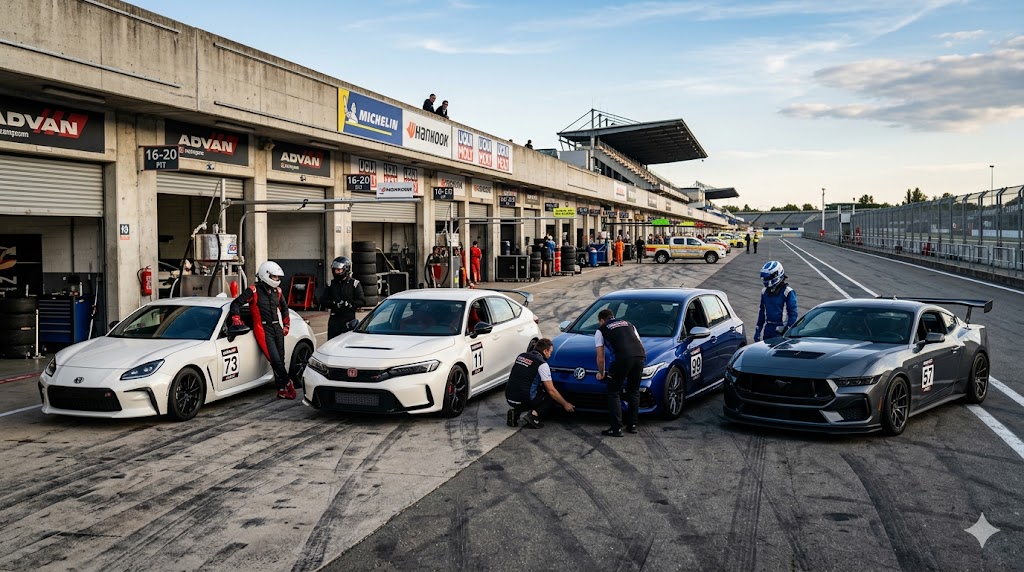
These two share a platform, an engine architecture, and a fundamental mission: a light, rear-wheel-drive coupe tuned for chassis balance rather than outright power. Neither one wins a straight-line drag race against much of anything, and that's precisely the point that gets lost. Because the horsepower figure looks modest next to turbocharged rivals, casual shoppers write these off before ever sampling the steering response or the way the chassis rotates predictably at the limit. Enthusiast journalists have praised both cars for years for their communicative feel, but that praise rarely converts into showroom traffic, because there's no flashy launch-control number to put in a headline.
The shortcomings are real and worth stating plainly. Rear seats are essentially decorative, trunk space is tight, and the base engine's flat spot in the midrange has been a genuine criticism since the platform's first generation. Some buyers will also find the ride firm enough on rough pavement to be tiresome as a daily driver. But as a car that talks to you through the seat and the wheel, few options at their price point in the segment come close, and depreciation has generally been kind to both nameplates, which matters if you're comparing lifetime ownership cost rather than just sticker price. Check current trims and published output figures before you buy, since both cars have received meaningful updates over their production runs.
The Mazda MX-5 Miata: Underrated by Sheer Familiarity
The Miata's problem is almost the opposite of obscurity — it's so well known that people stop actually considering it. It's been the default punchline and the default answer for "cheap sports car" for more than three decades, and that familiarity breeds a kind of dismissal. Buyers chasing status see a car with mainstream badge equity, not exotic cachet, and scroll past it looking for something that photographs as a bigger flex. Meanwhile, working journalists and racers have continued to call it one of the purest steering and chassis experiences sold new, generation after generation, because low weight and near-perfect balance never go out of style regardless of how unglamorous the concept sounds on paper.
Practicality is the honest trade-off. Trunk space is minimal, the cabin is snug for taller drivers, and the available power will never satisfy someone who measures a car by a 0-60 number. Resale value is generally strong and reliability has a long track record, but you're buying a focused two-seat roadster, not a do-everything car, and it shows the moment you need to haul more than a weekend bag.
The Nissan Z and BMW Z4: Overshadowed by Their Own Categories
The current Nissan Z carries a genuinely charismatic twin-turbo six and rear-wheel-drive dynamics that reviewers have generally liked, yet it fights the lingering perception baggage of Nissan's broader lineup, which skews toward mainstream sedans and crossovers rather than performance halo cars. Buyers cross-shopping in this price range often default to a German nameplate out of habit before they've actually sampled what the Z offers in terms of engine character and old-school analog feel. The interior finishes and infotainment don't always match rivals at the same price, which gives skeptics an easy excuse to look elsewhere, but the core driving experience is arguably the more emotionally engaging of the two.
The BMW Z4, meanwhile, suffers from a strange kind of internal competition: it shares its bones and engines with the Toyota Supra, and much of the enthusiast conversation around that platform gravitates toward the Toyota's badge and its heritage nameplate rather than the BMW's roadster body style. That's a shame, because the Z4's folding hardtop-turned-soft-top execution and its own chassis tuning give it a distinct character as a proper open-top grand tourer rather than a fixed-roof sports coupe. Both cars ask you to look past segment assumptions — that a Z-badged Nissan can't compete with a German nameplate, or that a roadster is just a Supra with a worse roof — and both reward that open-mindedness on a good road.
Honda Civic Type R and Lexus RC F: The Adjacent Overachievers
The Civic Type R rarely gets filed under "sports car" simply because it has four doors and a hatchback silhouette, but on a genuinely challenging road it embarrasses cars that look far more serious. Its front-wheel-drive layout still carries some stigma among purists who equate real performance with rear- or all-wheel drive, and that bias costs it consideration it has clearly earned through chassis tuning, steering precision, and a manual gearbox that enthusiast reviewers consistently single out for praise. It's not cheap for what is nominally a Civic, and the ride is stiff enough that it won't suit everyone as a daily commuter, but few cars at any price deliver more genuine feedback per dollar.
The Lexus RC F suffers a different fate: it's a naturally aspirated V8 coupe in a market that has moved almost entirely to turbocharged engines, and Lexus's broader reputation for comfort-focused luxury rather than track-day credibility means shoppers rarely put it on their initial list. That naturally aspirated engine's linear power delivery and sound are exactly what a lot of driving enthusiasts say they miss in the current landscape, yet the car gets bypassed constantly in favor of German rivals with more prestigious badges and lower published curb weights. It's heavier than its direct rivals and less sharp in tight corners as a result, and interior tech lags behind competitors, but it remains one of the more characterful choices in its class for buyers willing to prioritize engine feel over outright cornering numbers.
What Ties These Cars Together
None of these cars are underrated by accident. Each one is missing at least one of the ingredients that typically drives mainstream hype: a prestigious badge, an aggressive marketing push, a viral spec sheet, or a body style people associate with sports cars in the first place. What they share instead is a chassis and powertrain combination that rewards a driver who actually pushes them, verified by people who do that for a living. If you're shopping this category, the practical move is to test-drive with an open mind about badge and body style, verify current pricing and specs directly from each manufacturer since trims and output change year to year, and weigh the real trade-offs — smaller trunks, firmer rides, less glamorous resale story — against a driving experience that, in every one of these cases, outperforms its reputation.
- Underrated doesn't mean obscure: every car here has real enthusiast-press and owner praise, just not proportional showroom attention.
- The GR86/BRZ twins reward drivers who value chassis balance over horsepower bragging rights, at the cost of rear-seat and trunk practicality.
- The Miata remains one of the purest steering experiences on sale precisely because its familiarity makes people stop taking it seriously.
- The Nissan Z and BMW Z4 both lose cross-shoppers to badge habit rather than any real deficit in driving character.
- The Civic Type R and Lexus RC F prove that body style and engine architecture bias, not actual capability, keep great cars off shopping lists.
- Bottom line: if you're chasing genuine driving satisfaction rather than status, test these before you buy the car everyone else is buying, and confirm current specs and pricing directly with each manufacturer.