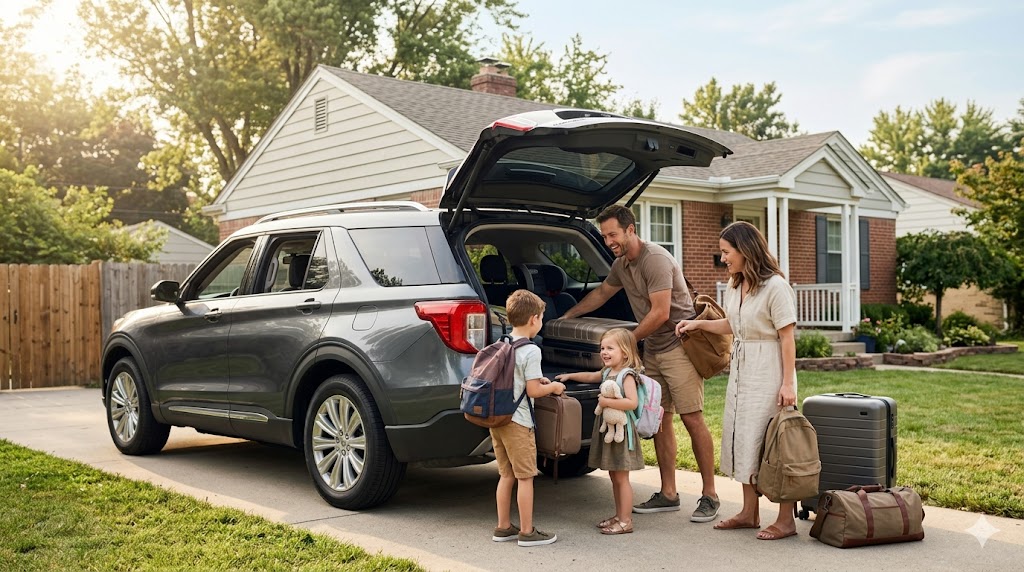
Ask three different shoppers which compact SUV is "the best" and you'll get three different answers, and none of them will be wrong. The person cross-shopping a Mazda CX-5 wants their commute to feel like a reward rather than a chore. The Forester buyer has a dog, a kayak rack, and a driveway that turns to slush every January. The CR-V shopper just wants a vehicle that swallows a stroller, a cooler, and two carry-on suitcases without drama, then still runs great at 150,000 miles. All three are excellent at the thing they're built for, which is exactly why this segment is so hard to call. Rather than crown a single universal winner, the honest answer is that the best compact SUV depends entirely on which of those three people you are.
Best for Whom: Matching the SUV to the Buyer
The CX-5 makes its case the moment you sit in the driver's seat. Mazda has spent the better part of a decade making its interiors feel like they belong a class above their price point, and the CX-5's cabin, with its tighter panel gaps, softer materials, and cleaner dashboard layout, still embarrasses some luxury-badged competitors. Pair that with steering that responds crisply and a chassis that stays flat and composed through a curve, and you get a compact SUV that rewards a driver who actually enjoys driving. If your daily loop includes a stretch of twisty two-lane road, or if you simply want to feel a little something behind the wheel, the Mazda is the one that delivers it.
The Forester speaks to a completely different set of priorities. Subaru builds every trim with standard all-wheel drive, generous ground clearance, and a driving position that emphasizes outward visibility over sportiness. This is the vehicle for someone who tows a small trailer to the trailhead, drives to a ski hill regularly, or just lives somewhere winters get serious. You don't have to pay extra or hunt for the right trim to get AWD here; it comes on every single Forester, which simplifies shopping and signals exactly what Subaru thinks its customer needs most.
The CR-V, meanwhile, is the vehicle for someone who wants the fewest compromises and the least drama. Honda has refined this nameplate for decades, and it shows in the way the CR-V balances ride comfort, interior space, fuel efficiency, and a reputation for mechanical durability that keeps resale values strong. It isn't trying to thrill you and it isn't trying to convince you it's an off-roader. It's trying to be the SUV you stop thinking about once you own it, and for a huge number of buyers, that's precisely the point.
Interior Space and Cargo Practicality
Here's where the trade-offs start to bite. Step into the CX-5's back seat after riding in a CR-V and the difference is immediately obvious: the Mazda's rear quarters are noticeably tighter on both leg and head room, a consequence of Mazda prioritizing a lower, sportier roofline and a more cockpit-focused front cabin. For a couple or a small family without lanky teenagers, this rarely matters day to day. For anyone regularly hauling adult passengers in the back seat, it's a real limitation worth test-sitting before you commit.
The Forester takes a different approach, with a boxier greenhouse and a seating position that prioritizes sightlines and headroom over style. Rear seat space is genuinely competitive, and the tall, upright cargo area swallows bulky, awkwardly shaped items, like camping gear or a mountain bike with the front wheel off, more easily than its shape alone would suggest. It's not the flashiest cabin to look at, with switchgear and materials that feel a step behind Mazda's, but it's an honest, functional space built for people who actually use their SUV as gear-hauling equipment rather than a fashion statement.
The CR-V splits the difference and, in outright passenger and cargo room, often comes out ahead of both. Honda's packaging engineers have long been excellent at maximizing usable interior volume within a given footprint, and the current CR-V continues that tradition with a rear seat that comfortably fits adults and a cargo hold that's easy to load thanks to a wide opening and a relatively flat floor. Check the published cargo volume specs for each vehicle's current model year before you decide, since numbers shift with generations and trims, but in person, the CR-V routinely feels like the roomiest of the three.
Driving Dynamics, Powertrains, and Everyday Character
On the road, the personality differences sharpen further. The CX-5 feels noticeably quicker and more composed in corners than its rivals, with a firmer suspension tune that controls body lean well but transmits more road texture into the cabin over broken pavement. Higher trims offer a turbocharged engine option that gives the CX-5 a genuine shot of extra punch, particularly useful for merging and passing, though you should confirm current horsepower and torque figures against Mazda's official specs rather than relying on memory of past model years.
The Forester's character is built around a horizontally opposed "boxer" engine, a Subaru signature that lowers the car's center of gravity slightly and contributes to a distinct engine note. It's not a quick vehicle in most trims, and the continuously variable transmission (CVT) that pairs with it can feel droning under hard acceleration, holding engine speed high in a way that some drivers find wearing on long highway climbs. What the Forester trades in outright pace, it makes up for in confidence on loose or slippery surfaces, where the standard AWD system and generous ground clearance let it shrug off conditions that would have the other two treading more carefully.
The CR-V drives like exactly what it's designed to be: calm, quiet, and easy. Steering is light, the ride soaks up bumps well, and the available turbocharged four-cylinder provides adequate, unremarkable power that never feels like the point. It's the least engaging of the three from behind the wheel, and enthusiasts will find it forgettable, but for the buyer who wants a smooth, low-stress commute and an easy vehicle to live with, that lack of drama is a feature, not a flaw.
Tech, Safety, and Ownership Costs
All three nameplates now offer a strong suite of driver assistance features, including adaptive cruise control, lane-keeping assistance, and automatic emergency braking, though exactly which features come standard versus optional varies by trim and model year, so verify the current safety equipment list for the specific trim you're considering rather than assuming parity across the lineup. Mazda's infotainment system leans on a rotary controller rather than a touchscreen for most functions while driving, a layout some drivers find safer and more intuitive once learned, and others find needlessly old-fashioned compared to Honda's more straightforward touchscreen approach.
Ownership costs tend to favor the CR-V and, to a lesser extent, the Forester, largely on the strength of Honda's long-standing reputation for mechanical longevity and strong resale value; a used CR-V holds its value better than most competitors in this class, which matters enormously if you plan to sell or trade in down the road. Subaru's reputation is nearly as strong, particularly among owners in snowier climates who value the peace of mind that standard AWD provides, though some owners report higher costs tied to CVT and head gasket concerns on older models, so a pre-purchase inspection is worth the money on any used Forester. Mazda's reliability track record has improved significantly in recent years and is now competitive with its rivals, but resale values, while solid, still typically trail Honda's. Fuel economy differences between the three are real but modest, and change enough between model years and trims that you should pull current EPA figures directly before comparing rather than relying on outdated numbers.
Final Verdict
None of these three SUVs is objectively "the best," because they're not really built to solve the same problem. The CX-5 is the pick if you want your compact SUV to feel special every time you drive it and you're willing to accept a tighter back seat and a firmer ride in exchange. The Forester is the pick if all-weather, all-terrain capability is non-negotiable and you can live with a CVT that isn't the smoothest operator and an interior that prioritizes function over flair. The CR-V is the pick if your top priorities are interior space, comfort, and long-term peace of mind, and you're fine trading away some driving excitement to get them. If you forced a single overall recommendation for the widest range of buyers, the CR-V's blend of room, comfort, and resale strength makes it the safest bet; but "safest" and "best for you" aren't always the same vehicle, and that's exactly why a test drive of all three, back to back, remains the smartest step before you sign anything.
- The Mazda CX-5 delivers the most upscale interior and the sportiest driving feel, at the cost of a tighter rear seat and firmer ride.
- The Subaru Forester's standard all-wheel drive and boxy, gear-friendly cargo area make it the strongest choice for outdoorsy and snow-belt buyers.
- The Honda CR-V typically offers the most usable passenger and cargo space along with a reputation for durability and strong resale value.
- The Forester's CVT can feel droning under hard acceleration, while the CR-V trades driving excitement for comfort and predictability.
- Always verify current horsepower, cargo volume, fuel economy, and pricing figures directly from each automaker before comparing trims.
- There's no single "best" among these three: choose the CX-5 for driving enjoyment, the Forester for all-weather capability, or the CR-V for space and long-term peace of mind.