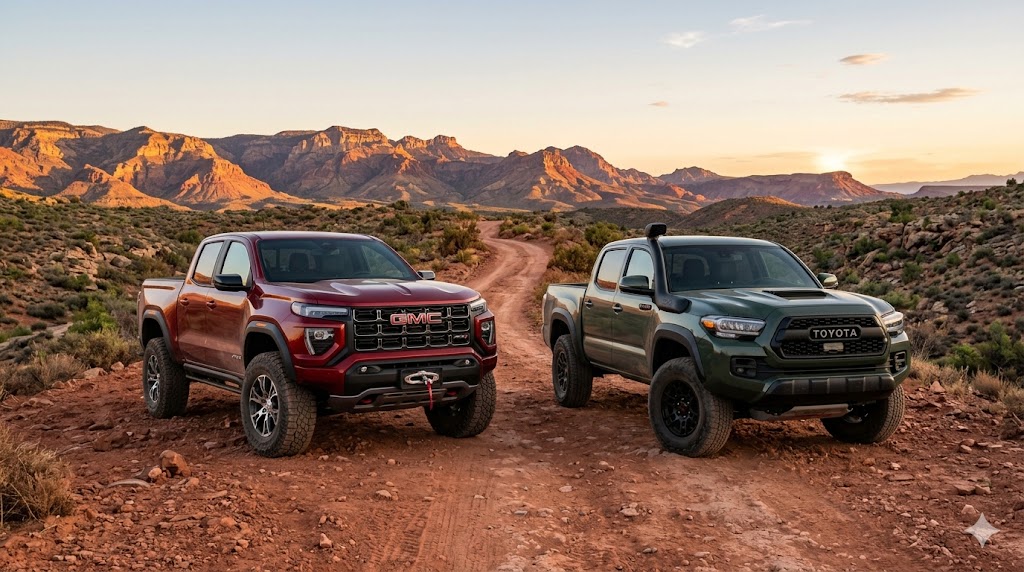
Most truck buyers look at a single number on a spec sheet, assume it's the whole story, and hook up a trailer without ever checking whether the rest of the math actually works. The maximum tow rating is real, but it's only one input in a larger equation that includes what's already in the truck bed, who's riding in the cab, and how the trailer's weight is distributed front to back. Misreading any one of those inputs is how otherwise careful owners end up legally and mechanically overloaded without realizing it.
The Tow Rating Is a Ceiling, Not a Budget
The advertised maximum tow rating tells you the heaviest trailer that specific configuration is allowed to pull under ideal conditions — it does not tell you what's left over for passengers, cargo, and gear once you're actually towing. Manufacturers calculate that ceiling assuming a fairly light load in the truck itself, and every pound you add inside the cab or bed reduces how much of that towing ceiling is genuinely usable. This is why two owners with the identical truck and identical trailer can be in very different positions: one running light with just a driver, the other loaded down with a full cab of passengers, a bed full of camping gear, and a hitch-mounted cargo carrier. The rated number didn't change, but the safe reality did.
Treat the max tow rating the way you'd treat a credit limit rather than a target. Knowing the ceiling exists is useful, but the number that actually matters day to day is how much of it you have left after accounting for everything else already on board.
GCWR Is the Number That Actually Governs Everything
Gross Combined Weight Rating is the total allowable weight of the truck, its occupants, its cargo, and the trailer combined — and it's the figure that ties everything else together. Where the tow rating in isolation can mislead, GCWR forces the complete picture: take the truck's actual weight as loaded (driver, passengers, cargo, fuel, hitch hardware), add the trailer's actual loaded weight, and compare that sum against the GCWR listed for your specific configuration in the owner's manual or manufacturer's towing guide.
This is the calculation that catches problems the headline tow rating hides. A truck can be well under its maximum tow rating and still exceed its GCWR if the truck itself is heavily loaded with people and gear. GCWR doesn't care whether the weight is in the bed or behind the hitch — it's a combined-total ceiling, and exceeding it stresses the drivetrain, brakes, and frame regardless of where the extra pounds are sitting. Any time you're towing near a truck's rated capacity, GCWR deserves at least as much attention as the standalone tow number, arguably more.
Tongue Weight: The Small Number With Outsized Consequences
Tongue weight — or, on a fifth-wheel or gooseneck, pin weight — is the portion of the trailer's total weight that presses down on the hitch itself, and it's typically meant to fall in a range of roughly 10 to 15 percent of the trailer's total loaded weight for a conventional bumper-pull setup. Get this number wrong in either direction and the towing experience degrades in very different but equally dangerous ways.
Too little tongue weight — trailer loaded heavy toward the rear axle — reduces the hitch's ability to keep the trailer tracking straight behind the truck, and it's the single most common cause of dangerous high-speed trailer sway. Too much tongue weight overloads the truck's rear axle and can exceed the truck's rear GAWR (Gross Axle Weight Rating) even when the truck's overall GCWR still has room, pushing the front end light and hurting steering response and braking. Both failure modes are avoidable with the same simple fix: load heavier items over the trailer's axles rather than far forward or far aft, and verify actual tongue weight with a scale rather than guessing based on how the trailer looks loaded.
A tongue weight scale is inexpensive relative to the trailers and trucks it protects, and many truck stops and CAT scale locations offer full weigh services that break out axle-by-axle weights for a few dollars. Guessing is the expensive option here, not the cheap one.
Payload and Tow Rating Are Not the Same Fight
It's worth separating the towing question from the payload question even though they're related. Payload capacity governs what the truck itself can carry — passengers, cargo, and tongue or pin weight all count against payload, since that weight rests on the truck's own suspension and tires rather than the trailer's. A truck can have a generous max tow rating and a comparatively modest payload rating, which means the tongue weight from a heavy trailer can eat into payload capacity faster than expected, especially once you add a full cab of people and a bed full of gear on top of it.
This is particularly relevant for fifth-wheel and gooseneck towing, where pin weights run considerably higher than a conventional tongue weight — often 20 percent or more of the trailer's total weight — and that weight lands directly in the bed over the rear axle. A truck can be nowhere near its tow rating ceiling and still be over payload once a fifth-wheel's pin weight, a full tank of fuel, and passengers are added together. Checking both numbers independently, rather than assuming clearing one clears the other, is the habit that prevents this specific and common mistake.
Reading the Door Sticker and the Towing Guide Together
The tire and loading information placard on the driver's door jamb lists your specific truck's GVWR and payload capacity as built, which is more useful than any generic spec-sheet number because it reflects your actual options and equipment. Pair that placard with the manufacturer's published towing guide — a document, not just a headline figure — which breaks tow and GCWR ratings down by cab, bed, drivetrain, and axle ratio. Cross-referencing both documents against your trailer's actual scaled weight, not its advertised dry weight, is the only way to know with confidence that your specific truck and trailer combination is within every limit that actually matters, not just the one that's easiest to find.
Key Takeaways
- The advertised max tow rating is a ceiling calculated under light-load conditions, not a guaranteed usable number for your actual setup.
- GCWR combines truck weight, occupants, cargo, and trailer weight — check it independently, since a truck can be under its tow rating and still over GCWR.
- Tongue or pin weight should generally land in the trailer manufacturer's recommended range; too little causes sway, too much overloads the rear axle.
- Payload and tow rating are separate limits; heavy tongue or pin weight can exceed payload well before the trailer approaches the tow rating.
- Use the door-jamb weight placard together with the manufacturer's full towing guide, and weigh your trailer loaded rather than trusting its advertised dry weight.