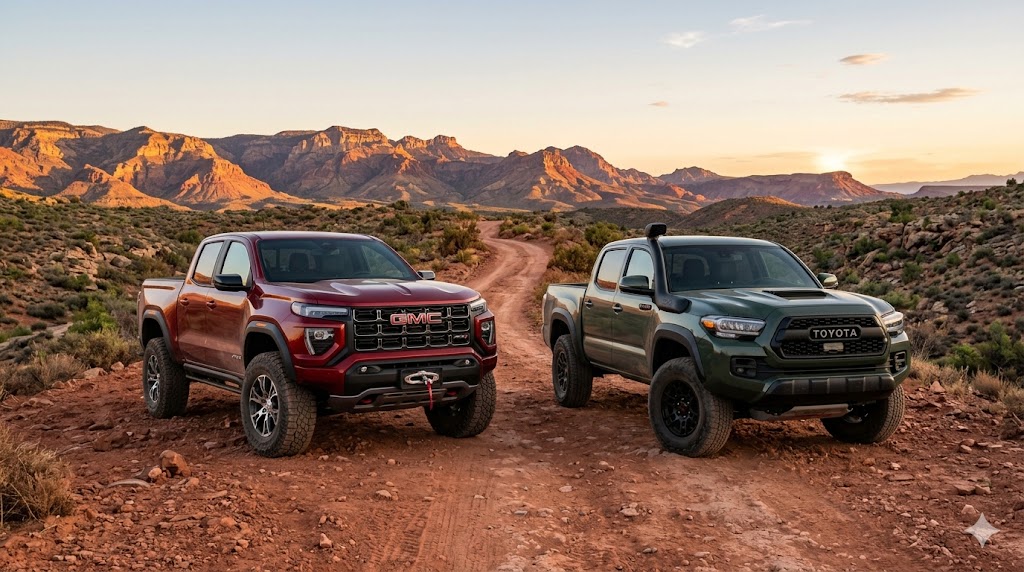
Most of the country's best backcountry driving doesn't require a single aftermarket part. It requires a stock four-wheel-drive vehicle, good tires, some patience, and a willingness to check current conditions before you go. The trail systems that get the most attention online tend to be the technical showcases built for heavily modified rigs, but they're a small fraction of what's actually out there. Every region of the country has extensive networks of forest service roads, BLM routes, and maintained trails that a factory-stock SUV or truck with real four-wheel drive can handle comfortably, provided you respect seasonal conditions and know your vehicle's actual clearance.
The Mountain West: High-Elevation Passes and Forest Roads
The Rocky Mountain states offer some of the most rewarding stock-friendly driving in the country, largely because of the sheer volume of forest service roads that connect trailheads, old mining towns, and high alpine terrain. Many of these roads were built for logging or mining trucks decades ago and remain graded well enough for a stock 4x4 with reasonable ground clearance, though washouts and rutting can appear after spring runoff or heavy rain, so timing matters more here than almost anywhere else. Colorado in particular has a well-documented network of routes that range from easy graded dirt to more technical passes, and it's worth researching a specific route's current difficulty rating rather than assuming an entire region is uniformly beginner-friendly, since a handful of high-elevation passes get lumped in with much easier roads under the same regional label.
Wyoming, Montana, and Idaho offer similar terrain with considerably less traffic, which means solitude but also less margin for error if something goes wrong. A stock vehicle is well suited to the well-maintained forest roads in these states, but cell coverage disappears quickly, so a paper map or offline GPS data is close to essential.
The Southwest: Desert Wash Roads and Slot Canyon Approaches
Utah, Arizona, and New Mexico are home to enormous networks of BLM land crossed by graded dirt and sandy wash roads, many of which are entirely manageable in a stock 4x4 as long as you understand the difference between a hard-packed wash and deep, unconsolidated sand. Stock all-wheel and four-wheel-drive vehicles do fine on the former and can get stuck quickly in the latter, so airing down tires appropriately and maintaining momentum through sandy stretches matters more here than raw ground clearance. Southern Utah's approach roads to many of its famous slot canyons and overlooks are a good example of terrain that's genuinely accessible to stock vehicles most of the year, though summer flash flooding and occasional deep sand pockets can catch unprepared drivers.
Arizona's high desert and mountain regions add a different flavor, with rockier, more technical stretches mixed among easier graded roads. As with the Mountain West, it pays to research the specific route rather than the region broadly, since a single named trail can range from easy to genuinely technical depending on which section you're on.
The Appalachians and Southeast: Mud, Grade, and Moisture Management
The eastern half of the country gets less attention in off-road media, but the Appalachian region, spanning parts of Tennessee, North Carolina, Virginia, and West Virginia, has an extensive network of forest roads through dense, hilly terrain. The defining challenge here isn't rock or sand but moisture: heavy tree cover keeps roads shaded and slow to dry, so a route that's perfectly manageable in a stock 4x4 after a dry stretch can turn genuinely difficult after a few days of rain. Grade also matters more here than out west, since these roads often climb and descend steeply through switchbacks rather than following gradual elevation changes.
A stock vehicle with good all-terrain or even a quality all-season tire can handle most of this terrain in dry to moderately wet conditions, but this is a region where checking recent weather and other drivers' recent trip reports pays off more than almost anywhere else, since conditions change quickly and aren't always reflected in official trail difficulty ratings.
The Upper Midwest and Great Lakes: Sand, Forest, and Seasonal Access
Michigan's Upper Peninsula, Wisconsin, and Minnesota offer an underrated network of forest roads through dense woodland, much of it built on sandy soil that behaves differently depending on moisture. A stock 4x4 handles the majority of these routes without issue in normal conditions, though deep sand sections after a dry spell can catch a two-wheel-drive vehicle or a driver who lets momentum drop too much. Many of these roads see limited maintenance and can be affected by fallen trees or seasonal closures, particularly outside of the summer and early fall window, so checking current forest service announcements before a trip is worthwhile.
This region rewards patience and a general awareness of soil conditions more than technical driving skill, and it's a good training ground for drivers who want to build confidence in a stock vehicle before attempting more demanding terrain elsewhere.
Reading Trail Difficulty Ratings Correctly
Across every region, the single most useful habit is learning to read a trail's difficulty rating skeptically rather than literally. Ratings systems vary by organization and region, a route rated easy in one state's system might resemble a moderate route elsewhere, and conditions can shift a route's real difficulty well beyond its posted rating after weather events. Recent trip reports from other drivers, when available, tend to be far more useful than a static difficulty number, because they reflect current conditions rather than a route's theoretical baseline. Whatever region you're exploring, treat the stated difficulty as a starting point for research rather than a guarantee, and always have a plan for turning around if conditions look worse than expected.
Key Takeaways
- Most of America's best backcountry driving is accessible to stock 4x4 vehicles, not just heavily modified rigs.
- The Mountain West rewards timing around seasonal runoff and washouts more than raw vehicle capability.
- The Southwest's biggest hazard for stock vehicles is deep sand, not rock, so tire pressure and momentum matter most.
- Appalachian and Southeastern trails are shaped by moisture and grade, and conditions shift quickly after rain.
- The Upper Midwest offers sandy, forested routes that are a good low-stakes training ground for building confidence.
- Bottom line: research the specific route and recent conditions, not just the region's reputation, before heading out in a stock vehicle.