Ground clearance gets all the attention in off-road marketing, but it's a surprisingly incomplete measure of what actually happens when an SUV meets a real obstacle. Three other numbers matter just as much, and most buyers never learn to read them: approach angle, which determines how steep a slope the front bumper can climb without scraping; departure angle, the same idea for the rear bumper on the way down; and breakover angle, which determines whether the undercarriage will hang up on the crest of a ridge even when the front and rear clear it fine. A vehicle with generous ground clearance but a long wheelbase and low-hanging bumpers can still get stuck on obstacles that a shorter, more geometrically favorable vehicle clears easily. Ranking stock SUVs by these three angles, rather than by ground clearance or marketing claims alone, produces a genuinely different and more useful picture of real off-road capability.
This ranking focuses on stock, factory-configured off-road trims rather than aftermarket-modified builds, since the entire point is comparing what a buyer actually gets by signing a purchase agreement, not what's theoretically achievable with a lift kit and new bumpers.
Why Wheelbase and Overhangs Matter More Than Marketing
The physics behind these three angles is straightforward once you see it laid out. Breakover angle is primarily a function of wheelbase length and ground clearance at the vehicle's center point — a shorter wheelbase with the same ground clearance yields a better breakover angle, which is exactly why two-door Wranglers and Broncos consistently outperform their four-door siblings on this specific measure despite sharing identical suspension hardware. Approach and departure angles depend heavily on how far the bumpers and body overhang extend beyond the front and rear axles, which is why vehicles with minimal front and rear overhangs — a design priority for genuine off-roaders — post dramatically better numbers than SUVs with long, styling-driven overhangs regardless of how much raw ground clearance they claim.
This is exactly why some larger, more expensive SUVs with impressive ground clearance specifications can still underperform smaller, more compact off-roaders in situations involving steep entry and exit points or sharp ridgelines, and it's the reason serious off-road buyers learn to check all three angle figures rather than fixating on ground clearance alone.
The Short-Wheelbase Advantage at the Top
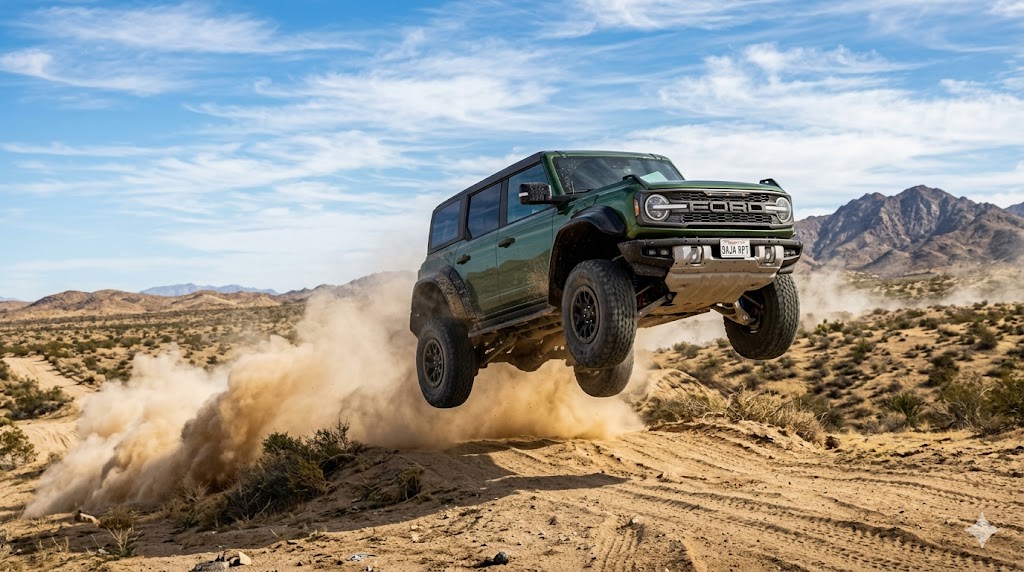
Vehicles built specifically around a short-wheelbase, off-road-first design consistently top these rankings, and it's not a coincidence. Two-door configurations of the Jeep Wrangler Rubicon and the Ford Bronco Badlands or Raptor benefit enormously from their compact dimensions, posting some of the best breakover angles available on any stock vehicle sold today, combined with minimal front and rear overhangs that translate into excellent approach and departure figures as well. The Land Rover Defender 90, despite its considerably more road-going luxury positioning, benefits from the same short-wheelbase logic and posts genuinely competitive numbers against dedicated off-road-branded competitors, aided by its air suspension's ability to raise ride height further when needed.
These vehicles share a common design philosophy: minimizing body overhang at both ends and keeping the wheelbase as short as practical without destroying interior usability or on-road stability. It's a deliberate trade-off, and one that four-door and longer-wheelbase variants of the same vehicles explicitly sacrifice in exchange for interior room and cargo space, which is why buyers cross-shopping two-door versus four-door configurations of the same nameplate should understand they're making a real capability trade, not just a styling choice.
Where Midsize Trucks and Body-on-Frame SUVs Land
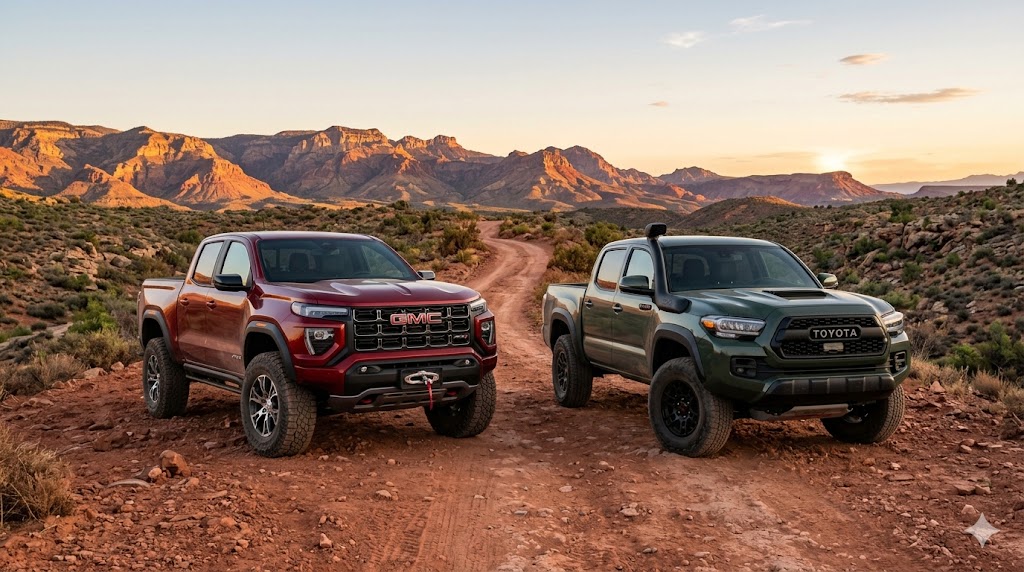
Midsize off-road trucks and SUVs like the Toyota 4Runner TRD Pro and the Chevrolet Colorado ZR2 generally post strong approach angles thanks to purposeful front-end design and minimal overhang, though their longer wheelbases relative to a two-door Wrangler or Bronco mean their breakover angles, while still solid, don't quite match the shortest-wheelbase competitors at the very top of the rankings. What these vehicles trade away in ultimate breakover angle, they generally recover in stability at speed and interior or cargo practicality, since a longer wheelbase also tends to improve ride comfort and high-speed composure over rough terrain.
Departure angle on pickup-based off-roaders deserves particular attention, since a rear bumper or a trailer hitch receiver can sometimes reduce departure angle compared to an SUV without that rear overhang, a detail that's easy to overlook when comparing spec sheets that don't clearly break out how accessories affect the published figures. Buyers genuinely focused on maximizing departure angle should check whether the specific configuration they're considering includes any rear-mounted equipment that might reduce ground clearance behind the rear axle.
Full-Size and Luxury Off-Roaders: Capable, But Geometrically Compromised
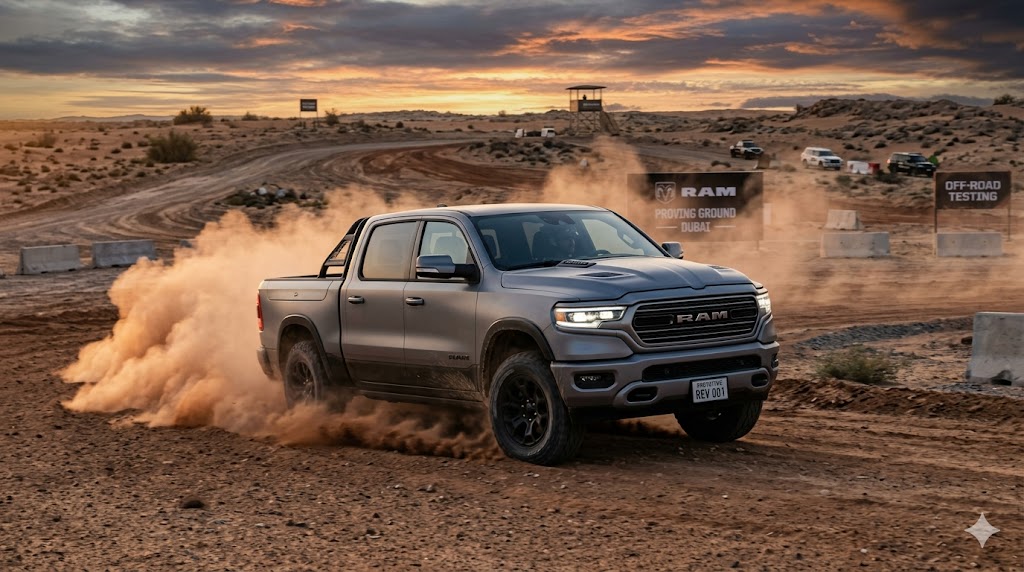
Full-size off-road pickups like the Ram 1500 Power Wagon and larger luxury off-roaders like the Mercedes-Benz G-Class and Lexus GX 550 generally deliver excellent ground clearance and genuinely strong mechanical capability — locking differentials, low-range gearing, sophisticated suspension — but their longer overall length and wheelbase put them at an inherent disadvantage on breakover angle specifically compared to shorter, more compact competitors. This doesn't make them less capable off-road overall; it means their capability expresses itself differently, favoring stability and traction over the raw geometric agility that lets a shorter vehicle thread through a tight, technical, ridge-heavy trail.
The G-Class actually performs better on these measures than its size might suggest, thanks to a relatively narrow footprint and a design that has always prioritized minimal overhang despite its otherwise boxy, imposing presence. The GX 550 and Power Wagon, both larger and longer than the G-Class, post respectable but comparatively less impressive breakover figures, reflecting the genuine trade-off between vehicle size and geometric agility that no amount of suspension engineering can fully overcome.
Reading the Numbers Correctly Before You Buy
The practical lesson for shoppers is to treat approach, departure, and breakover angle figures as a genuinely different data point from ground clearance, ideally checking all four numbers together for any vehicle under serious consideration, and confirming current published figures directly from the manufacturer since these specifications can shift between model years and trims. A vehicle that dominates on ground clearance alone can still underperform on a specific trail relative to a shorter, more compact competitor with tighter overhangs, and the only way to know which vehicle actually suits a specific type of terrain is to look at all three angle measurements together rather than any single spec in isolation.
Key Takeaways
- Breakover angle depends heavily on wheelbase length, which is why two-door Wranglers and Broncos consistently outperform four-door versions of the same vehicle.
- Approach and departure angles are driven by front and rear body overhang, not ground clearance alone, so compact off-road-first designs often beat larger SUVs with taller suspension.
- Midsize trucks like the 4Runner TRD Pro and Colorado ZR2 balance strong approach angles with better high-speed stability than the shortest-wheelbase competitors.
- Full-size off-roaders like the Power Wagon, G-Class, and GX 550 trade some breakover angle for superior stability, traction hardware, and interior or cargo capacity.
- Bottom line: always check approach, departure, and breakover angle together, not ground clearance alone, and match the vehicle's geometry to the specific terrain you'll actually drive.