Slide into a Mazda MX-5 Miata at six-foot-three and you'll understand the problem immediately. Your knees graze the steering column, your head brushes the headliner even with the seat at its lowest setting, and if you're wearing a helmet for a track day, forget it—you're either folding your neck sideways or leaving the car in the paddock. This isn't a knock on the Miata specifically; it's the physical reality of a category built around low centers of gravity, short wheelbases, and cabins sized for drivers who fit a certain mold. Sports cars are engineered around compactness, and compactness has a natural enemy: a six-foot-four frame with long legs and broad shoulders.
The frustrating part is that tall drivers are often told to just go buy a GT car or a sedan with a sportier trim, as if the only way to get more room is to give up the low seating position, the direct steering feedback, and the sense of wearing the car rather than driving it. That's not entirely true. Several genuine sports cars accommodate taller bodies without turning into isolation tanks—but figuring out which ones actually work, and where their limits sit, requires understanding what specifically goes wrong for tall drivers in the first place.
Why Sports Cars Punish Height in the First Place
The headline issue is roofline. Sports cars are low by design, and that low roof doesn't leave much vertical space between the seat cushion and the headliner. Even when the seat itself can be lowered, there's a floor to how low it can go before your hip point sits below the sill, making entry and exit awkward and visibility over the dash compromised. Many taller drivers find that the seat-height adjustment range in a sports car is narrower than in a sedan or crossover, because the engineers assumed most buyers wouldn't need to go much lower than the midpoint.
Legroom is the second failure point, and it's more complicated than raw seat-track travel. Some sports cars have offset pedal boxes, where the clutch, brake, and accelerator are angled toward the center of the car to clear a wheel well or a chassis rail. That offset forces your left leg into an unnatural angle for extended periods, which becomes genuinely uncomfortable on a long drive even if the seat itself slides back far enough. A car can have generous rearward seat travel and still feel cramped if the footwell geometry fights your knee angle.
Steering wheel reach matters just as much as people assume seat position alone solves fit. A wheel that only tilts, without telescoping in and out, forces a compromise: sit close enough for a comfortable reach to the wheel and your knees crowd the dash, or sit back for legroom and you're stretching your arms to reach it. The sports cars that work best for tall drivers pair a wide seat-travel range with real telescoping adjustment, so your arm and leg positions can be set independently rather than as a single fixed relationship.
Finally, there's cabin volume that has nothing to do with seat position—shoulder and head clearance dictated by the roof's curvature, the width of the door opening, and how low the sill sits. A car can technically have "enough" legroom on a spec sheet and still feel tight if the roof tapers aggressively toward the windshield or if the door opening is so small that getting in requires a practiced maneuver rather than a normal step-and-sit.
The Miata Problem, and Why It's Instructive
It's worth dwelling on the Miata a bit longer because it clarifies what "small" actually means in practice. Mazda has never hidden that the ND-generation Miata is built around a compact, lightweight footprint, and that philosophy extends directly into the cabin. Drivers over about six-foot-two consistently report that headroom becomes the limiting factor, not legroom—the roof simply sits too close to your skull once the seat is anywhere near a normal driving height, and lowering the seat further doesn't help much because the Miata's low-slung design doesn't give you much room to drop before you're sitting on the floor pan. Add a helmet for an autocross or track day and many tall drivers find contact with the roof unavoidable.
The lesson isn't "avoid small roadsters." It's that overall vehicle size and roofline shape predict fit far better than the marketing language of "sporty" versus "grand touring." A car can be small and tight, or small and cleverly packaged—and you won't know which until you sit in it.
Where the Coupes Split: GR86, BRZ, Mustang, and Z
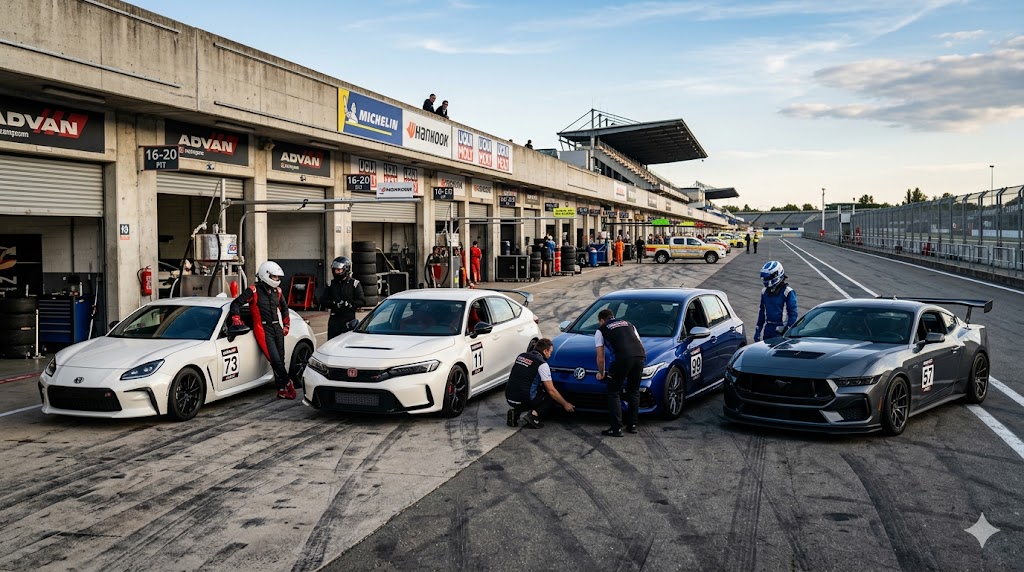
The Toyota GR86 and its twin, the Subaru BRZ, sit in an interesting middle ground. They're compact like the Miata, but because they're coupes rather than roadsters, the roofline doesn't have to accommodate a folding top mechanism, which sometimes frees up a bit more headroom relative to their footprint. That said, they're still tight cars, and taller drivers often find the pedal box narrow and the seat bottom short under the thigh, which can create discomfort on longer stints even if headroom is passable. The rear seats are essentially decorative for anyone over about five-foot-ten, so don't count on them for anything but a jacket.
The Ford Mustang, by contrast, benefits from being a genuinely larger car. Its longer hood and wider stance translate into a roomier cabin, and taller drivers frequently report that both headroom and legroom are more forgiving than in the smaller coupes, with a driving position that doesn't feel like a compromise. The tradeoff is that the Mustang's size and weight mean it doesn't deliver quite the same knife-edge, wear-it-like-a-glove feel as the smaller sports cars—you get more room, but a bit less of that intimate connection to the road.
The Nissan Z occupies a similar space to the Mustang in terms of usability for taller frames. Its cabin has more breathing room than the GR86/BRZ twins, and the seating position, while low, doesn't force the same knee-to-dash compromise that plagues tighter coupes. Visibility out of the Z can be a separate challenge—the low roofline and thick pillars mean taller drivers sitting high enough to see comfortably may find their head closer to the headliner than they'd like, which is a different kind of tall-driver problem: not cramped legs, but cramped sightlines.
The Corvette's Case, and the Porsche Question
The Chevrolet Corvette deserves particular attention because it defies the assumption that mid-engine, exotic-adjacent layouts must be cramped. Moving the engine behind the cabin freed up space in the footwell that front-engine sports cars don't have, and taller drivers often find more usable legroom in the Corvette than in cars that look, on paper, similarly sized. The tradeoff shows up at the door sill and the low seating position required by the car's height—getting in and out gracefully takes some practice, and the visibility over that long, low hood can take adjustment regardless of how tall you are.
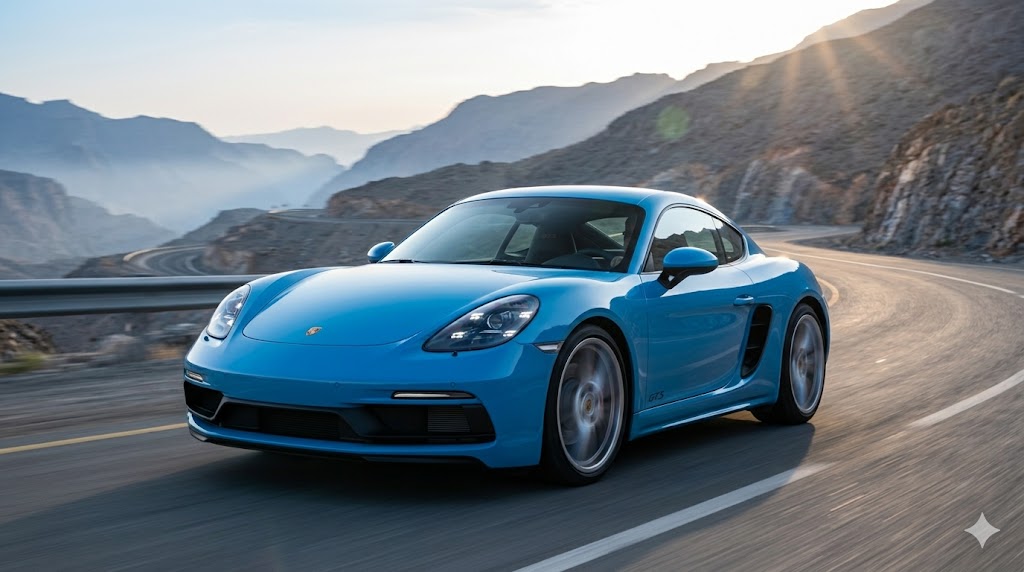
Porsche's lineup tells two different stories. The 911 has a genuinely surprising amount of usable space for its exterior dimensions, and taller drivers frequently report that the combination of seat travel, telescoping wheel, and a reasonably tall greenhouse make it one of the more livable sports cars for a six-foot-plus frame, even before considering the nominal rear seats as extra storage space. The Cayman and Boxster, being smaller and mid-engined, tend to feel tighter in the footwell and shoulder area than the 911 despite sharing much of Porsche's ergonomic thinking, and taller drivers who fit comfortably in a 911 shouldn't assume the same will be true in its smaller siblings without sitting in one first.
What Actually Determines Fit
None of this substitutes for sitting in the car yourself. Torso-to-leg proportions vary enormously even among people of the same overall height, and a car that fits a tall driver with a long torso and shorter legs can feel completely wrong for someone built the opposite way. Check the seat's height adjustment range and whether it goes low enough for your head clearance, check whether the wheel telescopes as well as tilts, and check the pedal box for offset by actually pressing the clutch or brake through a full stroke. Look up the manufacturer's interior dimensions for reference, but treat them as a starting point rather than a verdict, since two cars with similar published figures can feel very different once the seat, wheel, and pedals are all accounted for together. And remember that even the roomiest sports car on this list has a limit—helmet clearance with a roll bar or hardtop, sightlines with the seat dropped low, or a door opening that makes every entry a small negotiation. Comfortable does not mean unlimited.
- The Mazda MX-5 Miata is the clearest cautionary example: its compact roofline punishes height regardless of seat position, especially with a helmet on track.
- The Toyota GR86 and Subaru BRZ are tight on pedal-box and thigh support even when headroom is acceptable, so sit in one before assuming it'll work for a long drive.
- The Ford Mustang and Nissan Z offer noticeably more breathing room than the compact coupes, trading some of that knife-edge feel for genuine usability.
- The Chevrolet Corvette's mid-engine layout frees up footwell space that many taller drivers won't expect, though entry, exit, and low-seat visibility remain real adjustments.
- The Porsche 911 stands out as unusually accommodating for its size, while the smaller Cayman and Boxster shouldn't be assumed to fit the same way.
- Bottom line: for tall drivers who refuse to compromise on driving feel, the 911, Corvette, Mustang, and Z deserve a serious look, but no spec sheet replaces sitting in the seat, adjusting the wheel, and working the pedals yourself.