Fewer than one in twenty new vehicles sold in the United States comes with a clutch pedal anymore. Automakers have spent the last decade phasing out manual transmissions in favor of automatics and dual-clutch gearboxes that shift faster, return better fuel economy, and cost less to certify across a lineup. Yet a small, stubborn corner of the sports car world has refused to let the third pedal die. If you want to row your own gears in a new car this year, your options have narrowed dramatically, but they haven't disappeared entirely.
Why the Manual Is Disappearing Everywhere Else
The decline didn't happen because drivers stopped liking manuals. It happened because the business case for building them fell apart. Modern automatic transmissions, especially dual-clutch units, can execute shifts in milliseconds, something no human foot and hand can match. Automakers chasing fuel economy regulations and horsepower bragging rights found it easier to hit both targets with computer-controlled gearboxes tuned by engineers rather than left to a driver's left foot. Manuals also complicate production lines and infotainment integration, and younger buyers, many of whom never learned to drive stick, simply don't demand them the way previous generations did. Add in the rise of EVs, which have no traditional transmission at all, and you get a market where the manual has been quietly pushed into a niche it once dominated.
That niche, though, is exactly where enthusiast-focused sports cars live. Automakers building cars explicitly for driving pleasure have kept manuals around specifically because the segment's buyers are the ones still asking for them.
The Cars Generally Known to Still Offer a Manual
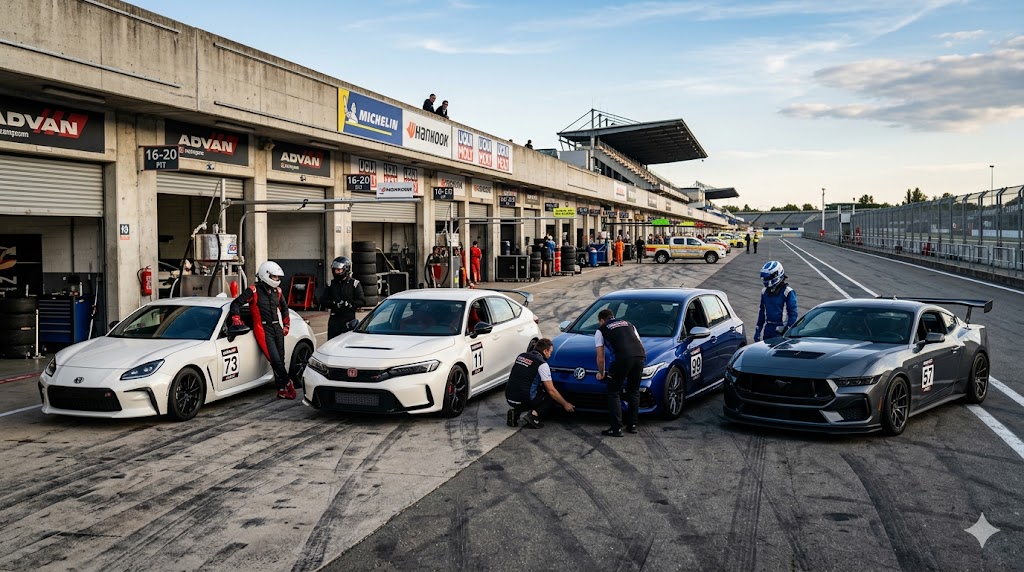
Several nameplates are generally known to offer, or to have very recently offered, a manual transmission option, though you should treat every one of these as a starting point for research rather than a guarantee. The Mazda MX-5 Miata is the standard-bearer here; it's built around the idea of a lightweight, driver-focused experience, and a manual gearbox has long been central to that identity. The Toyota GR86 and its mechanical twin, the Subaru BRZ, are also generally known for offering manual transmissions, continuing a tradition from their predecessor, the Scion FR-S/Subaru BRZ pairing, of prioritizing chassis feel and driver involvement over outright power.
Honda's performance compacts, the Civic Si and the Civic Type R, are generally associated with manual availability as well, and Honda has built a reputation among enthusiasts for manual gearboxes with notably precise, short-throw shift action. The Nissan Z is another car generally known to offer a manual option, carrying forward a lineage of Z-car manuals that stretches back decades. Porsche has kept manual transmissions alive on certain 911 variants, particularly ones aimed at purists, even as most of the lineup has shifted toward the brand's dual-clutch PDK gearbox. Ford's Mustang has historically offered manual transmissions on at least some trims and engine combinations, though availability has varied significantly by model year and configuration. Subaru's WRX rounds out the list as a car generally linked with manual availability, sitting at the more attainable end of the performance sedan and hatchback spectrum.
Every one of these associations reflects general, well-known reputation rather than a guarantee for any specific model year or trim. Automakers add and drop manual options frequently, sometimes tying them to specific engines, specific trims, or specific markets, and they don't always publicize the changes loudly. If a manual transmission is a deciding factor in your purchase, confirm it directly with a dealer or the automaker's build-and-price tool for the exact year and trim you're considering, not just the nameplate in general.
The Corvette as a Counterpoint
It's worth contrasting these holdouts with a car that went the other direction. The Chevrolet Corvette, for generations one of America's defining manual-transmission sports cars, no longer offers a manual gearbox option. Chevrolet moved the Corvette to an exclusively automatic transmission lineup as part of a broader shift in the car's engineering direction, and that decision has become a frequent talking point among enthusiasts debating where the industry is headed. The Corvette's move illustrates the broader pressure every automaker faces: even iconic manual nameplates aren't immune to being phased into automatic-only lineups when the numbers and engineering priorities point that way.
Why Manuals Persist in This Segment
The sports car segment keeps manuals alive for reasons that have little to do with outright performance and everything to do with the experience. Rowing your own gears creates a physical connection to the car that many drivers find more engaging than simply mashing a pedal and letting software decide when to shift. There's a rhythm to matching revs, choosing your moment to downshift into a corner, and feeling the mechanical linkage respond to your input. For a certain kind of enthusiast, that involvement is the entire point of owning a sports car rather than a means to an end.
There's also a practical, cost-driven argument. Manual transmissions are mechanically simpler than automatics or dual-clutch units, with fewer electronic components and less complex hydraulic control systems. That simplicity can translate into a lower price point for the transmission option itself, which matters in a segment like the Miata or the GR86/BRZ twins, where keeping the base price accessible is part of the appeal. Manuals also tend to be less expensive to repair out of warranty, since a clutch job is generally more straightforward than diagnosing a modern dual-clutch unit's software and mechatronics.
Enthusiast demand is the final piece. Buyers of the cars listed above skew toward people who cross-shop driving experience, not just numbers on a spec sheet. Automakers know that pulling the manual option from a Miata or a Civic Type R would alienate a vocal, loyal customer base, even if that base represents a shrinking slice of overall sales.
The Trade-Offs You Shouldn't Ignore
None of this means a manual is the objectively better choice, and it's worth being honest about the downsides. Modern dual-clutch and even conventional automatic transmissions frequently out-perform manuals in straight-line acceleration and lap times, because computer-controlled shifts happen faster and more consistently than human ones. If your priority is the quickest possible 0-60 time or the fastest track lap, the manual is often not the transmission that gets you there anymore. That's a real reversal from decades past, when a skilled driver with a manual could often beat an automatic.
Resale value is another mixed bag. In some niche models, a manual transmission can actually boost resale value because it appeals to the enthusiast buyers who specifically seek that car out secondhand. In other cases, manuals can sit longer on used lots simply because fewer buyers know how to drive them, narrowing your pool of potential buyers when it's time to sell. Which way it cuts depends heavily on the specific car, the regional market, and who's shopping at the time.
Availability is a practical headache, too. Manual-equipped trims are often built in smaller numbers than their automatic counterparts, meaning dealer lots may carry few or no manual examples in stock, and you might face a longer factory order wait to get exactly the configuration you want. Daily livability is worth weighing honestly as well. A manual can be genuinely tiring in stop-and-go traffic, and if most of your driving happens on congested commutes rather than open roads, the novelty of shifting for yourself wears thin fast for some owners.
What This Means for Shoppers in 2025
If a manual transmission matters to you, your search needs to start with the nameplates above, but it can't end there. Confirm the exact trim, engine, and model year combination before you fall in love with a specific configuration, because manual availability is one of the details automakers change most often and with the least fanfare. Test drive the manual variant specifically rather than assuming it drives like the automatic version with an extra pedal, since gearing, clutch feel, and even suspension tuning can differ between variants of the same car. And be realistic about how you'll actually use the car day to day, because the same manual that feels thrilling on a weekend backroad can feel like a chore in a daily commute.
Key Takeaways
- Manual transmissions have all but disappeared from mainstream new cars but persist in enthusiast-focused sports cars like the Mazda MX-5 Miata, Toyota GR86, Subaru BRZ, Honda Civic Si and Type R, Nissan Z, certain Porsche 911 trims, some Ford Mustang configurations, and the Subaru WRX.
- Manual availability by nameplate is generally known but not guaranteed on any specific trim or model year, so always confirm directly with the dealer or automaker before shopping.
- The Chevrolet Corvette illustrates the opposite trend, having dropped manual transmission availability as the model shifted toward automatic-only engineering priorities.
- Manuals survive in this segment because of driver engagement, enthusiast demand, and generally lower mechanical complexity and cost compared with automatics or dual-clutch units.
- Modern automatics and dual-clutch transmissions frequently beat manuals in acceleration and lap times, and manuals can mean thinner dealer stock, mixed resale outcomes, and more fatigue in heavy traffic.
- Bottom line: if you want a new manual sports car in 2025, start with the Miata, GR86/BRZ, Civic Si/Type R, Z, WRX, or select 911 and Mustang configurations, but verify exact trim-level availability before you commit.