Most first-time track day drivers make the same mistake before they ever turn a wheel in anger: they pick the wrong car. Some show up in something with far more power than their skills can manage, and they spend the day white-knuckled and terrified instead of learning anything. Others bring a soft, numb daily driver that never talks back, never rewards a good line, and never teaches them what the limit actually feels like. The right beginner track car sits in a narrow, valuable middle ground—forgiving enough that small mistakes don't turn into spins or crashes, communicative enough that you can feel the limit approaching before you cross it, and cheap enough to run that you're not skipping sessions because you're worried about a set of tires or a brake job. That combination, not raw speed, is what actually makes someone a better driver.
Why Safety Comes First, Not Last
Safety on a track day has almost nothing to do with airbags or crash ratings and everything to do with how a car behaves at the edge of grip. A genuinely safe beginner track car gives you a wide, predictable window between "starting to slide" and "completely gone." Cars that snap from grip to loss of control with little warning are dangerous in the hands of someone still learning to read a chassis, no matter how many electronic nannies are bolted on. This is why so many driving instructors point new students toward lightweight, moderate-power cars with well-sorted suspension geometry: they tend to slide progressively, telegraph their intentions through the seat and steering wheel, and give you time to react.
Brakes matter just as much as cornering behavior. A car with a factory braking system that fades badly after two or three hard laps teaches you the wrong lesson—it teaches you to brake earlier and more tentatively out of fear, rather than learning proper threshold braking technique. Cars with brakes that hold up reasonably well to repeated hard stops let you actually practice the skill without immediately cooking your pads and rotors. Stability and traction control systems deserve the same scrutiny. A system that's either completely absent or so intrusive that it fights your every input is equally unhelpful; what you want is a car where the electronics can be dialed back or switched to a more permissive setting, so they function as a safety net rather than a electronic instructor that never lets you actually drive.
Capability: Enough to Teach, Not Enough to Punish
The capability piece of this equation is where a lot of beginners overcorrect in one direction or another. There's a temptation to think that more power equals more fun, and therefore more power equals a better learning tool. In practice, a car with modest, well-managed power lets you focus entirely on lines, braking points, and smoothness without the added variable of a rear end trying to step out under throttle every time you're slightly too aggressive. Cars like the Mazda MX-5 Miata are frequently recommended for exactly this reason—they reward smooth inputs rather than punishing small mistakes, and they let a new driver explore genuine cornering limits at speeds low enough that the consequences of getting something wrong are manageable.
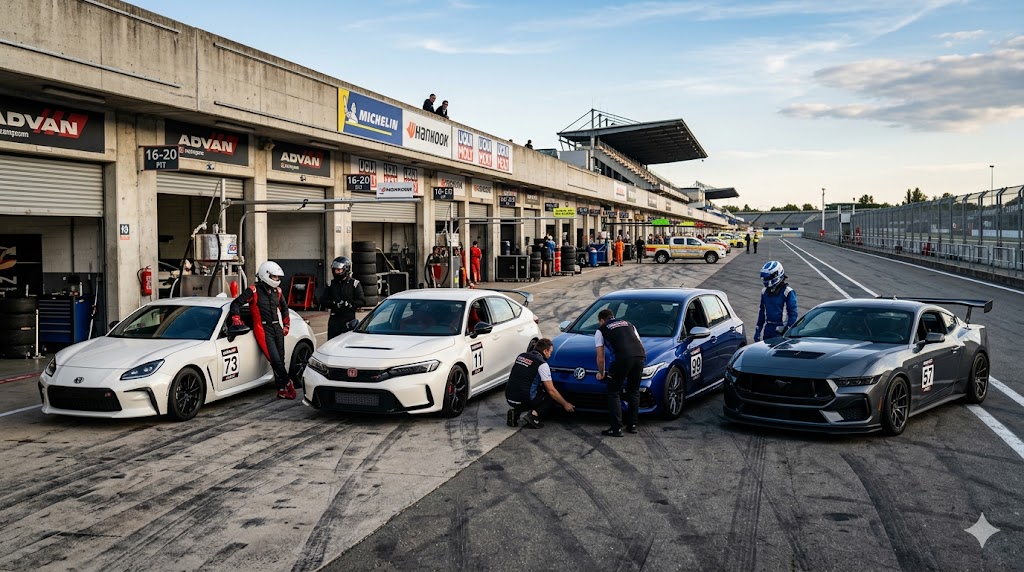
At the same time, a car needs enough real capability that it's actually teaching transferable skills. A car so slow and under-tired that you're never approaching any meaningful limit isn't teaching you much of anything—you're just driving in circles. The Toyota GR86 and Subaru BRZ twins occupy a similar space to the Miata: modest power, light weight, and a chassis balance that lets you feel weight transfer clearly, but with enough performance that experienced instructors still find them engaging to drive hard. That said, it's worth being honest about the trade-off here. Drivers who progress quickly, or who come in with some autocross or karting background, sometimes find these lightweight, moderate-power cars start to feel like they've been "solved" faster than expected—the car simply runs out of speed to keep testing you before your technique catches up. That's not necessarily a bad problem to have on day one, but it's part of the honest calculus.
Value: The Part Beginners Consistently Underestimate
Track days are brutally hard on consumables in a way that street driving never approaches. A set of tires that lasts 40,000 miles on the road might not survive a single aggressive weekend at full track pace. Brake pads wear at a similarly accelerated rate, and rotors can warp or crack under sustained heavy use if a car's factory cooling wasn't designed with track duty in mind. This is the part of the beginner car equation that's easy to ignore while shopping and impossible to ignore three track days later, when you're staring at a bill for new tires and pads.
This is precisely where lightweight, modest-power cars pull ahead on value, and it compounds their safety and capability advantages rather than existing separately from them. A car that weighs less puts less stress on its tires and brakes per lap, which means components last longer and replacement parts tend to be less specialized and less expensive. The Mazda MX-5, again, is a frequent recommendation here specifically because its combination of low curb weight and modest power means a driver can do far more track days per set of tires than they could in something heavier and more powerful. Hot hatches like a Honda Civic Si occupy a similar value tier—more weight than a Miata, but still light enough relative to their power that consumables remain manageable, and the aftermarket support for affordable performance tires and pads is extensive.
Applying the Framework to Hot Hatches and Sedans
Hot hatches deserve their own look through this three-part lens because they split the difference in an interesting way. A Honda Civic Si offers a chassis that's communicative and front-wheel-drive dynamics that are famously forgiving—understeer tends to announce itself clearly before anything dramatic happens, which is a safer failure mode for a beginner than a sudden snap of oversteer. Capability-wise, it's engaging enough to teach real technique, particularly around trail braking and rotating a front-wheel-drive car into corners, without demanding the modifications that a more track-focused car might need to be enjoyable. Something like the Civic Type R sits a notch higher in capability and genuinely track-ready focus, but that added performance also means a beginner will find its limits are higher and less accessible, and its tires and brakes, while excellent, are also more expensive to replace than a base Si's.
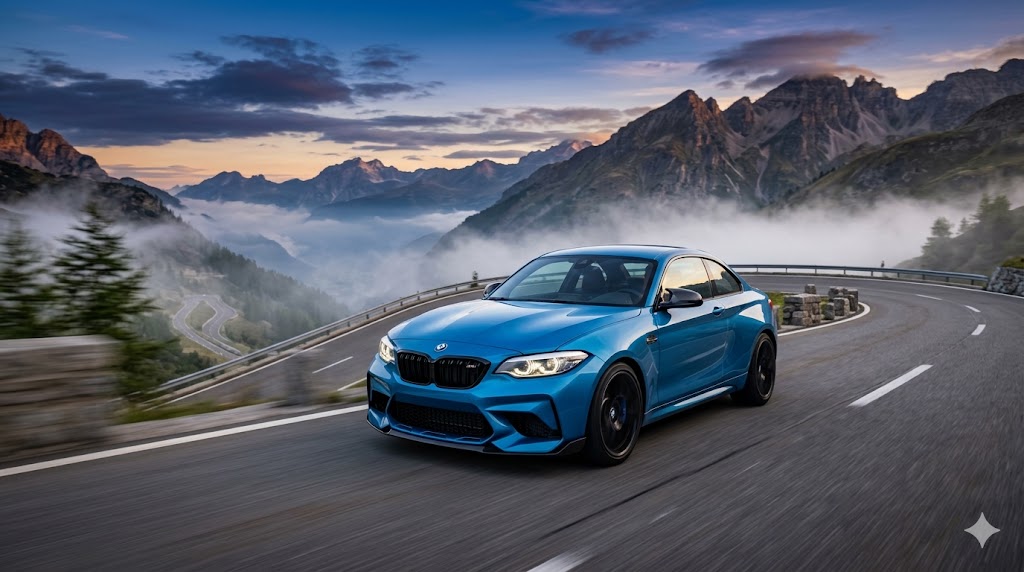
Entry-level performance sedans, like a BMW 3 Series, and larger rear-wheel-drive coupes like a Ford Mustang GT, present the opposite trade-off from the lightweight coupes. They bring more weight to the corner, which asks more of their tires and brakes, and that added mass and power means mistakes carry more consequence—a spin in a heavier, more powerful rear-wheel-drive car unwinds faster and less forgivingly than the same mistake in a Miata. Where these cars can trip up beginners specifically is when all-wheel-drive variants enter the picture: the added traction of all-wheel drive can genuinely mask sloppy technique, letting a driver power through a corner with poor inputs that would have spun a lighter, less traction-rich car. That can feel like progress while actually delaying the moment a driver learns to properly balance a car through weight transfer and smooth throttle application. None of this makes larger sedans or muscle coupes bad beginner choices—many drivers cut their teeth on exactly these cars—but it does mean the safety and value math shifts, and a new driver in one of these cars benefits enormously from instruction that emphasizes smoothness over simply using the available grip and power to cover for mistakes.
Bringing the Framework Together
None of these three factors—safety, capability, and value—work in isolation, and that's really the point. A car that's wonderfully safe but has no real capability teaches you nothing. A car that's thrillingly capable but chews through a set of tires in one session will quietly push you toward driving less often, which is its own kind of setback. The cars that consistently show up on instructor recommendation lists for beginners—the Miata, the GR86/BRZ twins, and modest hot hatches like the Civic Si—earn that reputation because they hit all three marks at once rather than excelling at one while failing at the others. As your skills grow, moving toward more powerful or more specialized machinery makes sense, but that transition works best once you've built genuine car control fundamentals in something that let you make mistakes safely and affordably along the way.
- The safest beginner track cars have wide, predictable limits and brakes that hold up to repeated hard stops rather than fading after a few laps.
- Modest power isn't a compromise for a new driver—it lets you focus on lines, braking points, and smoothness instead of managing constant wheelspin or oversteer.
- Lightweight, moderate-power cars like the Mazda MX-5 or Toyota GR86/Subaru BRZ twins are prized specifically because they're cheap on tires and brakes, which means more seat time per dollar.
- Hot hatches like the Honda Civic Si offer forgiving front-wheel-drive dynamics and real engagement without demanding immediate modification.
- More powerful sedans and coupes are exciting and capable but consume consumables faster and punish mistakes harder, while all-wheel-drive traction can mask bad technique rather than correct it.
- For a typical beginner, a lightweight, modest-power rear-wheel-drive coupe remains the safest, most instructive, and most affordable way to learn genuine car control before stepping up to anything more serious.