A car seat changes everything about how you evaluate a vehicle, often in ways new parents don't fully appreciate until they're trying to buckle a squirming infant into a rear-facing seat during a rainstorm in a cramped parking garage. The car that felt perfectly practical before a baby arrived can suddenly reveal a dozen small frustrations: door openings too narrow to lean in comfortably, a trunk that barely fits a stroller alongside groceries, back seats that make installing a car seat correctly feel like solving a puzzle. Choosing well for this specific life stage means prioritizing a different set of criteria than most car shopping guides emphasize, centered on how easily you can load a child and their gear, how confident you feel about crash safety, and how the car handles the unglamorous daily reality of parenting.
Easy Loading Starts With Door Design, Not Trunk Size
The most underrated factor in car-seat-friendly vehicles is door opening size and shape, not overall vehicle size. A wide door opening with a low step-in height lets you lean into the back seat with a baby in your arms without contorting your body or banging your head, and this single factor makes a bigger daily difference than almost any other spec. Sedans with lower rooflines and smaller rear door openings can make car seat installation and daily loading noticeably more awkward than a crossover or minivan with taller, wider door apertures, even when the sedan's actual interior dimensions are perfectly adequate on paper.
Rear door angle matters too, and it's rarely mentioned on spec sheets. Doors that open closer to a 90-degree angle create far more usable space to maneuver a car seat or lean in with a baby than doors that open at a shallower angle, which is common on some sleeker-styled sedans and coupes designed more for aesthetics than family practicality. Minivans deserve particular credit here, since sliding doors eliminate the swing-radius problem entirely and make loading in tight parking spots dramatically easier, which is exactly why minivans remain a genuinely excellent choice for new parents despite carrying a reputation as unglamorous compared to crossovers and SUVs.
Car Seat Compatibility Isn't Universal
It's a common and costly misconception that any car seat fits reasonably well into any vehicle. In practice, seat bottom cushion shape, the depth and angle of the lower LATCH anchors, and the available clearance between the front and rear seats all affect how securely and correctly a car seat installs, and some combinations of vehicle and car seat model fit dramatically better than others. This is genuinely worth testing before you buy a vehicle if at all possible, by bringing your actual car seat to the dealership and attempting a real installation rather than assuming compatibility based on published LATCH weight limits alone. Rear-facing infant seats in particular can eat up significant front-seat legroom depending on how the vehicle's seats are shaped, which matters enormously if a tall driver needs to sit close to the wheel while a rear-facing seat occupies the space behind them.
Three-across compatibility becomes relevant quickly for parents planning more than one child or regularly carpooling, and this is an area where vehicles vary enormously despite looking similar in advertised second-row width. Some midsize crossovers and sedans that seem spacious struggle to fit three car seats side by side due to the shape of the door frames and center console intrusion, while certain minivans and larger SUVs handle this configuration far more comfortably. If a second child or regular carpooling is on the horizon, it's worth verifying three-across compatibility for your specific car seats now rather than discovering a problem later.
Safety Credentials Deserve Real Scrutiny
New parents understandably prioritize safety above nearly everything else, and it's worth approaching this carefully rather than assuming any well-reviewed vehicle is automatically excellent in every relevant category. Checking current IIHS and NHTSA ratings for the specific trim and model year you're considering gives a far more accurate picture than relying on a vehicle's general reputation, since safety equipment and structural performance can vary between trims of the same model more than most buyers expect. Standard advanced driver-assistance features, particularly automatic emergency braking, blind-spot monitoring, and rear cross-traffic alert, matter enormously for new parents specifically because the daily reality of loading and unloading kids in parking lots and driveways creates exactly the kind of low-speed, high-distraction scenarios these systems are designed to help with.
Visibility also deserves more attention than it typically gets in safety conversations. A rear-facing infant seat blocks a meaningful portion of the rear window in many vehicles, and a built-in camera-based mirror view or a strong standard backup camera with wide coverage can meaningfully offset that lost visibility during the months when a rear-facing seat is required.
Cargo Space for the Unglamorous Reality of Baby Gear
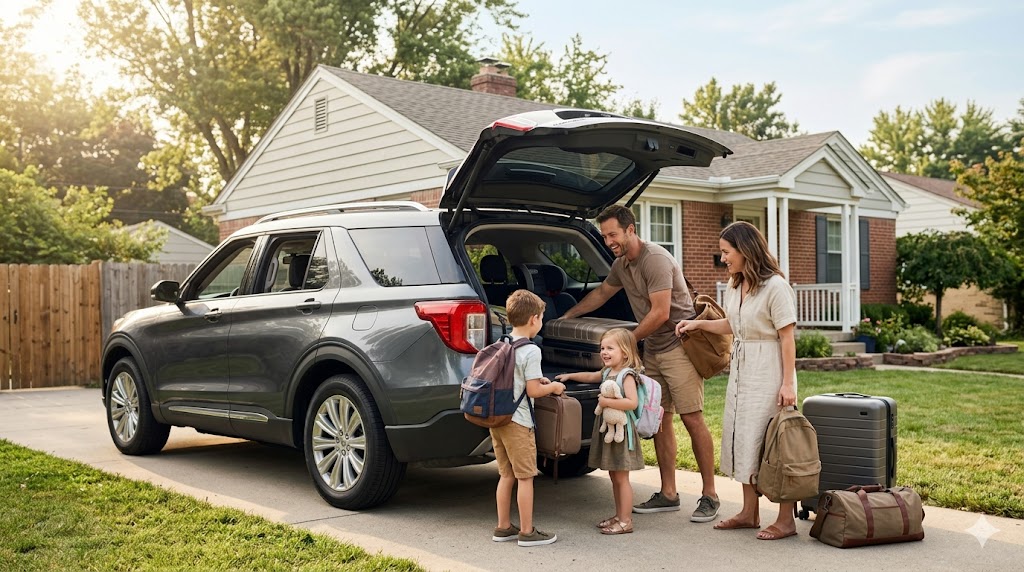
Strollers, diaper bags, and the sheer volume of gear a small baby somehow requires take up more cargo space than new parents typically anticipate before their first child arrives. A full-size stroller, even a relatively compact folding model, can consume a surprising portion of a smaller trunk, and testing your actual stroller's fit in a candidate vehicle's cargo area is a genuinely worthwhile exercise before buying rather than trusting cargo volume numbers alone. Crossovers and minivans generally offer more forgiving cargo space for this purpose than sedans, and a low liftover height, meaning you don't have to lift heavy items very high to clear the bumper, makes a meaningful daily difference when you're loading a stroller one-handed while holding a baby with the other arm.
The Trade-offs Worth Acknowledging
Choosing a car optimized for new-parent life does involve some trade-offs. Minivans and larger crossovers, while excellent for practicality, typically cost more to fuel and can feel less agile or engaging to drive than a smaller sedan or hatchback. Some parents also find that the practicality gains of a larger vehicle aren't worth the added size and parking difficulty if they live in a dense urban area, in which case a well-chosen compact crossover with strong door design and verified car seat compatibility can be a reasonable middle ground rather than jumping straight to the largest available vehicle.
Key Takeaways
- Wide, tall door openings and a low step-in height matter more for daily car seat loading than overall vehicle size or trunk volume.
- Car seat fit varies significantly between vehicles, so testing your actual seat's installation before buying is worth the effort.
- Minivans offer a genuine practicality advantage through sliding doors, despite an unglamorous reputation compared to crossovers and SUVs.
- Current IIHS and NHTSA ratings for your specific trim, plus standard automatic emergency braking and cross-traffic alert, matter more than general brand reputation.
- Testing your actual stroller's fit in the cargo area avoids an unpleasant surprise that advertised cargo volume numbers don't reveal.
- Bottom line: prioritize door design, verified car seat compatibility, and current safety ratings over styling or brand reputation when shopping as a new parent.