The idea that driving excitement disappeared once automakers pivoted to crossovers is one of the more persistent myths in the car world, and it simply does not hold up under $50,000. Walk into almost any mainstream dealership right now and you can still option your way into a manual transmission, a limited-slip differential, or a genuinely quick turbocharged four-cylinder without touching a six-figure loan. The sub-$50k sports car segment in 2025 is arguably deeper and more varied than it has been in a decade, spanning tossable roadsters, high-strung coupes, and pocket rockets that happen to also carry groceries. You just need to know where to look, and you need to go in with realistic expectations about what "affordable performance" actually delivers versus what a supercar brochure promises.
That's the real story here: this is not a list of watered-down performance cars pretending to be something they're not. Every car below earns its spot because it does at least one thing extremely well, whether that's steering feedback, straight-line urgency, or all-weather grip, and because enthusiasts and reviewers have consistently praised it for character rather than just spec-sheet bragging rights. Pricing on all of these fluctuates with trim, options, dealer markups, and incentives, so treat every reference to "affordable" or "near the top of the range" as a general guide rather than a quote. Always confirm current pricing, available trims, and up-to-date specifications directly with the manufacturer or a dealer before you buy.
The Purists: Miata, GR86, and BRZ
Start with the Mazda MX-5 Miata, because no conversation about accessible sports cars happens without it. The Miata's entire personality is built around lightness: a small-displacement naturally aspirated four, rear-wheel drive, a manual shifter that feels tighter than almost anything else sold new, and a chassis that rewards smooth inputs rather than raw power. It is not fast in a straight line by modern standards, and the cabin is tight enough that taller drivers should sit in one before committing. But as a pure, unfiltered driving experience, it remains the benchmark, and it typically sits comfortably under this budget even in its more focused trims.
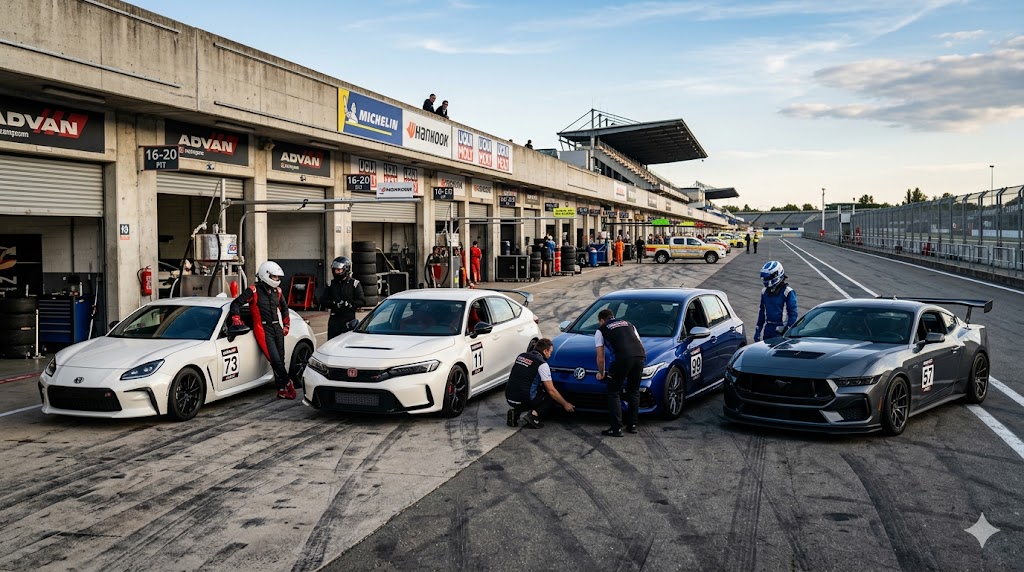
The Toyota GR86 and Subaru BRZ are close mechanical cousins, sharing a flat-four engine and a rear-wheel-drive platform tuned specifically for balance over brute force. Both cars favor a high-revving, naturally aspirated character that asks you to work the gearbox rather than lean on turbo boost, and both have earned reputations for playful, communicative handling at speeds that won't get you arrested. The trade-off is modest power and a back seat that exists in name only. Choosing between the two often comes down to styling preference and dealer availability more than any meaningful mechanical difference, and both generally price well within this budget even loaded up.
The Turbocharged All-Rounders: GTI, Golf R, and WRX
If you want a sports car that can also serve as your only car, the Volkswagen GTI is hard to beat. It pairs a punchy turbocharged four with a genuinely useful hatchback body, and its steering and chassis tuning have been refined over multiple generations to feel eager without being nervous. It's brisk rather than shocking in a straight line, but the way it changes direction and puts power down is what earns it a spot on nearly every enthusiast's shortlist. Stepping up to the Golf R adds all-wheel drive and a meaningful jump in composure and grip, particularly in poor weather, though pricing on well-equipped Golf R models can push toward the upper end of this budget range, so cross-shop carefully.
The Subaru WRX takes a similar all-weather philosophy and wraps it in a more traditional sedan-meets-rally-car package. Its turbocharged boxer engine has a distinctive burble and a torque-forward delivery that makes it feel eager from lower in the rev range than the naturally aspirated cars on this list. Standard all-wheel drive is the WRX's calling card, making it a genuine year-round performance option in climates where a rear-wheel-drive roadster is a three-season car at best. The trade-offs are a firmer ride than most daily commuters and cabin materials that lag behind some competitors.
The Muscle Car Holdout: Ford Mustang
The Ford Mustang remains the standard-bearer for affordable American muscle, and the base EcoBoost four-cylinder version is the one that keeps it firmly in this price bracket. It trades the theatrical soundtrack of the V8 for a turbocharged engine that's genuinely quick and, for many buyers, a smarter real-world choice thanks to better fuel economy and a lower price of entry. The long hood and rear-wheel-drive layout still deliver classic muscle car theater, and a manual is available if you want the full experience. Where it gives up ground is outright chassis sophistication compared to some of the more surgical options here, and the back seat is more of a formality than a functional space. Worth noting: Chevrolet recently wound down Camaro production, so if you want that particular flavor of American muscle, you'll be shopping remaining new or lightly used inventory rather than a fresh model year, and availability will vary a lot by region.
The High-Revving Honda: Civic Si and Type R
Honda's performance Civic lineup covers two very different personalities. The Civic Si is the value play: a turbocharged four, a slick manual gearbox, and sharp, precise steering wrapped in a practical sedan body that comfortably undercuts this budget. It won't overwhelm you with power, but its balance and eagerness to rev make it feel quicker than its numbers suggest, and it remains one of the best-driving affordable sedans on sale. The Civic Type R sits at the opposite end of the spectrum: a hardcore, front-wheel-drive hot hatch with aggressive styling, a stiffer suspension tune, and genuinely serious performance credentials that have earned it comparisons to cars costing far more. That performance comes at a price point that can sit right at or occasionally above this budget depending on configuration, so it deserves careful cross-shopping against the Golf R and WRX before you commit.
The Outliers: Nissan Z, Hyundai Elantra N, and Mini
The Nissan Z carries forward a long lineage of affordable rear-wheel-drive sports coupes, now with a turbocharged six-cylinder engine that gives it a distinct, more grown-up character compared to the four-cylinder cars on this list. It leans toward old-school GT-style thrills: a long hood, a throaty exhaust note, and a chassis tuned for confident cruising as much as outright cornering aggression. Well-equipped versions can sit near the top of this budget, so shop trims carefully, and know that interior tech lags behind some rivals.
The Hyundai Elantra N proves that a compact sedan can be genuinely thrilling, with an aggressive turbocharged engine, adjustable drive modes, and a chassis that some reviewers rank among the sharpest in this segment. It generally comes in well under this budget, making it one of the stronger value plays here, though its firm ride and boy-racer styling won't suit everyone.
Finally, the Mini Cooper S and John Cooper Works models offer a completely different kind of fun: a go-kart-like driving position, quick steering, and a turbocharged engine that feels punchier than its size suggests. These cars thrive in tight, twisty environments more than on the highway, and rear-seat space and ride comfort are compromises you accept for the personality on offer. JCW trims can approach the upper end of this budget once optioned, so check configurations closely.
Key Takeaways
- The sub-$50k sports car market in 2025 spans genuinely different personalities, from the featherweight Mazda MX-5 Miata to the all-wheel-drive Volkswagen Golf R and Subaru WRX.
- Naturally aspirated purists like the Miata, GR86, and BRZ prioritize balance and feedback over raw power, while turbocharged options like the GTI, WRX, Civic Si, and Elantra N trade some purity for everyday usability and quicker pace.
- The Ford Mustang EcoBoost and Nissan Z keep classic rear-wheel-drive coupe theater alive at this price point, though buyers wanting a new Chevrolet Camaro will be shopping remaining inventory rather than current production.
- Every car here involves real trade-offs, whether that's cramped rear seats, a firm ride, modest power, or trims that creep toward the top of this budget once optioned.
- Exact pricing, trim availability, and specifications change frequently and vary by region, so verify current figures with the manufacturer or a local dealer before making a purchase decision.
- Bottom line: if outright feedback and a manual gearbox matter most, start with the Miata or GR86/BRZ; if you need all-weather usability alongside genuine speed, the Golf R or WRX deserve first look.